

Why Vehicle Classification Matters
When shopping for a vehicle or simply trying to understand what you see on the road, classification terminology can be confusing. Industry groups, government agencies, and automakers each use overlapping systems — sometimes differently. Understanding how the major categories are defined helps you evaluate which body style and configuration actually suits your needs.
At the broadest level, passenger vehicles in the U.S. fall into two regulatory buckets: passenger cars and light trucks. The light truck category, as defined by the National Highway Traffic Safety Administration (NHTSA), includes pickup trucks, SUVs, crossovers, and minivans — which explains why fuel economy standards treat an SUV differently from a traditional sedan. From there, body style and size determine the more granular labels consumers encounter every day.
For a deeper look at how size labels like "compact" and "mid-size" are assigned — and why they can shift over time — see how to read vehicle segment labels accurately.
The Major Vehicle Body Styles Explained
Sedans and Coupes
A sedan features a three-box body structure — engine compartment, passenger cabin, and trunk — with four doors and a separate enclosed trunk. Coupes share this basic shape but typically have two doors and a sportier roofline. Both styles prioritize on-road comfort and fuel efficiency over cargo volume, making them well-suited for commuting and everyday driving.
SUVs and Crossovers
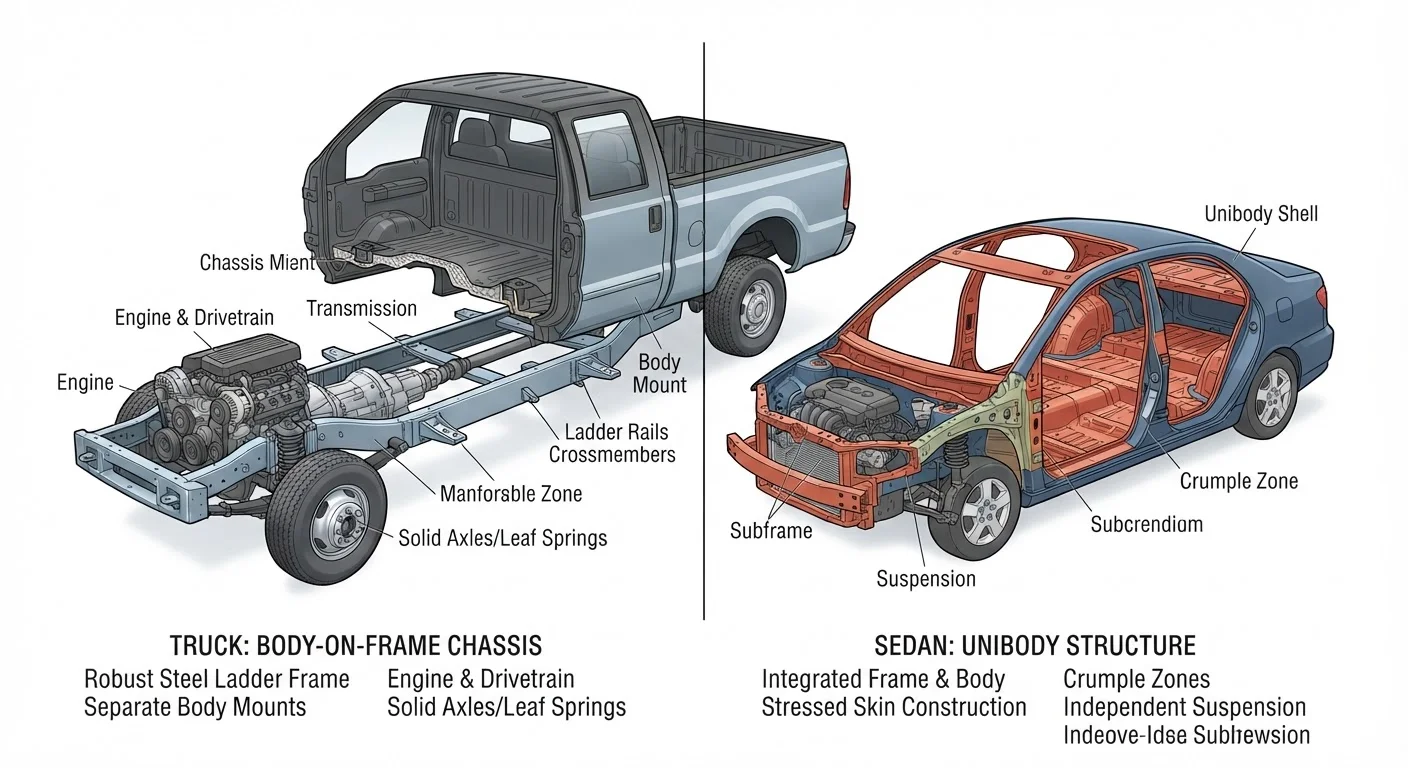
The terms SUV (sport utility vehicle) and crossover are often used interchangeably in marketing, but they reflect different engineering approaches. Traditional SUVs are built on a body-on-frame platform — the same construction used for pickup trucks — which supports serious off-road use and higher tow ratings. Crossovers use a unibody platform shared with cars, offering better ride quality and fuel economy. Understanding body-on-frame vs. unibody construction helps clarify why these vehicles behave so differently despite similar appearances.
Pickup Trucks
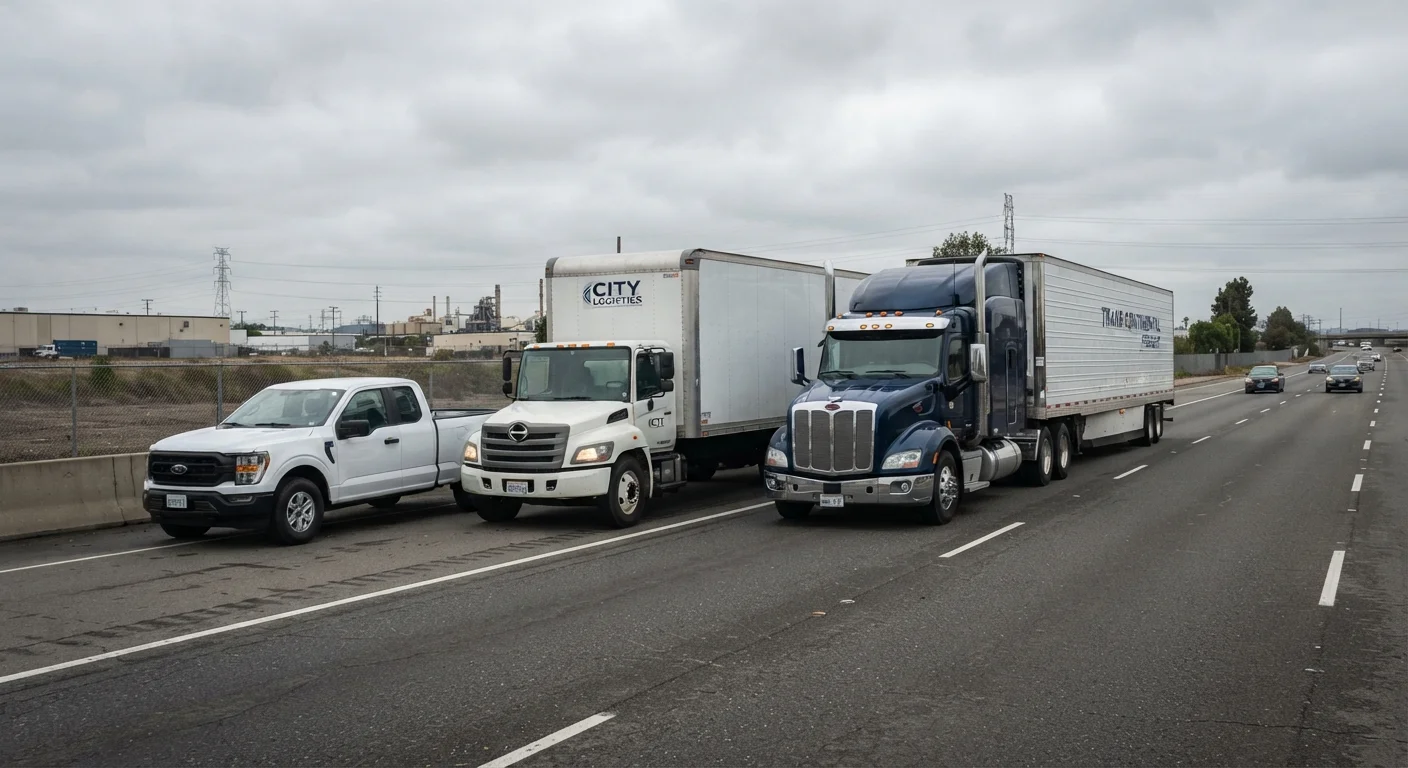
Pickups feature an open cargo bed separate from the passenger cab. They are available in several cab configurations (regular, extended, and crew) and bed lengths. Light-duty half-ton trucks serve personal and light commercial use; heavier-duty variants are rated for substantially greater payload and towing capacity. For a thorough breakdown of duty ratings, see the full spectrum of light-duty to heavy-duty trucks.
Minivans and Vans
Minivans prioritize passenger capacity and interior access, typically seating seven or eight with sliding rear doors. Full-size passenger vans extend this capacity further. Cargo vans share the same basic body but eliminate rear seating in favor of enclosed load space — common in commercial delivery fleets.
Wagons and Hatchbacks
Station wagons extend the roofline rearward to merge the passenger and cargo areas, retaining a traditional trunk door. Hatchbacks apply the same concept to smaller vehicles, adding a rear liftgate to a compact or mid-size car body. Both offer more practicality than a comparable sedan without the height or bulk of an SUV.
Body-on-Frame
A construction method in which the vehicle's body is built separately and mounted on a rigid steel frame. Common in traditional SUVs and pickup trucks; supports higher tow and payload ratings.
Unibody
A construction approach in which the body and frame are integrated into a single structure. Most crossovers and passenger cars use this method, which generally provides better ride comfort and fuel efficiency.
Light Truck
A regulatory category defined by NHTSA that includes pickup trucks, SUVs, crossovers, and minivans. Light trucks are subject to different fuel economy and safety standards than passenger cars.
Payload Capacity
The maximum combined weight a truck or van can carry in its bed or cargo area, including passengers and gear. Payload ratings are established by the manufacturer and should not be exceeded.
Powertrain
The system that generates and delivers power to the wheels, including the engine (or electric motor), transmission, and drivetrain components.
Crossover (CUV)
A crossover utility vehicle built on a car-based unibody platform. Often marketed alongside traditional SUVs despite significant engineering differences in frame construction and off-road capability.
Powertrain type cuts across all these body styles. If you're evaluating electrified options, sorting out hybrid system differences is a useful companion reference. And for vehicles beyond four wheels, motorized two- and three-wheel vehicles covers motorcycles, scooters, and trikes.