
Why Motorcycle Class Matters Before You Ride
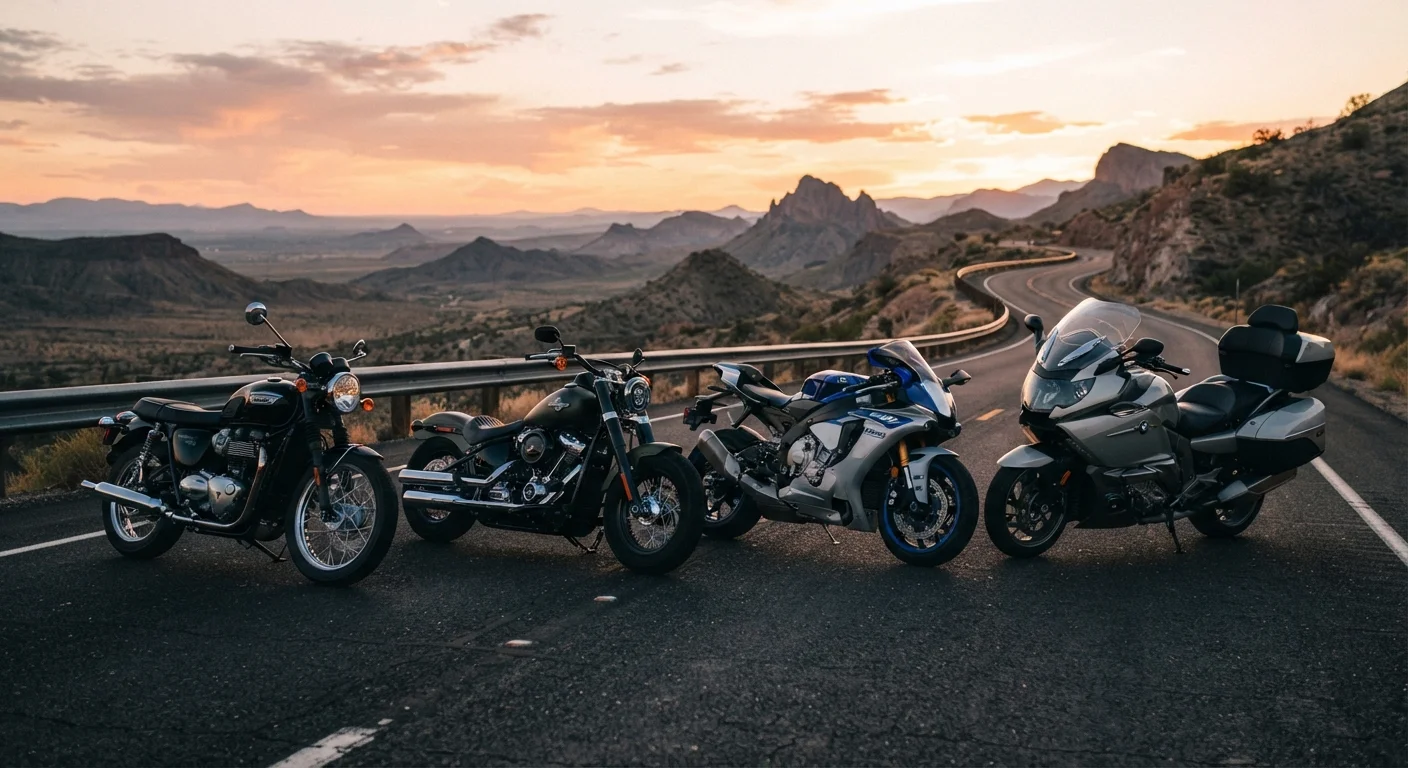
Walk into any motorcycle dealership and you'll encounter machines that look nothing alike — low-slung bikes with wide handlebars, crouched racers in bright fairings, upright commuters, and hulking highway cruisers bristling with luggage. These aren't just aesthetic choices. Each motorcycle class reflects a specific engineering philosophy built around how, where, and why riders use it.
Choosing a class that fits your actual riding habits — commuting, weekend canyon runs, cross-country touring — makes every ride more comfortable, safer, and more enjoyable. Choosing the wrong class means fighting the bike's design every time you're in the saddle. If you're still figuring out what kind of vehicle suits your life overall, see this practical framework for matching vehicle type to real driving patterns.
The four classes covered here — standard, cruiser, sport, and touring — represent the broadest and most populated segments of the American motorcycle market. Understanding what separates them puts you in a much stronger position to evaluate any specific model.
Standard (Naked)
The standard motorcycle — also called a naked bike — is the baseline configuration from which most other classes evolved. Its defining characteristic is an upright, neutral riding position: the rider sits with a relatively straight back, hands reaching forward to flat or slightly raised handlebars, and feet positioned directly below the hips.
Standards typically feature mid-sized engines (often 300cc to 750cc for entry-level models, larger for experienced riders), minimal bodywork, and a center of gravity that makes low-speed maneuvering intuitive. Because the ergonomics don't punish the rider for city stops and starts, they're frequently recommended for newer riders building foundational skills.
That said, standards aren't limited to beginners. Many experienced riders gravitate back to them for daily commuting precisely because the position is sustainable over mixed urban and suburban routes. The lack of fairings also makes maintenance more accessible, since engine components are easier to reach.
The standard's upright riding position makes it one of the most forgiving classes for new and returning riders alike.
Cruiser
Cruisers are defined as much by cultural identity as engineering. Originating from American motorcycle traditions, they feature a long, low profile with a stretched-out riding position: feet pushed forward on forward controls, handlebars pulled back toward the rider, and a seat close to the ground. This posture is relaxed and well-suited to straight-line highway riding at moderate speeds.
Engine displacement in cruisers tends to run large — V-twin configurations producing strong low-end torque are common — but the emphasis is on steady, rolling power rather than peak performance. Weight is typically higher than in standards or sport bikes, which affects handling in tight urban environments.
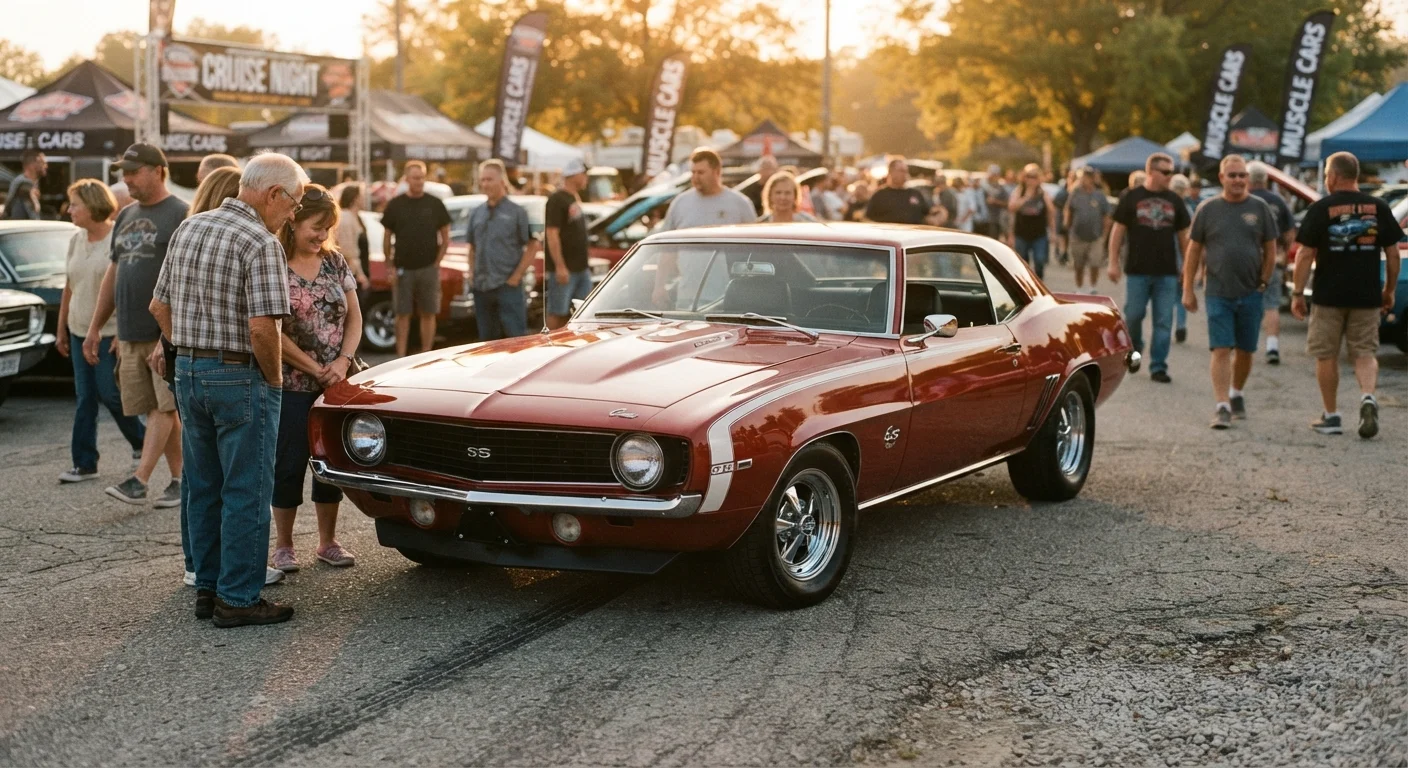
The low seat height (often 26–28 inches) is a genuine functional advantage for shorter riders who want both feet flat on the ground at stops. Cruisers also have a strong aftermarket parts culture, with extensive options for customization in both appearance and function. Some vintage and custom cruisers have crossed into collector territory — context worth exploring in how classification works for historic vehicles.
Cruisers trade cornering agility for low-end torque and a relaxed highway posture built for straight-road miles.
Sport
Sport bikes are purpose-engineered for performance: high-revving engines, lightweight frames, and aerodynamic fairings that minimize drag at speed. The riding position is aggressive — the rider leans sharply forward over the tank, weight on the wrists, with rear-set footpegs that raise the knees. This posture optimizes control at high speeds and improves aerodynamics but becomes uncomfortable on longer rides or in stop-and-go traffic.
Engine configurations vary widely, from inline-four cylinders to parallel twins, and displacement ranges from 300cc entry-level machines to 1000cc supersports. Suspension, braking systems, and chassis geometry are tuned for precise, responsive handling — particularly in corners.
Sport bikes are not inherently more dangerous than other classes, but their performance envelope is higher, which demands more disciplined throttle and braking technique. Many experienced riders recommend completing an advanced rider training course before regularly riding a full-power sport machine. Insurance premiums on sport bikes also tend to be higher, reflecting their performance characteristics and claims history — general information worth verifying through a licensed insurance agent for your specific situation.
Sport bikes deliver unmatched corner precision, but their aggressive riding position extracts a toll on long-distance comfort.
Touring
Touring motorcycles are built around one core premise: covering long distances in sustained comfort. They are the largest and heaviest class discussed here, typically weighing 700–900 pounds fully loaded. In exchange for that mass, they offer an extensive suite of features: large integrated saddlebags and top cases, substantial wind fairings and deflectors, tall windscreens, comfortable seat cushioning for both rider and passenger, and increasingly, electronic amenities such as navigation, audio systems, and heated grips.
The riding position is relaxed and upright, closer to a cruiser than a sport bike, with a footboard configuration on many models rather than traditional footpegs. Engines are large-displacement units producing smooth, sustained power suited to sustained highway speeds over many hours.
Because of their size and weight, tourers handle differently from lighter machines — particularly at low speeds and in parking maneuvers. Riders transitioning from a standard or sport bike to a full tourer benefit from familiarization time in low-traffic environments before tackling heavy traffic or mountain roads.
For those drawn to vehicle categories built around long-distance travel in a different form, understanding motorhome classifications offers a useful parallel look at how size and purpose shape vehicle design.
Touring bikes sacrifice agility for endurance — designed to carry riders hundreds of highway miles in genuine comfort.
Finding the Right Fit for Your Riding Life
No single class is objectively superior — each involves trade-offs between comfort, performance, versatility, and cost. A sport bike's handling precision comes at the expense of long-ride comfort. A tourer's wind protection and cargo capacity add significant weight. A cruiser's low seat height aids new riders but limits lean angle in aggressive cornering.
Try Before You Commit
Many motorcycle safety courses, such as those offered through the Motorcycle Safety Foundation (MSF), provide training bikes so you can experience different ergonomics before purchasing. Sitting on multiple classes at a dealership — with the bike on flat ground rather than a stand — gives a realistic sense of reach, seat height, and balance that no specification sheet can replicate.
Riders who regularly switch between city commuting and weekend highway miles often find that standard and adventure-touring bikes straddle multiple use cases better than dedicated sport or cruiser models. If your interests extend beyond motorcycles into other classic or vintage segments, a guide to the classic car world offers useful context on how vehicle categories evolve over time. For a broader look at motorized two- and three-wheelers — including scooters and trikes — this overview explains how they differ in design and licensing from full motorcycles.
Understanding the class is the first step. From there, seat time — ideally through a rider training course or demo ride — is the only way to know whether a bike's geometry, controls, and feel genuinely match the way you ride.