
Why Budget Eating Often Gets Nutrition Wrong
The assumption that eating well costs more is understandable — health food marketing has spent decades reinforcing it. But nutrition science tells a different story. Many of the most nutrient-dense foods available are also among the least expensive: dried legumes, whole grains, eggs, canned fish, and seasonal vegetables. The challenge isn't access to affordable nutritious food so much as knowing how to identify and use it confidently.
Where budget eating tends to go wrong is in substituting highly processed, calorie-dense foods that feel filling but deliver little micronutrient value. Understanding a few core principles from nutrition science can shift those decisions without requiring a specialty grocery store or a premium price tag. See our guide on how well-meaning food habits can quietly go wrong for patterns worth recognizing.
This Is General Nutrition Information
The guidance in this article is intended for general educational purposes and does not constitute personalized medical or dietary advice. Individual nutritional needs vary by age, health status, and other factors. For guidance tailored to your specific circumstances — particularly if you manage a chronic condition or have specialized dietary requirements — consult a registered dietitian or qualified healthcare professional.
Best Practices for Nutritious, Affordable Meals
These principles are grounded in dietary patterns that nutrition research and public health bodies consistently support. None require expensive ingredients or elaborate preparation.
Build meals around legumes and whole grains as primary protein and energy sources.
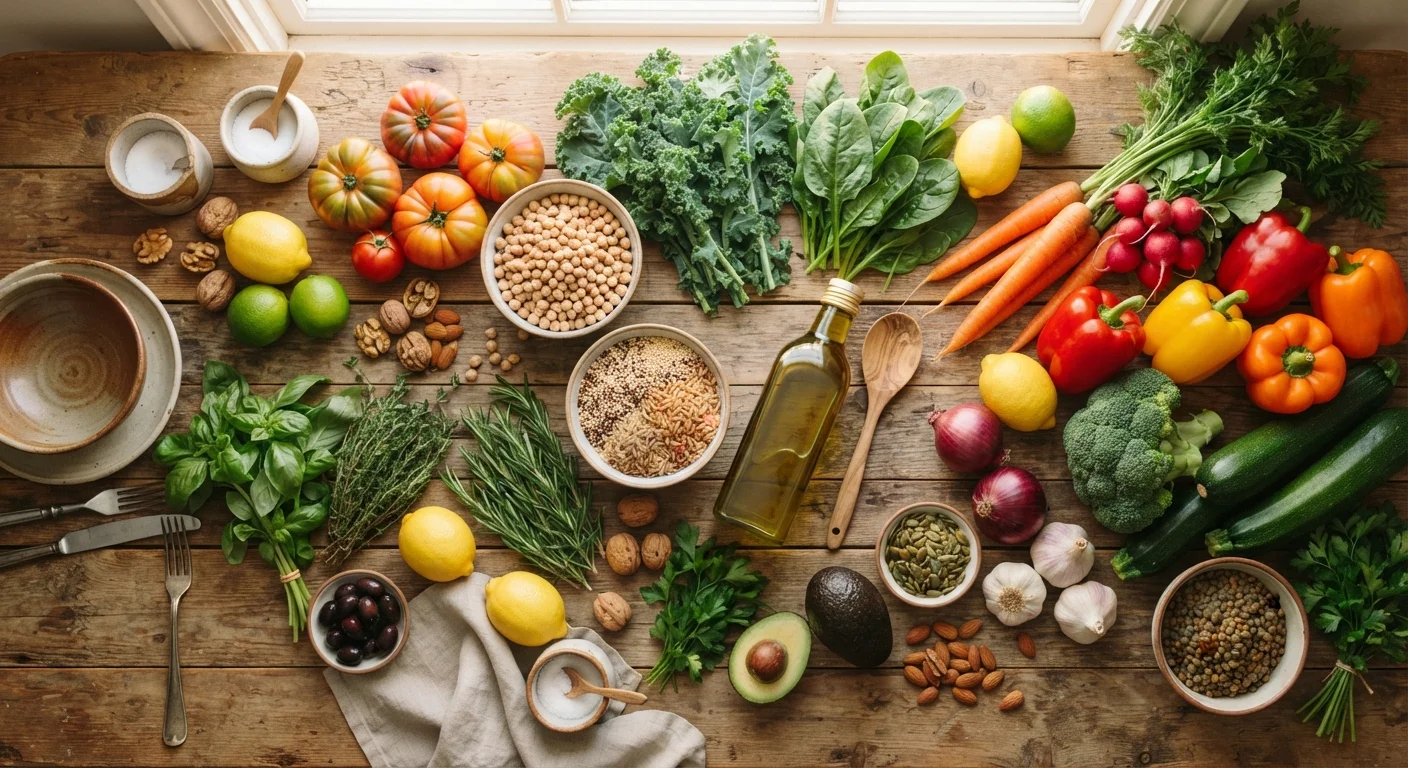
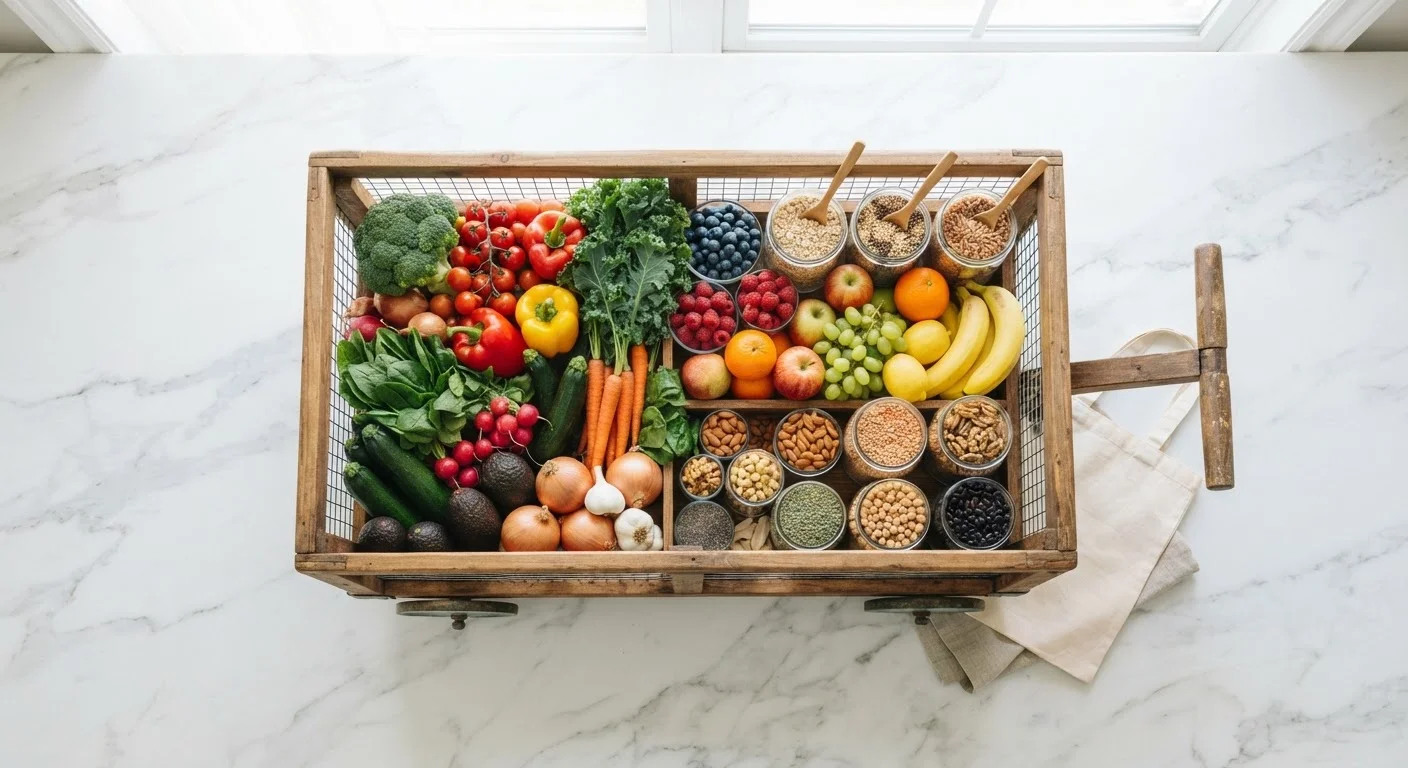
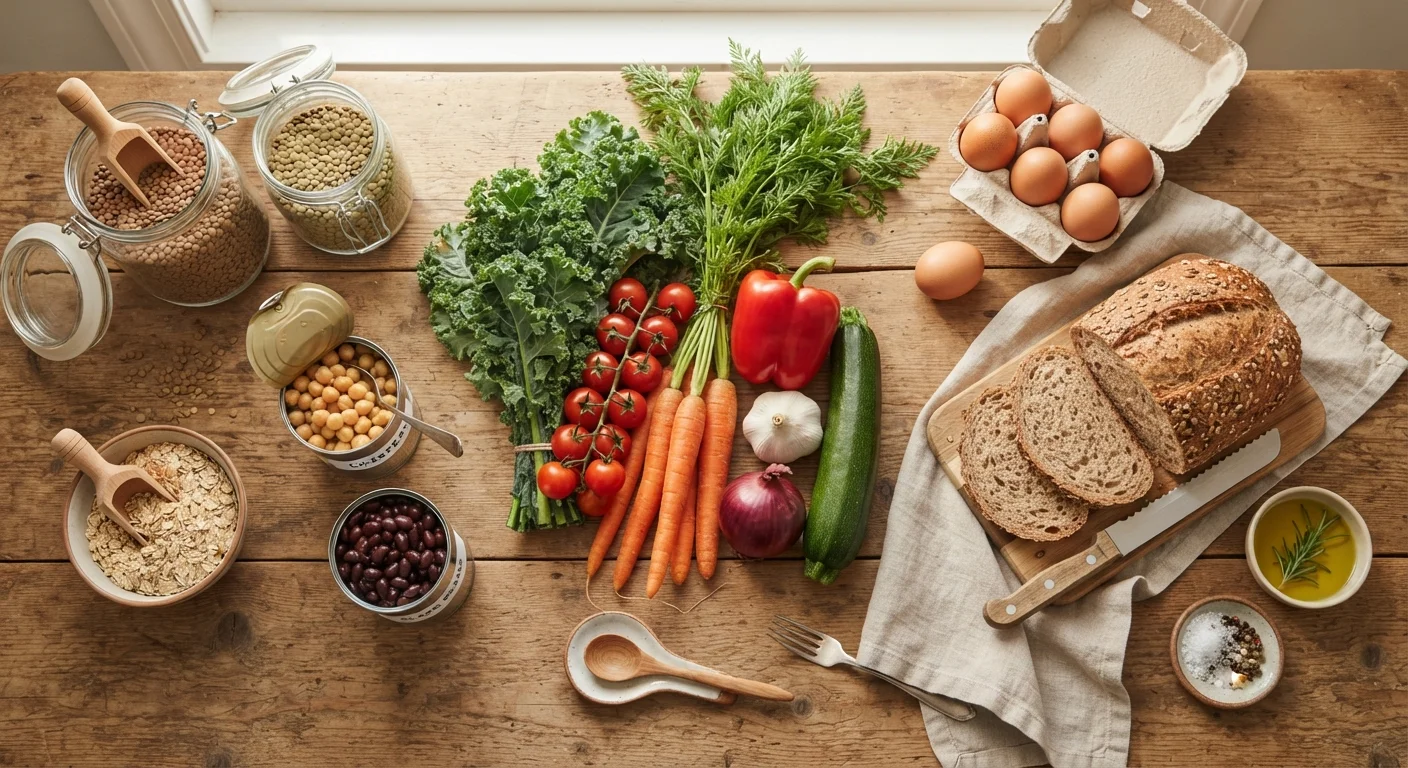
Dried beans, lentils, chickpeas, and whole grains like oats, brown rice, and barley are among the most nutrient-dense foods per dollar available. They provide fiber, plant-based protein, B vitamins, and minerals — nutrients consistently linked to long-term health outcomes in large epidemiological studies.
Prioritize frozen and canned vegetables over skipping vegetables entirely.
Research consistently shows that commercially frozen vegetables retain their vitamin and mineral content comparably to fresh — and often better than fresh produce stored several days after harvest. Canned vegetables, especially low-sodium varieties, are similarly nutritious and shelf-stable. Cost should not be a barrier to vegetable intake.
Plan meals before shopping and build a list you commit to.
Unplanned grocery shopping is one of the primary drivers of both overspending and food waste. A USDA analysis estimated that U.S. households discard 30–40% of their food supply — waste that directly erodes budget efficiency. A short weekly meal plan converts that waste into intentional use.
Use eggs as a versatile, complete protein anchor.
Eggs contain all nine essential amino acids and are rich in choline, vitamin D, B12, and selenium — a nutrient profile that compares favorably with far more expensive animal proteins. Nutrition researchers frequently describe eggs as one of the most cost-effective whole foods available.
Read the Nutrition Facts label to evaluate cost per nutrient, not just cost per item.
Price alone is a poor guide to food value. A cheap, highly processed food can cost less per serving than a whole food while delivering far fewer vitamins, minerals, or fiber. Comparing fiber content, protein per serving, and sodium levels helps identify genuine budget value rather than apparent savings.
For a closer look at how these principles map to well-studied dietary approaches, see our comparison of Mediterranean, DASH, and whole foods eating patterns. And when you're ready to translate these ideas into a grocery list, our nutrition-focused grocery shopping checklist can guide your next store visit.
Building Meals Around Nutritional Density
Nutritional density — the concentration of vitamins, minerals, fiber, and protein relative to calories — is the most useful lens for evaluating affordable food. Plant-forward eating aligns particularly well with budget priorities. Replacing a portion of weekly meat consumption with beans, lentils, or tofu can substantially reduce grocery costs while maintaining protein and fiber intake.
“The most nutritious diets in the world are built on simple, inexpensive staples — beans, grains, vegetables, and modest amounts of animal foods. Cost and quality are not opposites in nutrition.”
— Walter Willett, Professor of Epidemiology and Nutrition, Harvard T.H. Chan School of Public Health
Our overview of plant-based eating patterns covers key nutrients to monitor when shifting in this direction. For a detailed breakdown of what specific vitamins and minerals do and where to find them affordably, our quick-reference micronutrient guide is a useful companion.
Seasonal and Store-Brand Produce Saves More
Seasonal produce is typically cheaper because it is more abundant and requires less transportation. Store-brand canned or frozen vegetables carry the same nutritional profile as name-brand equivalents. Rotating purchases based on what is in season adds variety while keeping weekly costs predictable.
Turning Principles Into Habits Starting Now
The gap between knowing what to do and actually changing habits is often a matter of starting small. These are concrete, low-effort adjustments that align everyday grocery and cooking decisions with sound nutrition — without requiring a major overhaul of how you eat.
If you are also building financial habits to support consistent grocery budgeting, the framework for savings planning around real life offers practical starting points. Nutrition across different life stages also brings unique considerations — our article on how dietary needs shift across the lifespan explores why one-size-fits-all guidance has its limits.
This article is for general informational and educational purposes only and does not constitute medical or dietary advice. Individual nutritional needs vary. Consult a qualified healthcare professional or registered dietitian for guidance tailored to your personal health circumstances.