
Carbohydrates: Your Body's First Choice for Fuel
Carbohydrates are broken down into glucose, which circulates in the bloodstream and powers cells throughout your body. The brain, in particular, relies almost exclusively on glucose under normal conditions — it consumes roughly 20% of your body's total energy despite making up only about 2% of body weight.
Not all carbohydrates behave the same way. Simple carbohydrates — found in refined sugars and white flour — digest quickly and cause a rapid rise in blood glucose. Complex carbohydrates — found in whole grains, legumes, and vegetables — digest more slowly, providing sustained energy and significant dietary fiber. Fiber supports digestive health, feeds beneficial gut bacteria, and helps regulate blood sugar response.
When carbohydrate intake exceeds immediate energy needs, glucose is stored as glycogen in the liver and muscles. These glycogen stores are tapped during physical activity or fasting before the body turns to fat for fuel. This is why athletes often prioritize carbohydrate intake around training sessions.
Choose Whole-Food Carbohydrate Sources
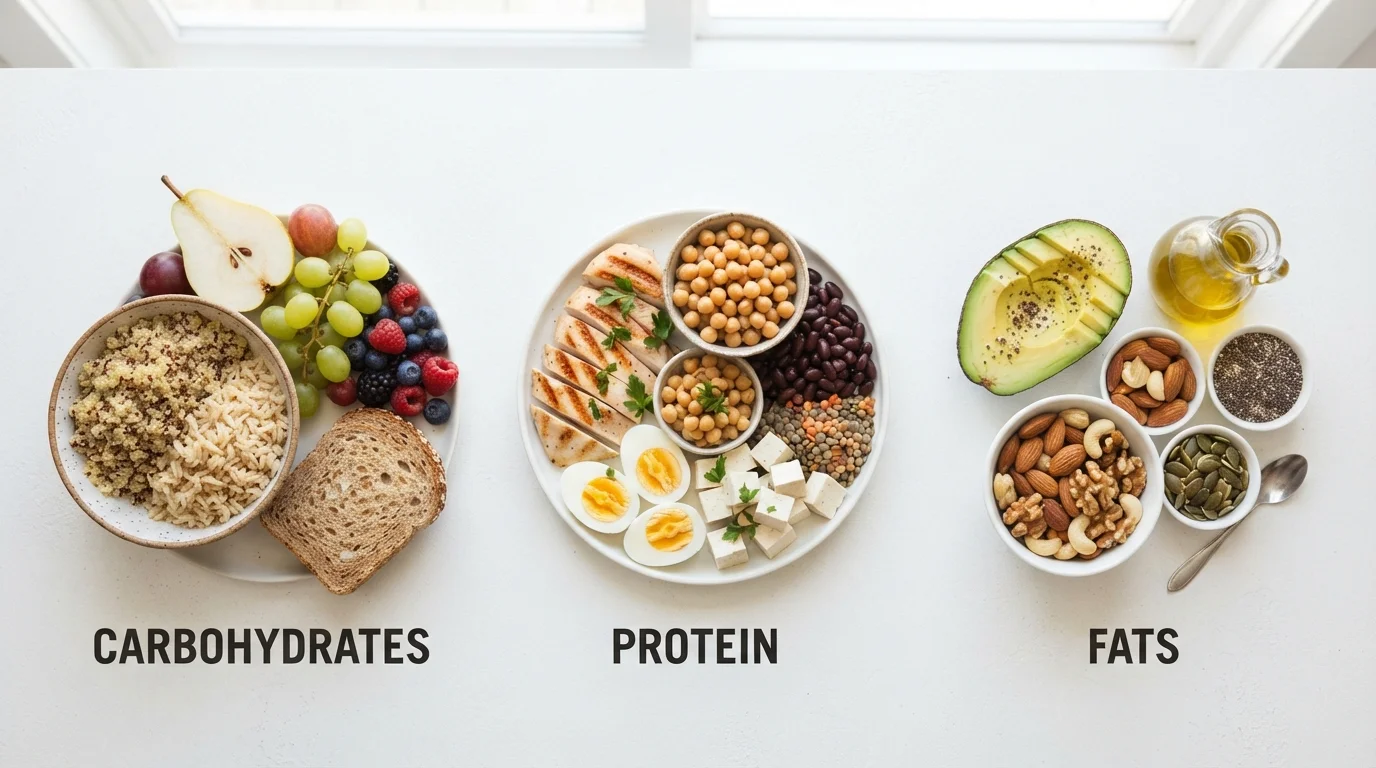
Whole grains, legumes, fruits, and vegetables provide carbohydrates alongside fiber, vitamins, and minerals — a nutritional package that refined sources largely strip away. Prioritizing these foods supports steadier energy levels and better long-term health markers compared to a diet heavy in refined carbohydrates and added sugars.
Choosing whole-food carbohydrate sources over heavily refined ones is one of the most consistent recommendations across major nutrition guidelines worldwide.
Protein: Builder, Repairer, and Regulator
Protein is made up of smaller units called amino acids, of which 20 are used by the human body. Nine of these are classified as essential — meaning the body cannot synthesize them and must obtain them from food. Animal sources such as meat, eggs, and dairy tend to supply all nine essential amino acids in adequate proportions, making them complete proteins. Many plant sources lack one or more essential amino acids, but a varied plant-based diet can meet needs across the day without requiring any single meal to be nutritionally perfect.
Protein's roles extend far beyond muscle building. Enzymes that drive chemical reactions, antibodies that defend against infection, and hormones like insulin are all proteins. Structural proteins such as collagen hold connective tissue together, while transport proteins like hemoglobin carry oxygen through the blood.
~20%
Share of body's energy used by the brain
Despite representing roughly 2% of body weight, the brain accounts for approximately 20% of total resting energy expenditure, according to neuroscience research.
9 kcal/g
Energy density of dietary fat
Fat provides more than twice the calories per gram compared to carbohydrates or protein, making portion awareness relevant for calorie-conscious eating patterns.
0.8 g/kg
Minimum protein reference intake for adults
The U.S. Dietary Reference Intakes recommend 0.8 grams of protein per kilogram of body weight daily as a baseline for sedentary adults, with higher amounts for active individuals.
Because protein plays such broad regulatory roles, chronically low intake — rather than simply affecting muscle mass — can impair immune function, wound healing, and hormonal balance. Older adults are particularly vulnerable, as protein synthesis efficiency declines with age.
Dietary Fat: More Than Just Stored Energy
Fat carries a complicated reputation, but it is an essential macronutrient with functions that cannot be replaced by carbohydrates or protein. Most critically, dietary fat enables the absorption of fat-soluble vitamins — A, D, E, and K — which support vision, bone health, antioxidant activity, and blood clotting respectively. Without adequate fat intake, these vitamins pass through the digestive tract largely unused.
Fat also forms the structural foundation of every cell membrane in your body. The membranes surrounding cells are composed largely of phospholipids — fat-based molecules that regulate what enters and exits each cell. Omega-3 fatty acids, a class of polyunsaturated fat found in fatty fish, flaxseed, and walnuts, are particularly important for brain structure and reducing systemic inflammation.
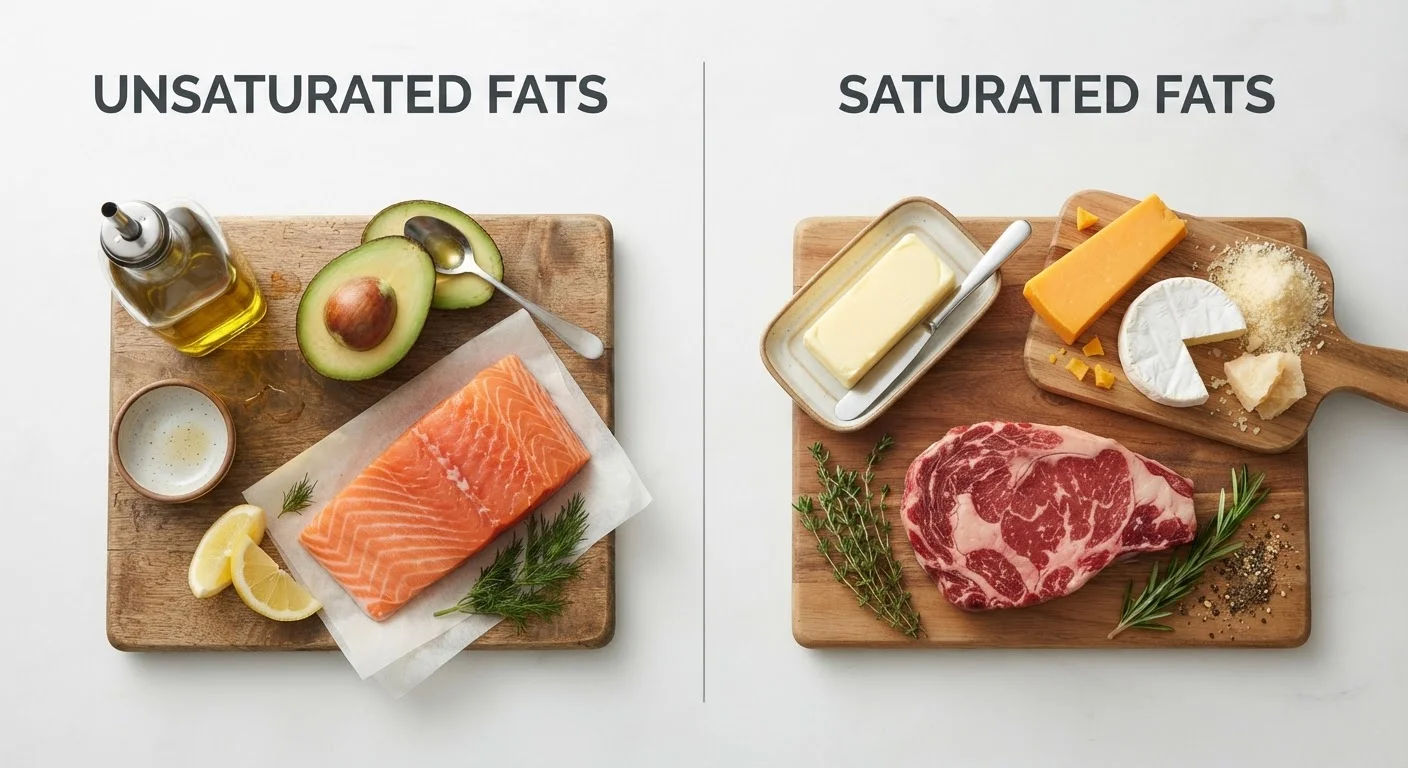
Dietary fats are broadly categorized as saturated, unsaturated (monounsaturated and polyunsaturated), and trans fats. Current evidence broadly supports prioritizing unsaturated fats while limiting saturated fat and avoiding artificial trans fats. For a detailed comparison of how these types differ physiologically and what guidance says about each, see our article on saturated fat vs. unsaturated fat.
Fat and Calorie Density: Context Matters
Because fat contains roughly 9 calories per gram — more than double carbohydrates or protein — portion sizes of high-fat foods affect total calorie intake more quickly. This does not mean fat should be avoided; it means that dietary context matters. A small handful of nuts offers healthy fats and meaningful satiety, while calorie-dense foods eaten without awareness of portion size can tip overall intake higher than intended.
Why Balance Across All Three Macronutrients Matters
Popular diets often demonize one macronutrient while glorifying another — low-fat in one era, low-carb in the next. Mainstream nutrition science, however, consistently points away from eliminating any macronutrient entirely and toward optimizing the quality of each.
Macronutrients also interact. Protein and fat slow the digestion of carbohydrates, moderating blood glucose response. Fat is necessary to absorb certain antioxidants — like the lycopene in tomatoes — that are found in carbohydrate-rich plant foods. Protein synthesis is more efficient when calorie intake is adequate, meaning low-energy periods can limit the body's ability to use dietary protein effectively.
Understanding what each macronutrient actually does makes it easier to evaluate popular nutrition claims with a more critical eye. Many persistent myths — such as the idea that eating fat makes you fat, or that carbohydrates are inherently harmful — rest on oversimplifications of how these nutrients operate. Our article on nutrition myths that refuse to die examines those claims against the evidence. For readers curious about the parallel world of micronutrients, the vitamins and minerals quick-reference guide offers a useful companion overview.
This article is for general informational and educational purposes only and is not a substitute for professional medical or dietary advice. Consult a qualified healthcare provider or registered dietitian for guidance specific to your health needs.