
How Real Estate Listings Are Created and Distributed
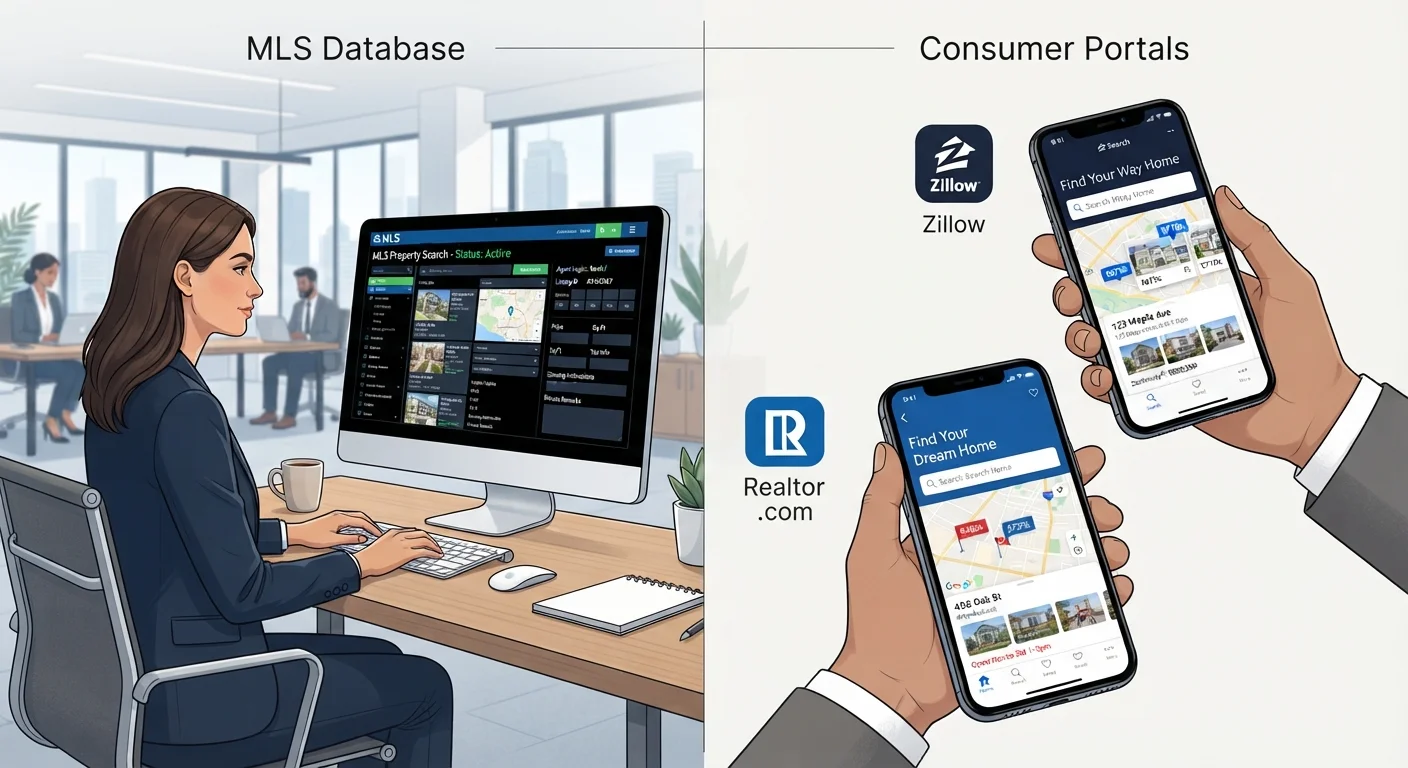
Every property listing you see online begins in one place: the Multiple Listing Service (MLS). The MLS is a private, cooperative database maintained by local and regional associations of real estate professionals. When a seller hires a licensed agent, that agent inputs the property's details — price, square footage, photos, disclosures — directly into the MLS. From there, the listing becomes available to every other participating broker and agent in that market.
Consumer-facing websites like Zillow and Realtor.com do not independently gather listing data. They receive it through data-sharing agreements with MLS organizations. This distinction matters: the MLS is the origin point, while aggregator sites are downstream recipients. Any delay, filtering, or error introduced in that transfer affects what buyers see. For a deeper look at how listings work in practice, see our guide to interpreting a real estate listing.
MLS: The Authoritative Source
There is no single national MLS. Instead, roughly 500–600 regional MLS organizations operate across the country, each serving a defined geographic area. Access is restricted to licensed real estate professionals who are members of the relevant association. This gatekeeping serves a purpose: it ensures listing data is submitted by accountable parties and meets minimum accuracy standards.
When an agent pulls listings for a buyer client, they are working directly inside the MLS — seeing price changes, status updates (active, pending, contingent, sold), and listing notes the moment they are entered. That real-time access is fundamentally different from what consumers see on public portals. Sellers considering their options should also review flat-fee MLS vs. full-service listing to understand how MLS entry affects their exposure.
| MLS | Realtor.com | Zillow | |
|---|---|---|---|
| Data origin | Primary source | MLS feed via NAR agreement | MLS feeds + broker/FSBO data |
| Public access | Licensed agents only | Open to consumers | Open to consumers |
| Listing refresh rate | Real-time | ~15 min (varies by MLS) | Varies; can be hours or longer |
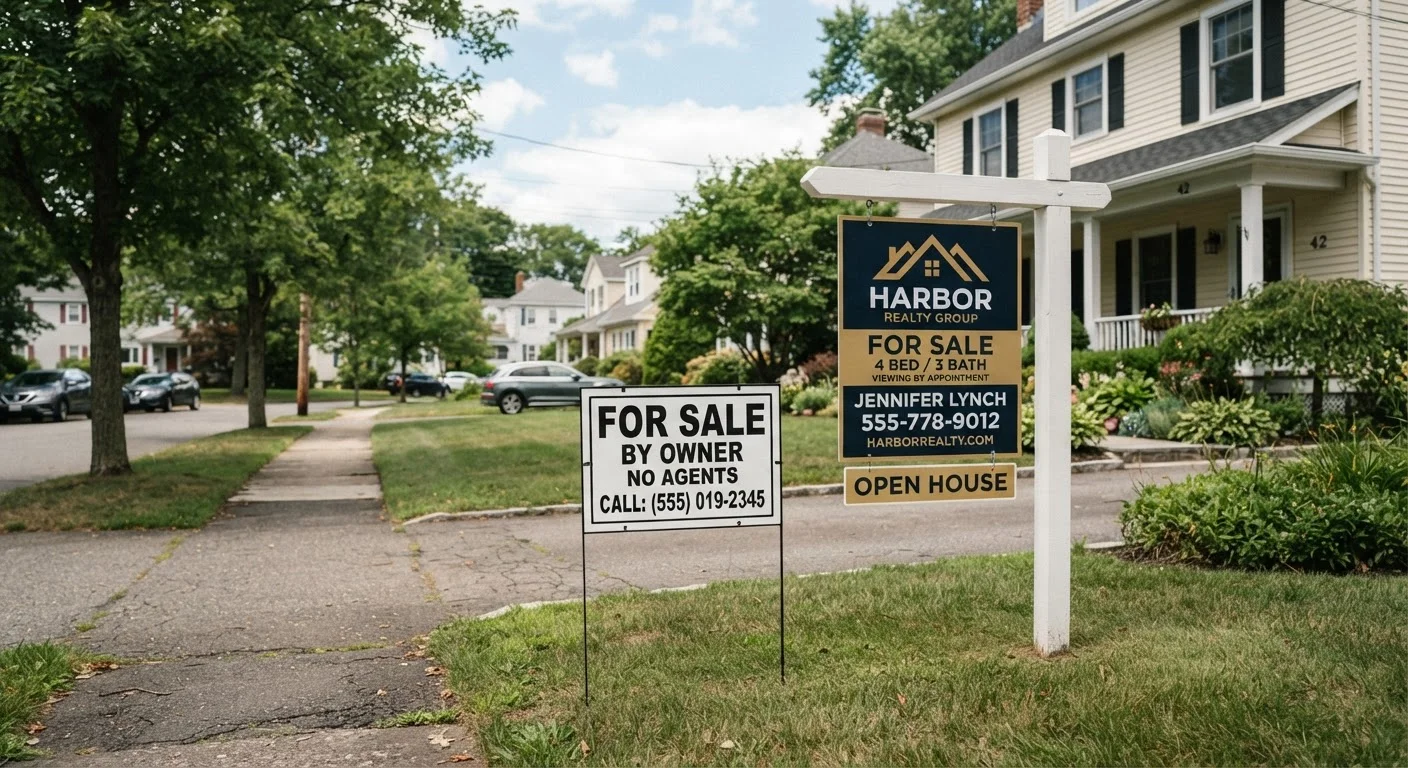
| FSBO/non-MLS listings | Not included | Limited | Yes, user-submitted allowed |
| Status accuracy | Highest | High for participating MLSs | Variable; lags common |
| Coverage completeness | Regional and complete | Broad; some opt-outs | Broad; gaps possible |
Zillow and Realtor.com: Aggregators With Different Data Pipelines
Realtor.com operates under a formal data licensing relationship with the National Association of Realtors (NAR), which gives it direct feeds from a large share of MLS organizations. As a result, Realtor.com typically refreshes listing data more frequently than most competing portals — often every 15 minutes for participating MLSs — though refresh rates still vary by region.
Zillow aggregates data through a combination of direct MLS feeds, broker partnerships, and user-submitted listings (known as "Make Me Move" or FSBO entries). This broader intake means Zillow sometimes shows properties that never entered the MLS, such as for-sale-by-owner listings. However, it also means data quality is less uniform. Status lags — where a home appears active on Zillow after going under contract — are a documented consumer frustration. Our article on real estate listing myths that confuse buyers covers how these gaps can mislead shoppers.
Cross-Check Listings Before Acting
If you find a property on Zillow or Realtor.com that interests you, ask your agent to pull the current MLS record before scheduling a showing. Status changes — price reductions, pending contracts, or withdrawn listings — often appear in the MLS hours or days before consumer sites reflect them. This simple step can save significant time and prevent false expectations.
Neither portal shows every listing in every market, and neither updates instantaneously. Buyers who spot a property on a consumer site should confirm its current status with an agent before investing significant time.
What This Means for Buyers and Sellers
For buyers, consumer portals are reasonable starting points for geographic exploration, price range filtering, and neighborhood comparisons. However, relying on them as a sole source introduces risk: listings may be stale, status may be inaccurate, and some MLS-listed properties may not appear at all if a broker has opted out of data syndication. Working with an agent who provides live MLS access closes these gaps. When evaluating two seemingly identical properties, a structured review of the underlying listing data is essential — see how to compare two similar listings side by side.
For sellers, MLS entry is the foundational step that drives visibility across all downstream platforms. A listing not in the MLS will not appear on Realtor.com's primary feed and may have limited Zillow exposure. Understanding the difference between agent-listed and FSBO pathways — covered in for sale by owner vs. agent-listed properties — helps sellers weigh the tradeoffs of MLS access against listing costs.
~500–600
Regional MLS organizations in the U.S.
The National Association of Realtors notes that MLS organizations are locally governed, with no single national database covering all markets.
~90%
Home searches that start online
NAR research has consistently found that the vast majority of buyers use the internet at some point in their home search, making portal accuracy consequential.
Ultimately, these platforms serve different masters. The MLS is built for professionals who need precision. Consumer aggregators are built for reach and convenience. Knowing the difference helps both buyers and sellers use each tool appropriately.