

The One Variable That Changes Everything
Walk into any room and the first thing people notice about what you're wearing isn't the label — it's the shape. A garment that fits your proportions creates clean, confident lines. One that doesn't — even if it carries a premium name — immediately reads as off. Fit is not a luxury concern. It's the foundational variable in how clothing communicates, and it applies equally to a $20 shirt and a $200 one.
This is something experienced stylists and tailors have long understood: the most expensive garment in the room can look sloppy if it doesn't fit the person wearing it, while a simple, affordable piece can look elevated simply because it sits correctly. As a practical matter for everyday wardrobes, prioritizing fit over brand recognition or price point is one of the most effective style decisions a person can make.
Style lessons that take most people years to learn often center on exactly this: the realization that chasing labels and ignoring fit leads to a closet full of clothes that never quite look right.
~60%
Clothes in the average wardrobe rarely worn
Industry research and wardrobe studies consistently find that most people regularly wear only a fraction of their wardrobe, often citing poor fit as a key reason items go unworn.
3 points
Critical fit areas to check before buying
Shoulder seam position, chest width, and trouser rise are the three fit points most difficult to alter — making them the most important to evaluate at the point of purchase.
Why Size Labels Are Unreliable Guides
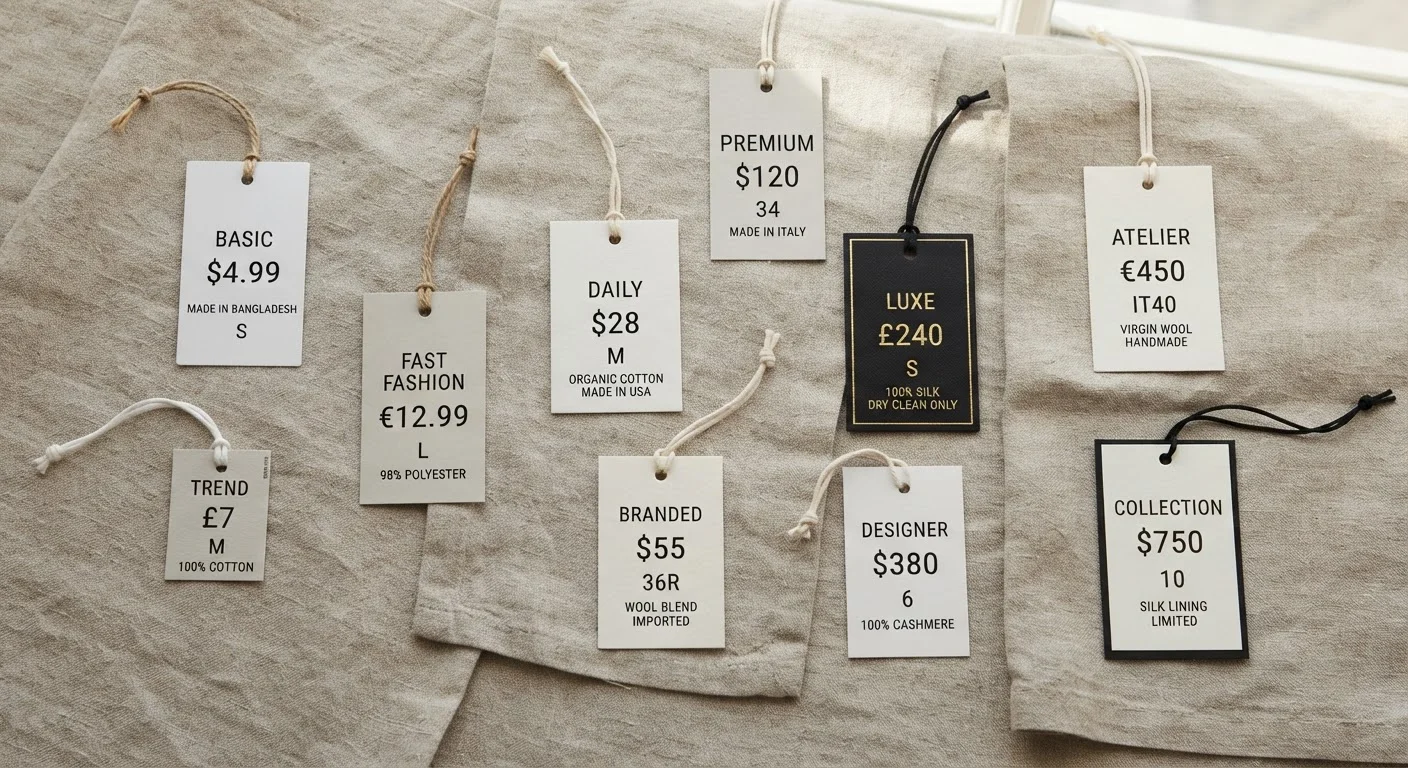
One of the most persistent obstacles to good fit is over-reliance on size numbers. Unlike shoe sizing, clothing size is not standardized in the United States. A garment labeled a medium in one brand may measure several inches larger or smaller in chest or waist width than a medium from another brand. This variation isn't a flaw in the system — it reflects the fact that different brands design for different customer proportions.
The practical consequence is that your size is not a fixed number. It changes between brands, between garment types, and sometimes between product lines within the same brand. Fit is something you assess by trying a garment on, checking the key fit points against your own measurements, or consulting a brand's specific size chart rather than assuming the label will hold.
Price doesn't guarantee quality or fit — and neither does any particular number sewn into a collar. Training yourself to evaluate fit independent of size label is a shift that immediately improves the quality of wardrobe decisions.
The Fit Points That Matter Most
Not all fit issues are equal. Some are easy to correct with a basic alteration; others require significant reconstruction that may cost more than the garment is worth. Knowing which fit points are critical helps you decide at the point of purchase what's workable and what isn't.
- Shoulder seam position: This should sit precisely at the edge of the shoulder. A shoulder seam that droops onto the arm or pulls toward the neck changes the entire silhouette of a garment and is the most difficult fit issue to alter.
- Chest and torso width: There should be no horizontal pulling across the chest or back. Some torso shaping can be adjusted by a tailor, but the overall width is set by the garment's cut.
- Trouser rise: The distance from waistband to crotch seam affects both comfort and how trousers hang. Rise is difficult to alter and should fit comfortably off the rack.
- Hem length: Sleeves, trouser legs, and jacket hem lengths are the easiest alterations a tailor can make — and often the most transformative.
When shoulders, chest, and rise fit correctly, what remains — a slightly long hem, a loose waist — is almost always fixable at modest cost. This is the practical case for treating those three points as non-negotiable at purchase.
Try Before You Trust the Tag
When evaluating fit in a store or checking a size chart online, focus on the shoulder seam, chest width, and rise first. If those three points feel right, most other issues — hem length, waist suppression — are straightforward to address with a basic alteration. Don't let a size number override what you observe when you actually try the garment on.
Alterations: The Affordable Upgrade Most People Skip
Basic tailoring is widely underused as a wardrobe tool. Many people assume alterations are expensive or reserved for formal wear, but common adjustments — hemming trousers, taking in a side seam, shortening sleeves — are typically straightforward and relatively low-cost at most local tailor shops. The result can be dramatic: the same garment, corrected by a couple of inches in the right places, can look like a completely different piece of clothing.
This is especially relevant for standard-cut garments that are designed to fit a wide range of body proportions. Off-the-rack clothing is made to fit many people reasonably well, not any one person exactly. A small alteration bridges that gap.
Some wardrobe staples are worth a higher upfront investment, but even those pieces benefit from tailoring if the fit isn't exact. And for affordable pieces you're already happy with, factoring in a modest alteration cost still keeps the total well below what a premium brand charges for a garment that may not fit any better.
A smaller wardrobe of well-fitting pieces consistently outperforms a large closet filled with clothes that are merely close enough. Fit is the multiplier that makes every garment you own work harder.