
Why the Wash Method Matters More Than You Think
A garment can survive years of wear and still be ruined in a single wash cycle. Delicate fabrics — silk, cashmere, lace, rayon, fine knits — are vulnerable to heat, friction, and prolonged water exposure in ways that sturdier materials are not. Choosing the wrong method can cause irreversible shrinkage, pilling, stretched-out fibers, or color loss.
The good news is that understanding a few core principles puts the decision firmly in your hands. As garment durability often comes down to care habits, not price tags, building smart laundry habits is one of the highest-return things you can do for your wardrobe.
Before anything else, check the care label. In the U.S., federal regulations require manufacturers to include care instructions that reflect at least one safe cleaning method. If a label says "Dry Clean Only," that is a meaningful warning — not a suggestion.
Hand-Washing: Maximum Control, Real Time Commitment
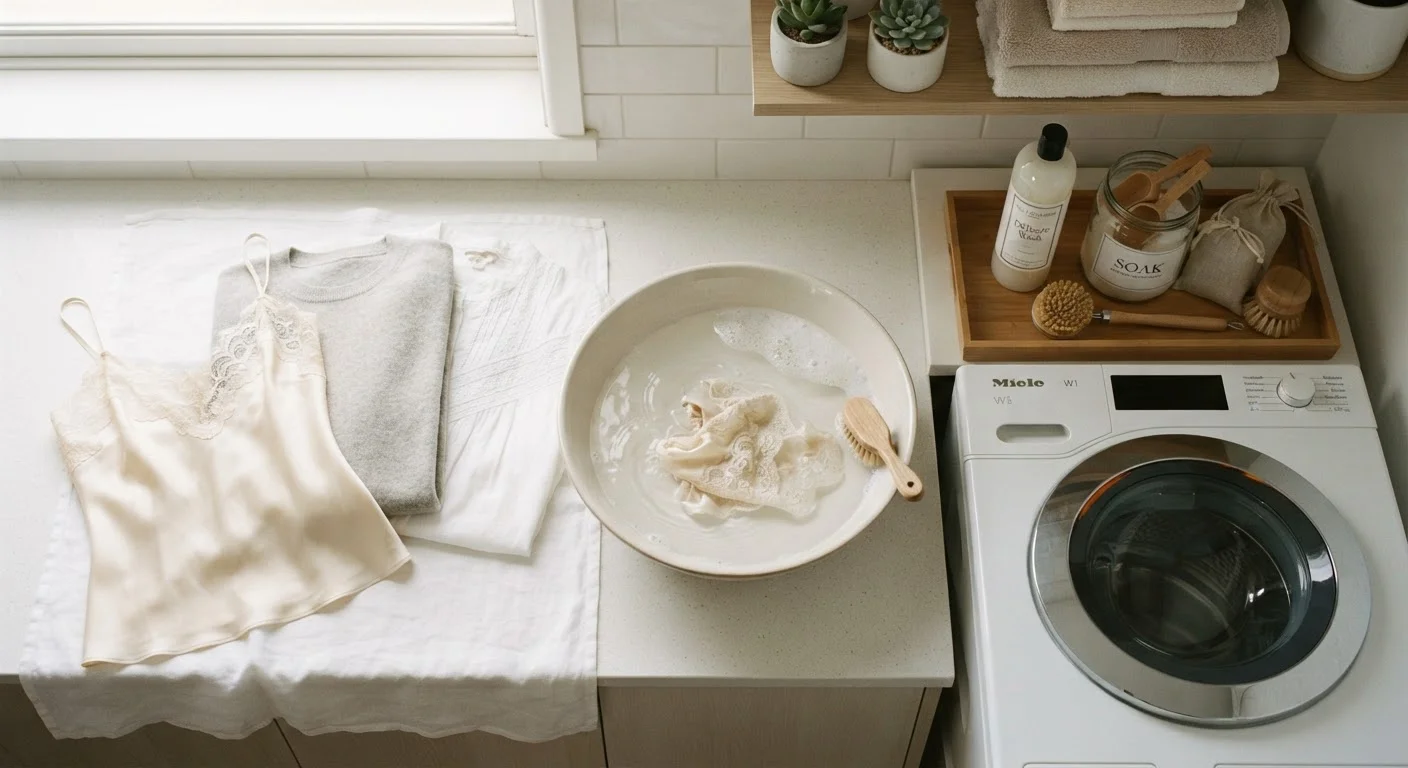
Hand-washing is the gentlest mechanical option available. You control water temperature, pressure, and duration entirely. For fabrics with delicate weaves, embellishments, or weak dye bonds, that control is genuinely protective.
How to do it effectively:
- Fill a clean basin or sink with cool or lukewarm water — hot water accelerates dye bleeding and fiber breakdown.
- Add a small amount of mild detergent formulated for delicates; avoid regular laundry detergent, which can be too alkaline for fine fabrics.
- Submerge the garment and gently squeeze — never wring, twist, or scrub. Agitation is the enemy of fragile fibers.
- Rinse thoroughly until no soap remains, then press (don't wring) excess water out against the side of the basin.
- Lay flat or hang to dry, away from direct sunlight or heat sources.
The trade-off is time. Hand-washing each item individually adds up quickly, and larger pieces like sweaters or knit dresses are cumbersome to handle in a small basin.
Test for Colorfastness Before Washing
Before washing a brightly colored or deeply dyed delicate for the first time, dampen a hidden corner and press a white cloth against it. If dye transfers, wash the item alone and in cold water to minimize bleeding onto other garments. This simple test can prevent an unpleasant surprise mid-load.
Machine-Washing on Delicate: Convenient but Not Risk-Free
Modern washing machines — particularly front-loaders — have come a long way. A properly used delicate or gentle cycle uses slow agitation speeds and shorter wash times specifically to reduce mechanical stress on fabrics. For many everyday delicates, this is adequate and saves significant time.
To reduce risk when machine-washing delicates:
- Use a mesh laundry bag to minimize direct friction between the garment and the drum.
- Select cold water and the shortest available cycle.
- Use a detergent designed for delicates or fine washables.
- Never overload — garments need room to move freely without bunching.
- Skip the spin cycle or choose the lowest spin speed available, as high-speed spinning stresses seams and stretched fibers.
Front-loading machines are generally gentler than top-loaders with a center agitator, which can catch and stress fabric unexpectedly. If your machine is older or top-loading with an agitator, apply extra caution.
| Hand-Washing | Machine Delicate Cycle | |
|---|---|---|
| Mechanical stress on fabric | Minimal — fully controlled | Low to moderate — depends on machine |
| Risk of shrinkage | Low with cool water | Low with cold water setting |
| Risk of snags or tears | Very low | Low with mesh bag; higher without |
| Time required | 10–20 min per item | 30–45 min per load |
| Best fabric suitability | Silk, lace, cashmere, embellished | Modal, microfiber, lightweight knits |
| Effort level | High — hands-on throughout | Low — set and step away |
| Control over agitation | Complete | Limited to machine settings |
Fabric-by-Fabric: Which Method Fits Which Material
Not all "delicates" are equally fragile. The fabric type should guide your decision as much as the care label.
- Silk: Hand-wash in cool water only. Silk loses tensile strength when wet and is highly susceptible to heat damage and color bleeding.
- Cashmere and fine wool: Hand-wash preferred; machine delicate is possible in a mesh bag with cold water. Hot water causes irreversible felting (shrinkage and matting).
- Lace and embellished pieces: Hand-wash only. Machine agitation — even gentle — can snag lace or loosen sewn-on beads and sequins.
- Rayon and viscose: Hand-wash or machine delicate with extreme care. These fibers weaken significantly when wet and are prone to distortion.
- Modal and microfiber: Generally machine-delicate safe; these synthetic or semi-synthetic fabrics are engineered for resilience.
- Lightweight polyester and nylon: Machine delicate is usually fine; these synthetics are durable even when wet.
The same logic that applies to fabric care applies to personal care — friction and heat are consistent culprits. Everyday habits that cause slow, cumulative damage are worth understanding across both wardrobe and hair care.
~$150–$300
Average cost to replace a ruined delicate garment
Industry estimates suggest that silk blouses and cashmere sweaters frequently fall in this price range, making proper care a meaningful financial consideration.
68°F–86°F
Recommended wash temperature range for most delicates
Textile care guidelines from fabric and garment trade organizations commonly cite cool-to-lukewarm water as the safest range for fragile natural fibers.
Drying: The Step That Often Does the Most Damage
Regardless of how carefully you wash a delicate garment, putting it in a hot dryer can undo all of that effort in minutes. Heat is the primary driver of shrinkage, fiber breakdown, and elastic degradation. For most delicate items, air drying is not optional — it is essential.
Air drying best practices for delicates:
- Lay flat for knits and structured garments to prevent stretching under their own weight.
- Hang lightweight items on a padded or wide hanger to avoid shoulder distortion.
- Reshape garments while damp — once dry, distorted fibers are much harder to correct.
- Dry in a well-ventilated area away from direct sun, which can fade dyes.
If you are ever weighing air drying against machine drying for other items in your routine, the same principle applies broadly — heat is rarely neutral. The same care considerations that protect delicate clothes extend to how you handle other routines, as explored in our look at air drying versus blow drying trade-offs.
Never Use a Hot Dryer on Delicates
Even a single cycle in a hot dryer can cause cashmere to felt, silk to lose its sheen, and elastic to degrade beyond recovery. If a garment must be machine dried, use the lowest heat or air-dry setting and remove it while still slightly damp. When in doubt, air dry every time.