
Why Breakage Sneaks Up on You
Hair breakage rarely announces itself. Most people notice it only when ponytails feel noticeably thinner, shorter strands litter the sink, or ends look uneven despite recent trims. By that point, cumulative damage has already been building for weeks — sometimes months.
The habits most responsible for that damage aren't dramatic. They're mundane: how you dry your hair after a shower, where you place your elastic, how you sleep. Each individual action creates minimal stress on the hair shaft, but repetition is the problem. Hair is a protein fiber, and like any fiber, it fatigues under repeated mechanical strain.
Understanding which habits cause the most cumulative harm is the first step toward reducing breakage without overhauling your entire routine. The list below covers the most common culprits — and what to do instead. For a broader look at habits that genuinely move the needle on hair health, see hair care habits backed by consistent evidence.
Rubbing Hair Dry with a Rough Towel
Standard terry cloth towels create significant friction against the hair cuticle — the outermost layer of each strand. Rubbing vigorously to speed up drying roughs up these cuticle scales, leaving hair more porous, prone to tangling, and vulnerable to snapping during the next styling step. Curly and coily textures are especially susceptible because the curl pattern creates more surface contact with the towel.
A better approach: blot and squeeze moisture out rather than rubbing. A microfiber towel or a plain cotton T-shirt reduces friction considerably because the weave is finer and smoother. The technique matters as much as the material — press and hold, don't drag.
Rubbing with terry cloth roughs up the cuticle and primes hair for breakage during styling.
Using Standard Elastics in the Same Spot
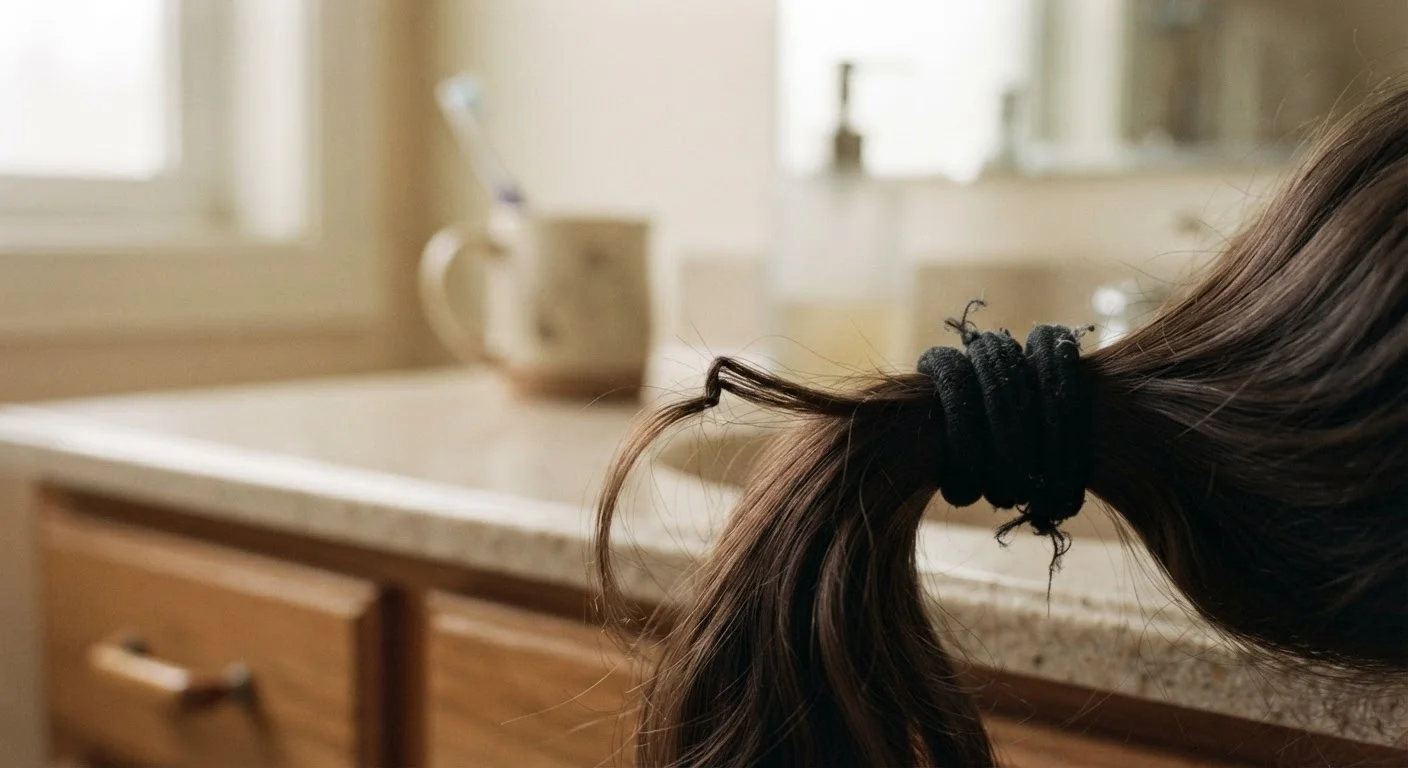
Traditional hair ties — the kind with a metal crimp or a tight rubber core — concentrate tension at a single point on the hair shaft every time they're used. Wearing them in exactly the same position daily creates a stress fracture zone. Over time, strands in that band weaken and eventually snap, which is why many people notice a ring of shorter, broken hairs at ponytail height.
Fabric-covered ties or spiral-shaped elastics distribute tension more evenly. Varying the height of your ponytail or bun from day to day also helps — even a small shift in position changes which hairs bear the load.
Placing an elastic at the exact same spot daily creates a hidden stress fracture zone in your hair.
Detangling Wet Hair Without Preparation
Wet hair stretches more than dry hair before snapping — that elasticity sounds protective, but it means strands that are dragged through a brush or comb can stretch well beyond their elastic limit before you feel resistance. Starting from the roots and pulling through knots compounds the problem by forcing multiple tangles through a single point of pressure.
Applying a detangling conditioner or leave-in product before combing gives slip to the hair shaft, reducing the friction required to move through knots. Working in sections — and starting from the ends, moving upward toward the root — allows each knot to be addressed individually rather than piled onto the one above it. The technique for washing curly hair without losing definition covers this in detail for textured types.
Starting detangling at the root forces multiple knots through a single pressure point, snapping strands.
Sleeping on a Cotton Pillowcase
Eight hours of contact between hair and a cotton pillowcase is eight hours of friction. As you shift during sleep, strands catch on the cotton weave, creating microscopic abrasion that accumulates night after night. Fine hair and hair that's already chemically treated tends to show the effects sooner, but no hair type is fully immune.
Satin or silk pillowcases — or a satin-lined bonnet or scarf — provide a smoother surface that allows hair to slide rather than snag. This simple swap is one of the most consistently recommended adjustments by hair care professionals precisely because it addresses a large block of daily exposure in a passive, zero-effort way.
Eight hours on a cotton pillowcase means eight hours of cumulative friction against the hair cuticle.
Skipping Heat Protectant Before Styling
Direct heat from flat irons, curling wands, and blow dryers raises the temperature of the hair shaft rapidly. Without a barrier, that heat disrupts the protein bonds within the strand and evaporates moisture from the cortex — the inner layer responsible for strength and flexibility. The result isn't always immediately visible; hair may feel fine for days before brittleness becomes apparent.
A heat protectant works by forming a film around the strand that slows heat transfer and helps retain moisture during the styling process. It doesn't make high heat entirely risk-free, but it meaningfully reduces the damage load per session. For a fact-based breakdown of what heat does and doesn't do to hair, heat styling and hair damage myths is worth reading alongside this.
Heat protectant slows heat transfer to the hair shaft — skipping it increases cumulative damage with every session.
Wearing Tight Styles Too Frequently
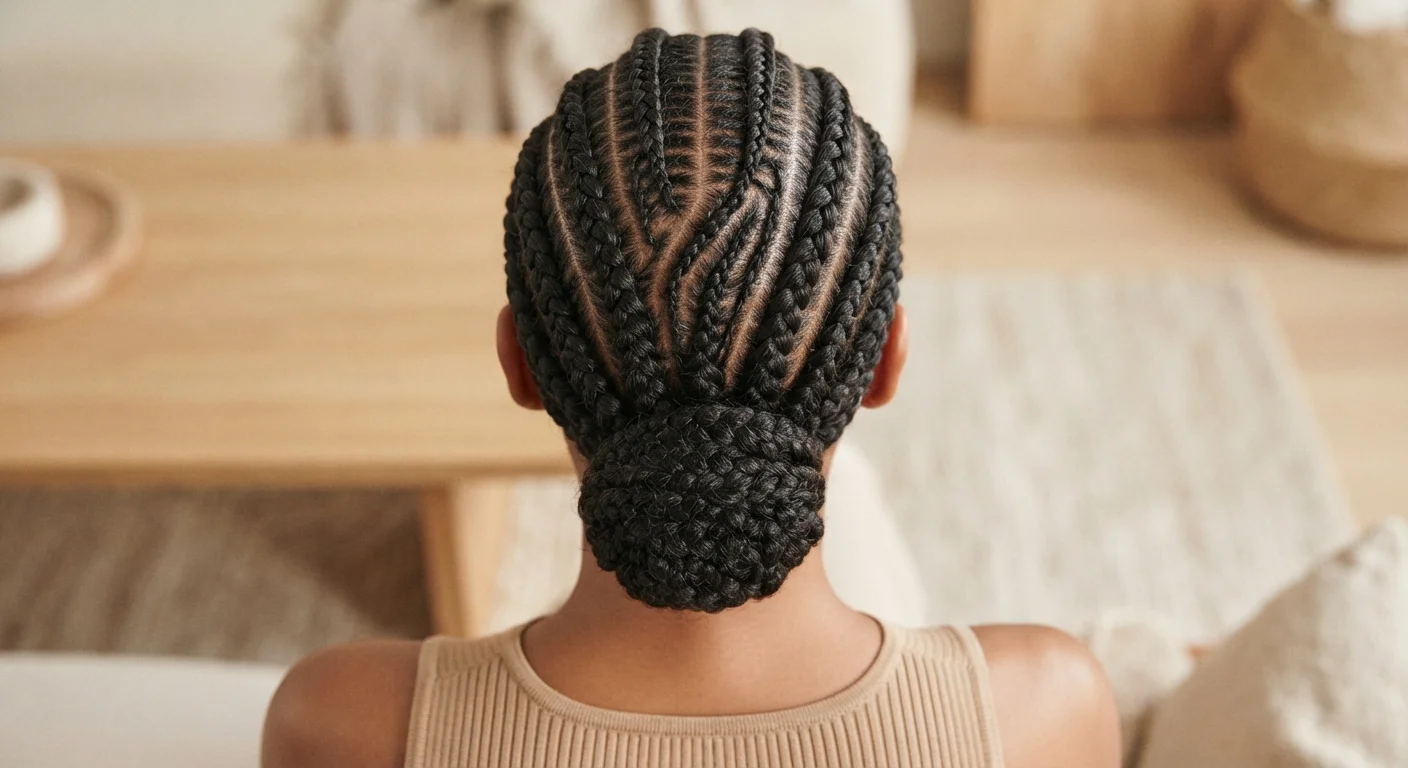
Tension-based styles — tight buns, slicked-back ponytails, braids pulled close to the scalp — place sustained traction on the follicle. Occasional wear is generally not problematic, but wearing these styles daily, or keeping them in for extended periods, can lead to traction-related breakage at the hairline and temples. Fine, relaxed, or chemically lightened hair is particularly vulnerable.
Rotating between tight and looser styles gives follicles time to recover. If you rely on protective styles regularly, protective styles 101 outlines how to maintain them in ways that protect rather than stress the hair underneath.
Daily tension at the same follicles — even from protective styles — accumulates into real structural damage.
Building Better Habits Without Starting Over
None of these changes require a dramatic overhaul. Swap one elastic, adjust your towel technique, shift your sleep surface — small substitutions compound over time just as the damaging habits did. Hair that was already weakened will still benefit; the goal is to stop adding new stress while existing strands recover and grow in stronger.
Address One Habit at a Time
Trying to change every habit simultaneously can feel overwhelming and rarely sticks. Choose the single habit on this list that applies most to your current routine and adjust that one first. Once it becomes automatic — usually within two to three weeks — move to the next. Gradual change is far more sustainable than an overnight overhaul.
If you're ready to structure your routine from the ground up, building a hair care routine from scratch walks through every step clearly. And if breakage has been significant, protective styles can give fragile sections a chance to rest while still keeping your hair styled.