
Where the Idea Came From
The term "capsule wardrobe" was introduced by Susie Faux, owner of a London boutique called Wardrobe, in the 1970s. Faux argued that a small core of quality, well-fitting pieces could serve as the foundation of a working woman's entire wardrobe. The concept reached American audiences in 1985 when designer Donna Karan released her influential "Seven Easy Pieces" collection — a coordinated group of interchangeable essentials designed to take a woman from boardroom to evening without missing a beat.
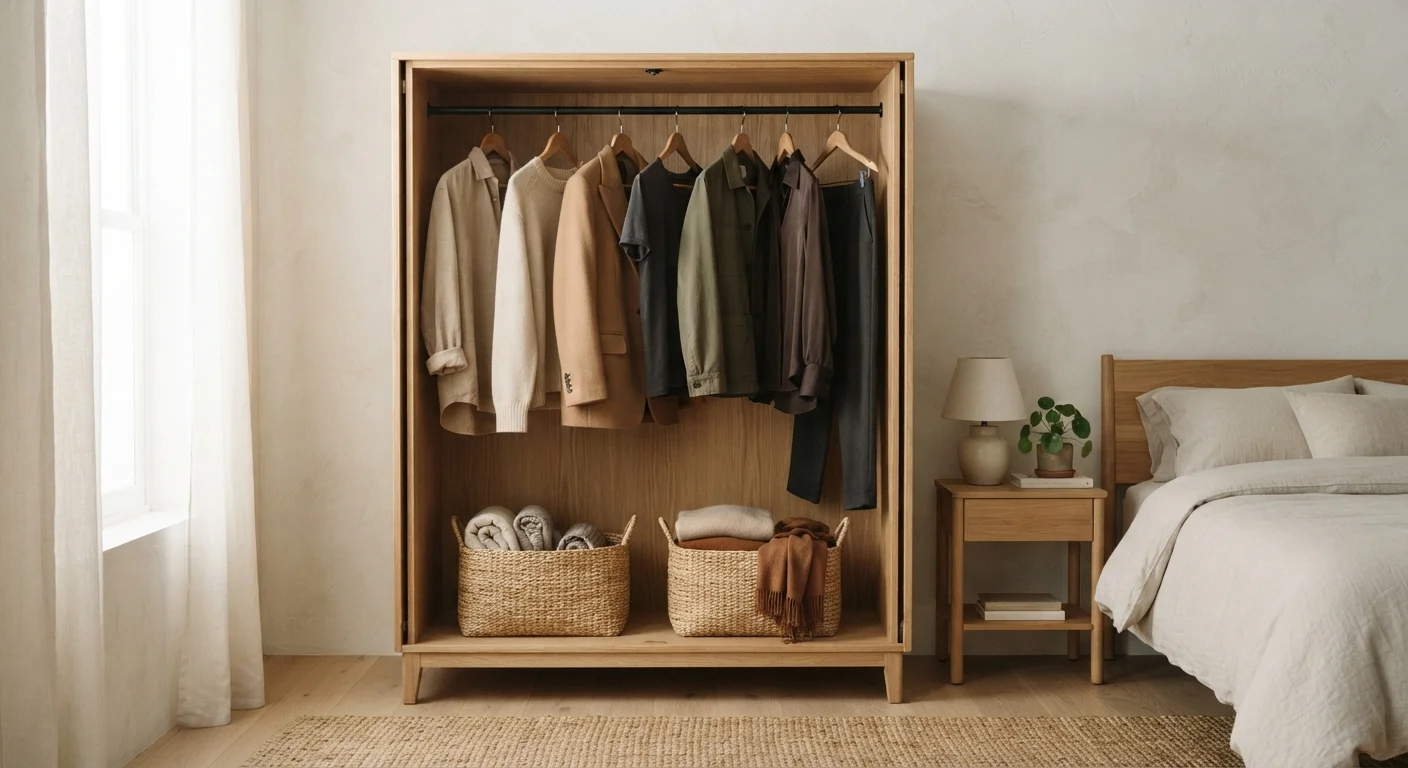
The idea has since expanded far beyond professional dressing. Today, a capsule wardrobe is understood as any intentionally curated collection built around versatility and longevity rather than seasonal trends. Chasing trends often leaves people with closets full of pieces that don't connect, which is exactly the problem the capsule concept was designed to solve.
What Makes a Wardrobe a Capsule
A capsule wardrobe has a few defining characteristics that separate it from simply owning fewer clothes:
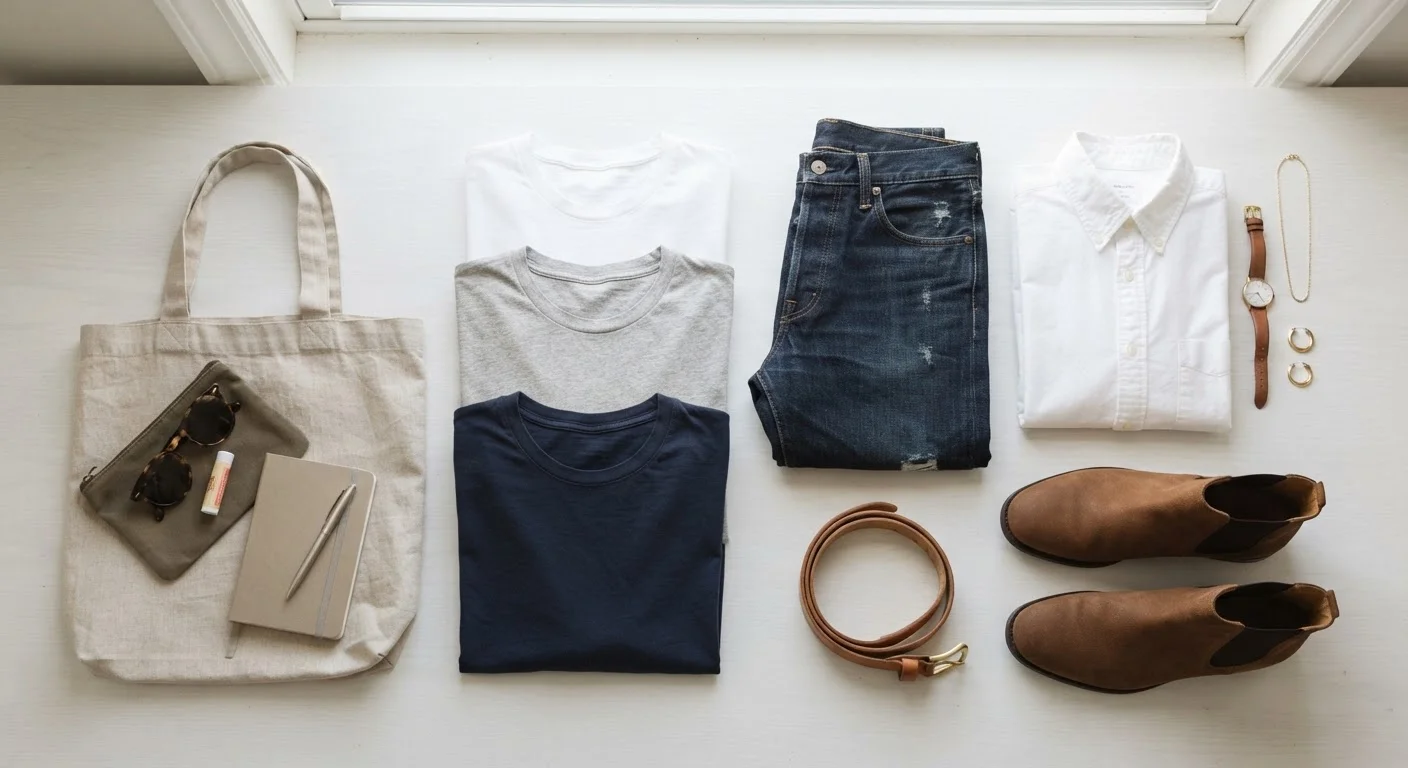
- Interchangeability: Each piece works with multiple others in the collection. A well-chosen pair of dark trousers, for example, might pair with five different tops and two different jackets.
- Timelessness: Capsule pieces are chosen for their durability across seasons and years, not for their relevance to a current trend cycle.
- Intentionality: Every item earns its place. If you haven't worn something in a year, it raises a question about whether it belongs in the collection at all.
- Appropriate scale: The collection is sized to your actual life — your climate, your job, your routine — rather than an idealized version of it.
~30–50
Typical capsule wardrobe item count
Style experts and wardrobe consultants commonly cite this range as a practical target, though individual needs vary based on lifestyle and climate.
80%
Of clothes worn only 20% of the time
The 80/20 principle is widely cited in wardrobe psychology circles to describe how most people rely on a small fraction of what they own for the majority of their outfits.
Maximizing outfit variety with a smaller, smarter wardrobe is one of the most practical benefits of this approach. When pieces are chosen to work together, the number of possible outfit combinations grows significantly even as the total item count shrinks.
Why It Works for Everyday Americans
The capsule concept resonates because it addresses a genuinely common frustration: owning a full closet but feeling like you have nothing to wear. That paradox usually signals a wardrobe full of disconnected, situational, or trend-driven items that don't function as a cohesive system.
Start With What You Already Own
Before purchasing anything new, spend time identifying the pieces you already reach for most often. Those are your natural capsule candidates. Building around existing favorites is more affordable and more honest than starting from scratch with an idealized list.
A capsule approach also has practical financial implications. Buying fewer, more versatile pieces — and wearing each one more often — tends to be more cost-effective over time than repeatedly purchasing cheap items that wear out quickly or fall out of rotation. If you're building a wardrobe from scratch on a tight budget, the capsule framework is particularly useful because it tells you what to buy first.
There's also a cognitive benefit. Research in decision science has consistently shown that an abundance of daily choices contributes to mental fatigue. A wardrobe where almost every combination works removes a low-stakes but repetitive daily burden.
How to Approach Building One
You don't need to overhaul your closet in a single weekend. Most people build a capsule gradually by starting with a honest assessment of what they already own. A structured closet audit helps identify which pieces already function as capsule items and which are taking up space without earning it.
From there, the process is additive rather than subtractive: identify gaps, prioritize the most versatile pieces first, and resist filling space with anything that doesn't serve the collection as a whole. Some items genuinely justify a higher upfront cost — understanding which wardrobe foundations are worth spending more on can help you make smarter choices when you do invest.
The capsule wardrobe isn't a rigid system or a lifestyle identity — it's a practical framework. Adapted to your actual life, it can make getting dressed easier, your spending more deliberate, and your closet genuinely useful rather than just full.