
The Real Price Comparison: Sticker vs. Cost Per Wear
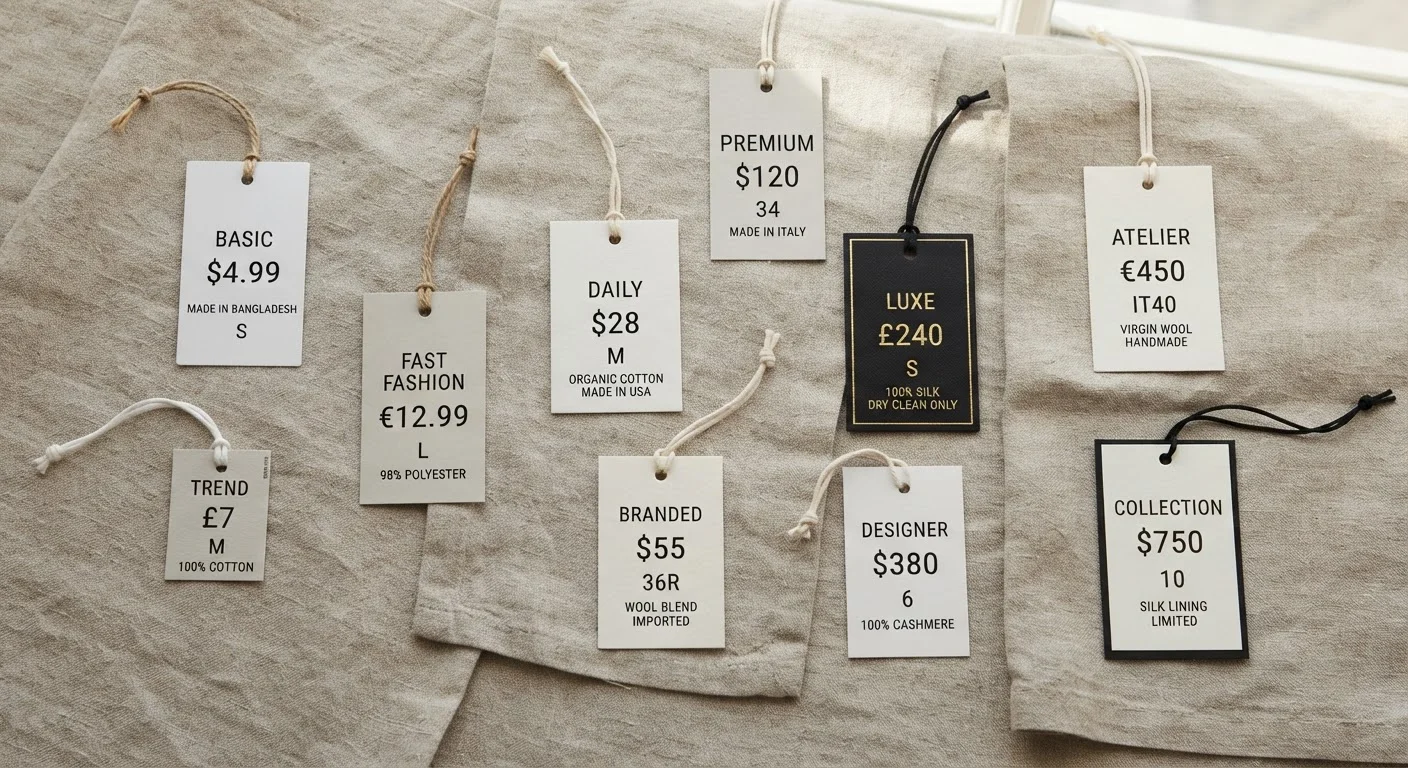
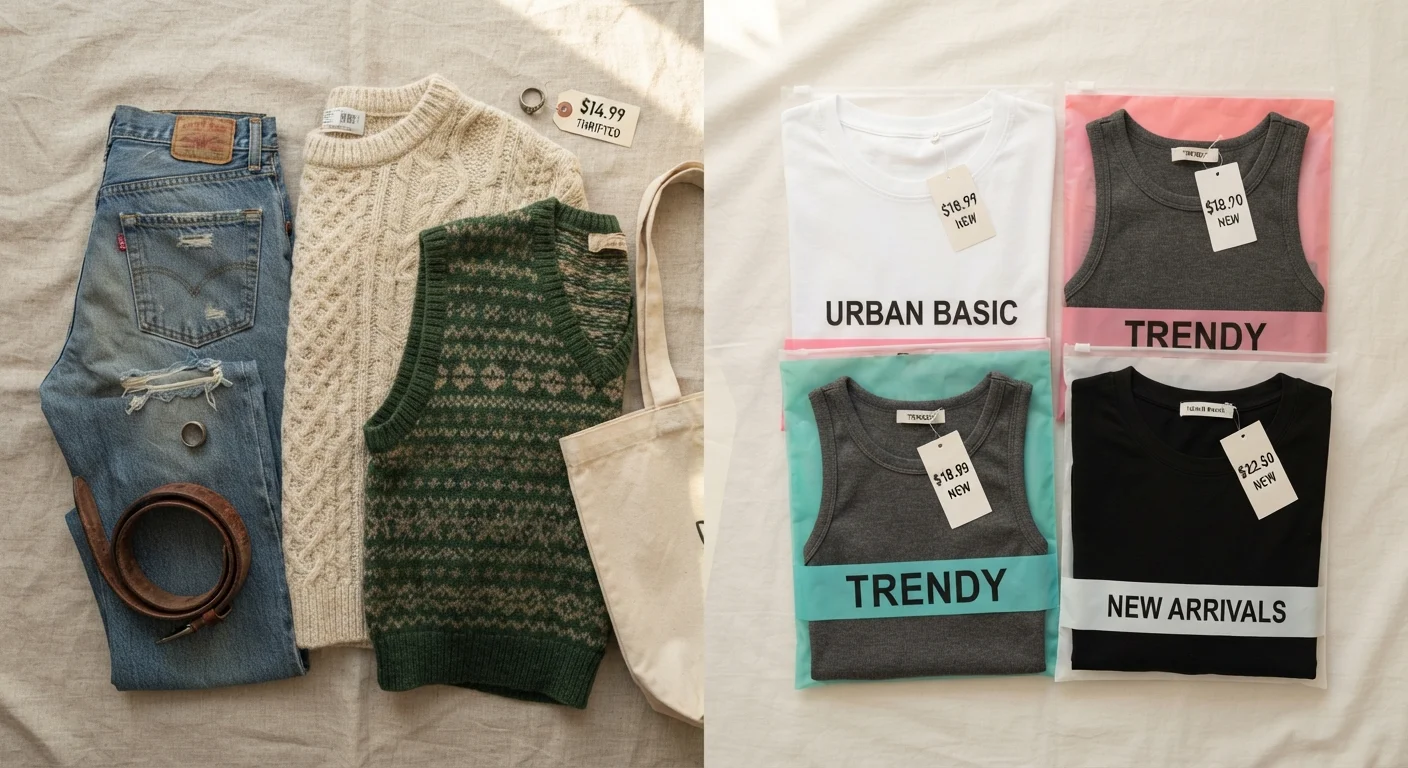
Both thrift stores and fast fashion retailers can put clothing in your hands for under $20. But sticker price is only the opening number. The more revealing measure is cost per wear — what you actually spend divided by how many times you use the item before it wears out or leaves your closet.
A fast fashion blouse purchased for $18 that fades, pills, or loses its shape after a dozen washes costs more per wear than a $12 thrifted silk shirt that holds up for years. Conversely, a thrifted item you never actually reach for — bought because the price felt too good to pass up — costs infinitely more per wear than something you use weekly.
Thrift shopping does have a genuine financial advantage: secondhand prices for well-constructed garments are often dramatically lower than their original retail value. The catch is time. A productive thrift run can require visiting multiple locations, sifting through a large volume of inventory, and managing inconsistent sizing. That time has real value, and it's worth factoring honestly into your budget math. As with any spending decision, the calculus is personal — and as financial tradeoffs research notes, optimizing one variable often means accepting costs in another.
| Criterion | Thrift Store Shopping | Fast Fashion |
|---|---|---|
| Typical price per item | Very low to moderate | Very low to moderate |
| Time investment | High — requires searching | Low — immediate availability |
| Size/fit consistency | Unpredictable, varies by era | More consistent within brand |
| Construction quality (typical) | Variable; often higher in older items | Often lower at price point |
| Trend relevance | Hit or miss; increasingly curated | High — designed for current trends |
| Environmental footprint per purchase | Lower — no new production | Higher — new manufacturing required |
| Longevity potential | Higher if well-selected | Lower on average |
Quality, Construction, and What Actually Lasts
Not all thrift store finds are high quality, and not all fast fashion items fall apart immediately. But there are structural reasons why older garments — especially those produced before the mid-2000s acceleration of fast fashion cycles — were often built to higher standards. Thicker fabric weights, reinforced seams, and natural fiber content are more commonly found in secondhand pieces than in new items at comparable price points today.
Fast fashion's business model depends on low per-unit production costs, which typically means thinner fabrics, synthetic blends, minimal seam allowances, and simpler construction. This doesn't make every fast fashion item unwearable — many hold up fine for light use — but it does mean the quality floor is lower and harder to assess from a quick in-store inspection.
Price doesn't reliably predict durability, but a few hands-on checks can help regardless of where you're shopping: look at seam width, pull gently at stress points, check fabric weight, and examine how buttons and zippers are attached. These signals matter whether you're in a thrift store or a fast fashion chain.
~60%
Fast fashion items discarded within a year
The Ellen MacArthur Foundation has reported that a significant share of clothing produced at fast fashion pace is disposed of within one year of purchase.
2x+
Global clothing production increase since 2000
Industry analyses estimate clothing production roughly doubled between 2000 and the late 2010s, driven largely by fast fashion supply chain models.
~$20B
U.S. secondhand apparel market annual value
ThredUp's annual resale market reports have consistently estimated the U.S. secondhand clothing market in the multi-billion-dollar range, with sustained growth year over year.
Ethics, Environment, and the Tradeoffs You Don't See on the Tag
The environmental case for secondhand shopping is often cited, and the core logic holds: buying a garment that already exists uses no new raw materials or manufacturing energy for that transaction. Clothing production — especially at fast fashion scale — is resource-intensive, involving water use, dye chemicals, and significant carbon output across global supply chains.
However, it's worth being precise about what thrift shopping does and doesn't solve. Donating and buying secondhand extends garment life and slows the pipeline to landfill, but it doesn't directly change how new clothing is produced. If thrift shopping also reduces your purchases of new garments, the impact compounds. If it's purely additive — a fun extra shopping channel — the net environmental benefit shrinks.
Fast fashion's labor and supply chain ethics are legitimately complex and vary widely by retailer and manufacturing country. General awareness that very low prices are made possible, in part, by compressed labor costs downstream is well-documented and worth holding as context — though it shouldn't be wielded as a reason to shame individual shoppers navigating real budget constraints.
For practical wardrobe building, chasing trends can quietly undermine a functional wardrobe. Both thrift stores and fast fashion chains traffic in trend pressure — secondhand stores increasingly curate for popularity, and prices on trending thrifted items have risen noticeably in recent years. A trend-resistant, use-case-first shopping mindset serves you better than a loyalty to either channel.
Building a Practical, Affordable Wardrobe With Both
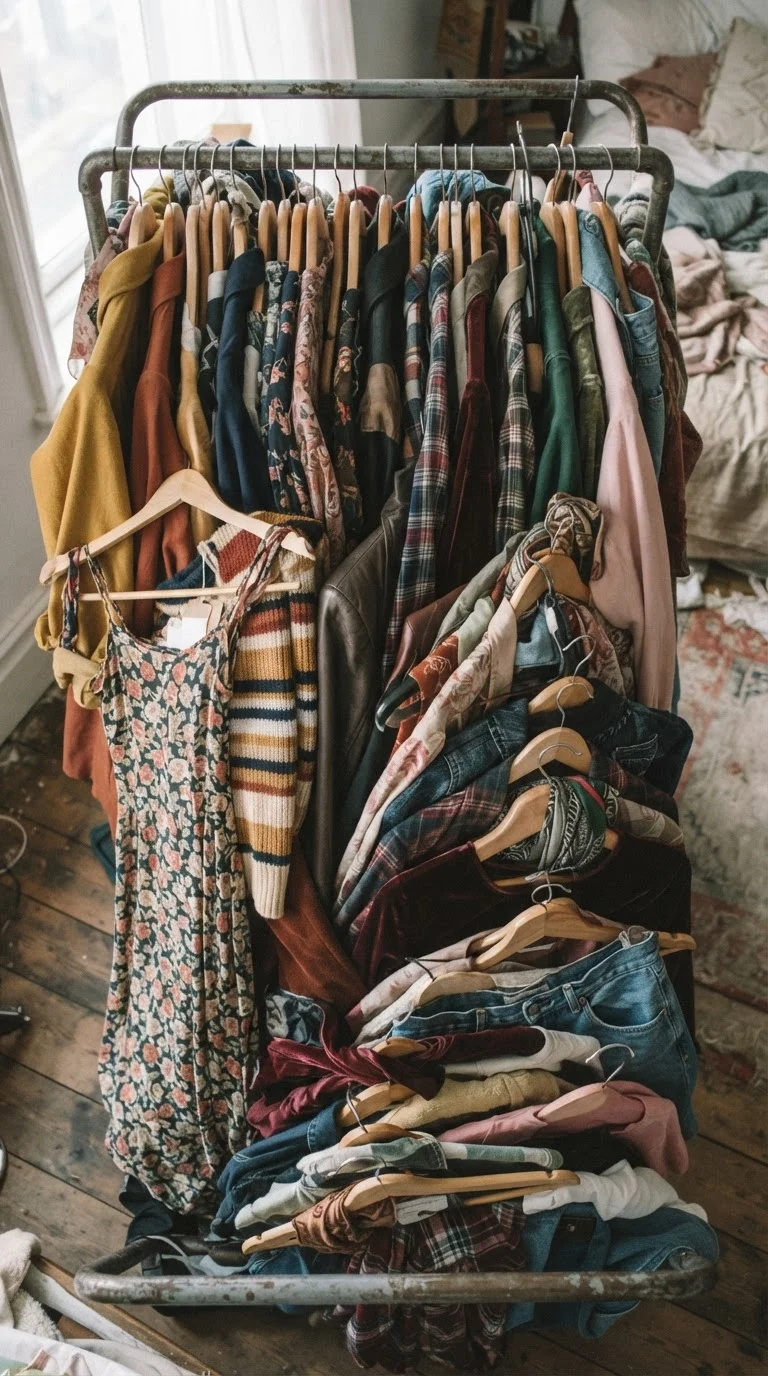
The most versatile approach for most everyday American consumers isn't a rigid commitment to one channel. It's a deliberate mix based on what each does well. Thrift stores tend to reward shoppers looking for durable foundations: heavyweight denim, wool coats, linen shirts, leather belts, and structured blazers. These are categories where older construction quality often genuinely exceeds what's available new at equivalent price points.
Fast fashion can make sense for items where fit predictability and specific sizing matter most, where trends move fast enough that longevity is irrelevant, or when you need something quickly and can't afford the time cost of thrift hunting. Underwear, activewear, and very trend-specific pieces are categories where the convenience-to-cost ratio may justify the tradeoff.
Seasonal wardrobe planning also interacts with this choice: if you rotate dramatically between seasons, investing in thrifted quality pieces you'll wear for years makes more financial sense than buying cheap seasonal items you'll discard. A smaller, more intentional closet — stocked through whichever channel serves each category best — tends to outperform a large one built around either source alone.
This article is for general informational and educational purposes only and does not constitute financial, legal, or professional advice. Individual circumstances vary.