
What 'Seasonal' and 'Year-Round' Actually Mean
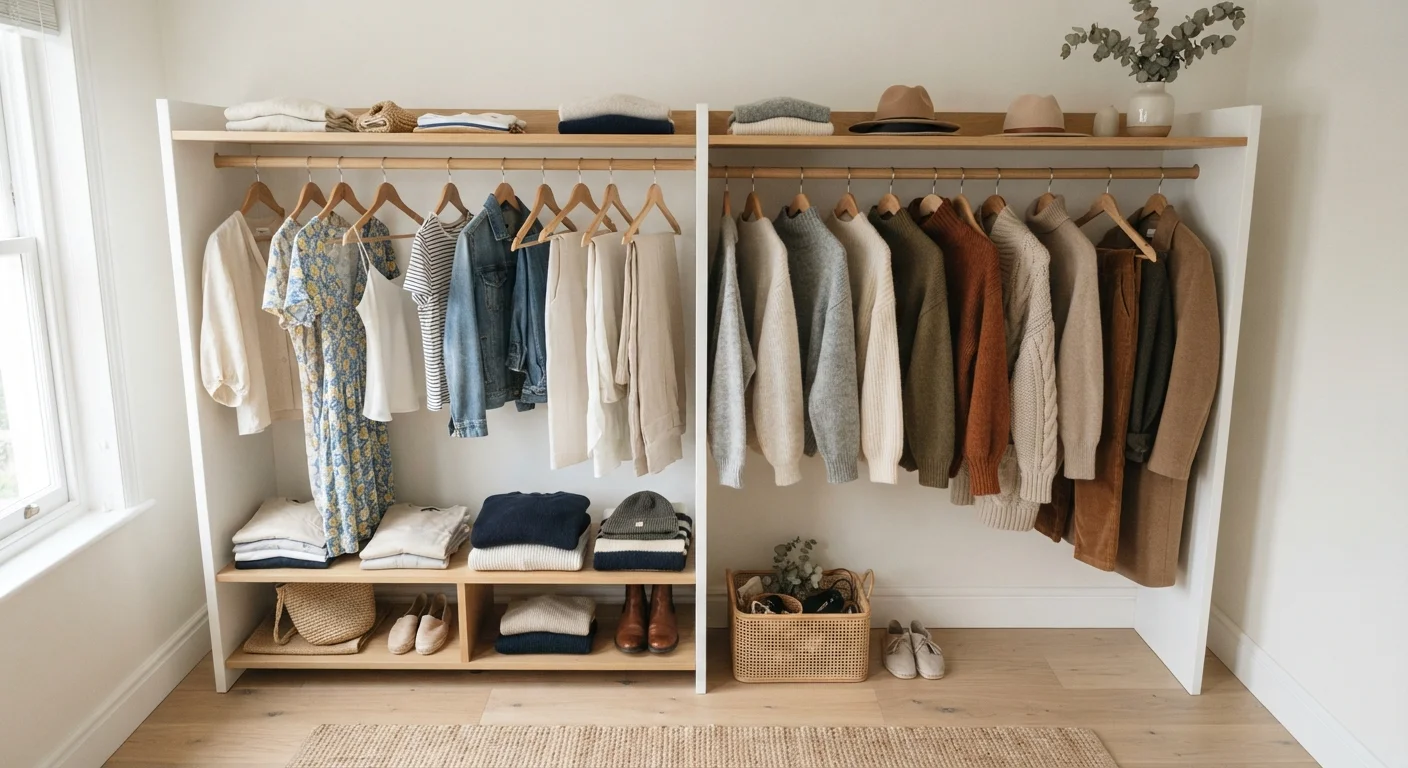
A seasonal wardrobe involves rotating distinct sets of clothing in and out of active use as temperatures change — heavy coats and sweaters in winter, linen and shorts in summer, with the off-season items packed away. A year-round wardrobe prioritizes transitional pieces — medium-weight fabrics, layerable items, and neutral basics — that work across multiple seasons without requiring a full swap.
Neither approach is about how many clothes you own. It's about how you organize and plan your spending. Understanding the distinction helps you make intentional decisions rather than accumulating clothes by default. If you're starting from nothing, see our step-by-step guide to building a wardrobe on a tight budget before deciding which system fits your life.
Pros and Cons of a Seasonal Wardrobe
Rotating your wardrobe with the calendar has real advantages — but also genuine costs that are easy to overlook.
Purpose-built clothing for extreme temperatures
Dedicated seasonal gear — heavy insulation in winter, breathable fabrics in summer — outperforms transitional pieces in climates with dramatic swings. Wearing the right weight for the weather is also more comfortable day-to-day.
Opportunity to buy quality at end-of-season discounts
Retailers typically mark down seasonal inventory at the close of each season. Patient shoppers can acquire higher-quality pieces at reduced prices by planning purchases around these cycles.
Wardrobe feels fresh and intentional each season
Rotating a curated set of pieces in and out can make your closet feel more organized and purposeful, since you're only ever working with what's relevant to current conditions.
The most obvious benefit is climate appropriateness. If you live in Minnesota or upstate New York, dressing for -10°F winters and 90°F summers with the same clothes simply isn't realistic. Dedicated seasonal pieces — insulated parkas, moisture-wicking summer tops — are purpose-built for those extremes and will outperform generic alternatives.
Seasonal shopping also aligns naturally with retail sale cycles, which means patient shoppers can stock up on winter coats at end-of-season discounts. However, this rhythm encourages frequent purchasing, which can quietly inflate your annual clothing spend. It also demands significant storage: off-season clothes need clean, dry, pest-free space, which isn't a given in smaller apartments.
Requires significant storage space
Off-season clothing needs clean, dry, properly ventilated storage to avoid mold, odor, or pest damage. This is a genuine constraint in smaller homes or apartments without dedicated closet space.
Higher cumulative spending over time
Buying distinct wardrobes for multiple seasons — even at sale prices — adds up. The annual clothing budget for a full seasonal rotation is typically higher than a maintained year-round core.
Greater environmental footprint from turnover
More frequent clothing replacement, even when items are donated rather than discarded, contributes to higher overall textile consumption and associated environmental costs.
Logistical effort of seasonal swaps
Rotating, cleaning, storing, and retrieving seasonal clothing takes time and planning. For households already managing busy schedules, this recurring task can become a real friction point.
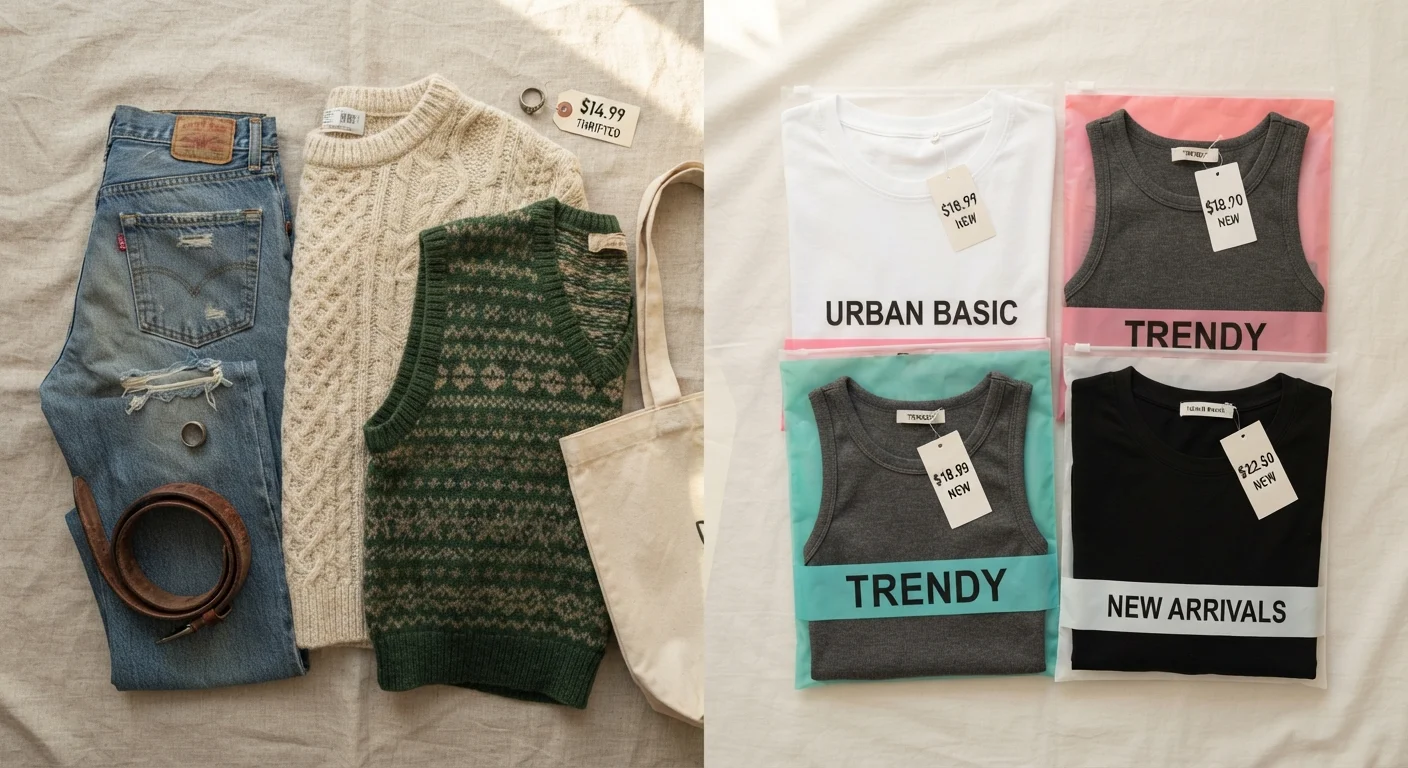
There's also a sustainability angle worth considering. More frequent turnover — even at discount prices — generates more textile waste over time. If longevity and environmental impact matter to you, the tradeoffs between fast fashion and secondhand shopping are worth reading before committing to a heavy seasonal rotation.
Pros and Cons of a Year-Round Wardrobe
A year-round wardrobe built on transitional staples is increasingly practical for Americans in moderate climates — and for anyone trying to simplify.
~$1,700
Average annual US household clothing spend
According to the U.S. Bureau of Labor Statistics Consumer Expenditure Survey, American households spend an average of roughly $1,700 annually on apparel and related services.
30–40%
Wardrobe items rarely or never worn
Wardrobe utilization studies consistently find that a significant share of clothing owned goes unworn in any given year, suggesting most people already own more than their active rotation requires.
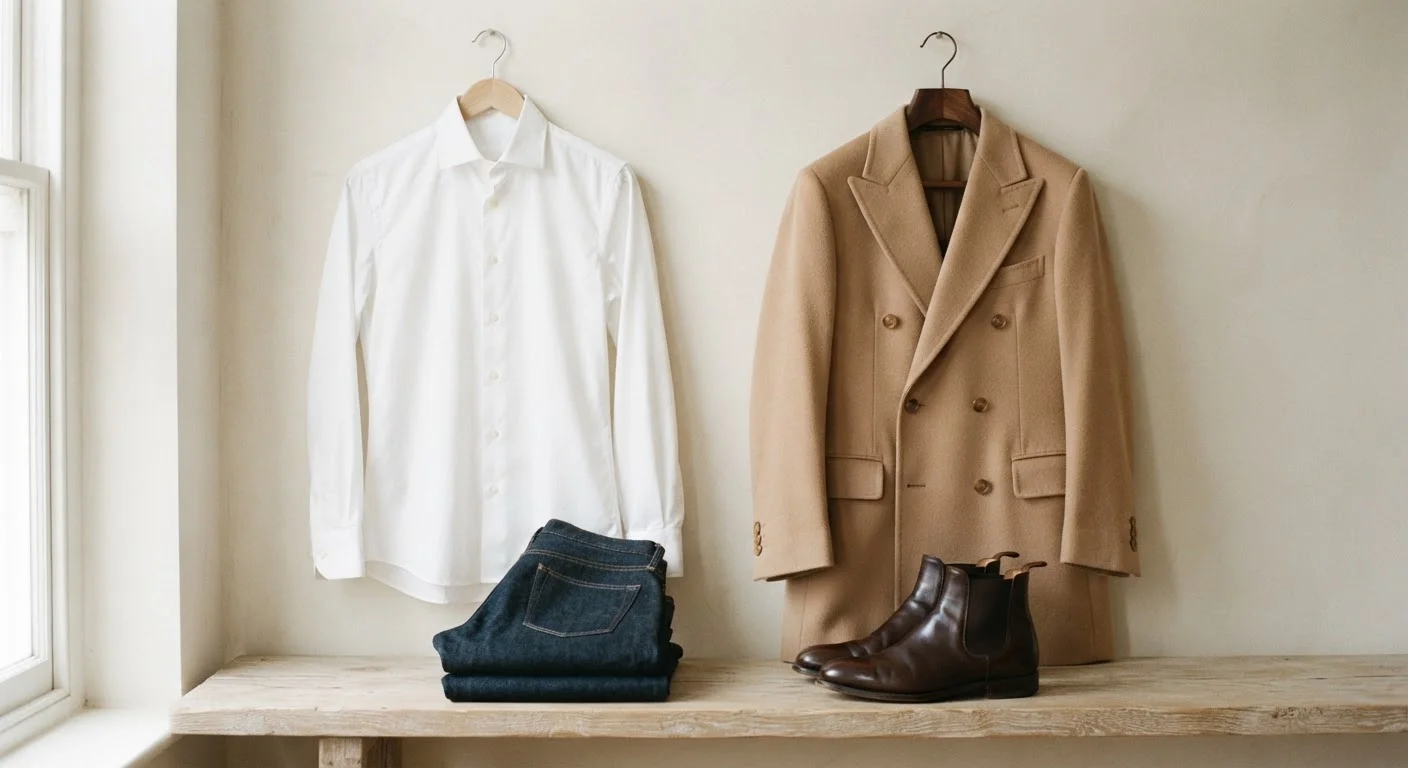
The core appeal is lower long-term cost. When a single well-made merino wool crewneck, a versatile chino, or a structured denim jacket earns regular use for nine or ten months a year, the cost-per-wear drops considerably. Our guide to wardrobe foundations worth spending more on identifies the specific piece types that justify a higher upfront investment.
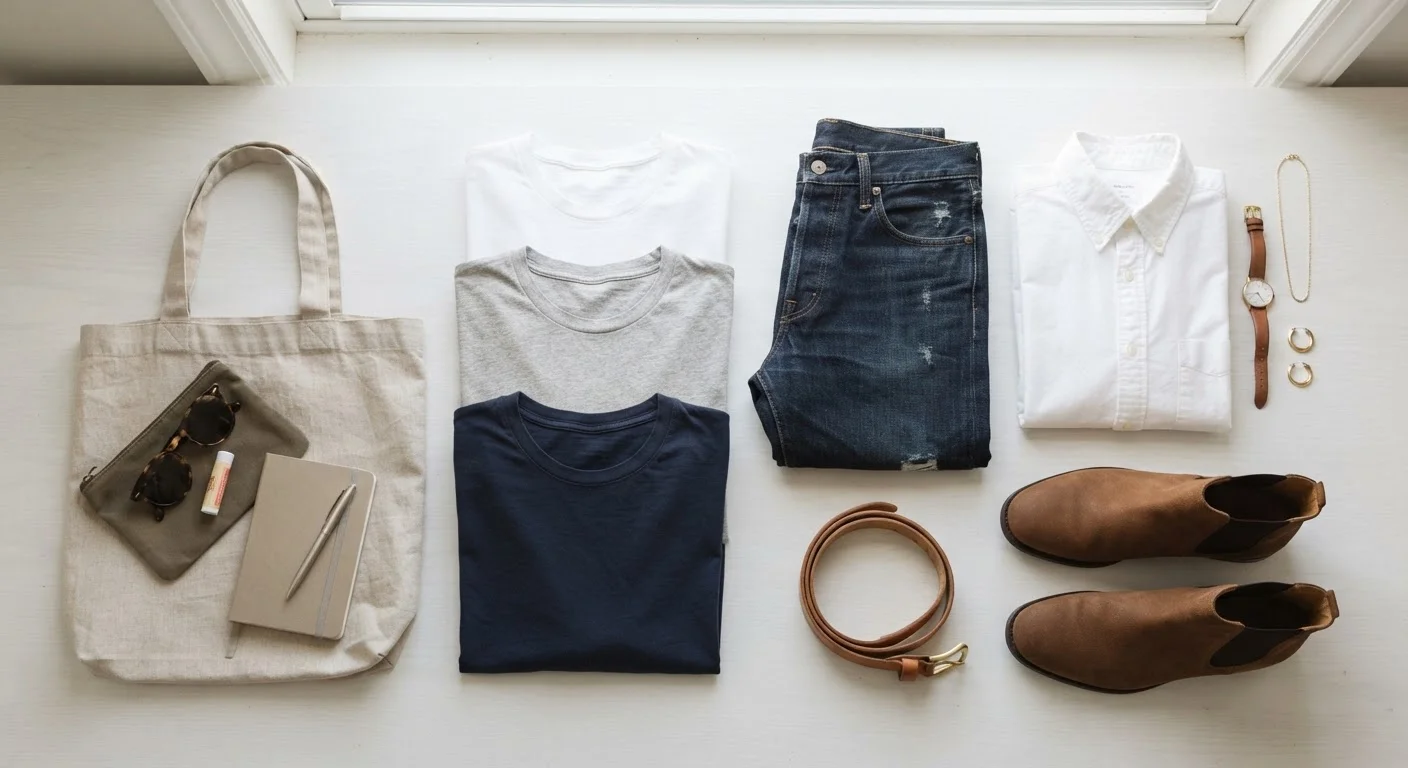
A smaller, cohesive wardrobe also makes daily dressing faster and easier. Fewer decisions, less clutter, and better visibility of what you actually own are practical benefits that compound over time. The versatile wardrobe approach shows how strategic outfit-building can produce more combinations from fewer pieces.
The limitation is real, though: in climates with dramatic seasonal extremes, year-round pieces alone will leave gaps. No amount of layering turns a linen shirt into a viable option for a January commute in Chicago.
How to Choose What Makes Sense for You
Three factors should drive your decision more than any style preference:
- Climate: Honest assessment of your local temperature range is the foundation. If your area sees fewer than 30°F of swing between seasons, a year-round core with minimal additions is likely enough. Larger swings usually require some seasonal investment.
- Storage: Seasonal rotation only works if off-season clothing has a safe place to go. Vacuum-seal bags, under-bed bins, or a dedicated closet are all options — but if storage is genuinely limited, the year-round model is more practical by default.
- Shopping habits: If you tend to overbuy when exposed to seasonal displays and promotions, a deliberate year-round strategy may save more money than the purchase price of any individual item. Trend-driven shopping habits can quietly undermine any wardrobe strategy, regardless of season.
The Hybrid Approach in Practice
A hybrid wardrobe doesn't mean buying more — it means buying differently. Start with mid-weight, neutral-toned basics that layer well, then add only the weather-specific pieces your climate genuinely demands. Reassess annually rather than every season. This keeps spending predictable and storage manageable without sacrificing comfort in extreme weather.
For most Americans, a hybrid approach is the practical answer: a foundation of 15–20 versatile, mid-weight pieces that carry across three seasons, supplemented by a small, intentional set of weather-specific items (a heavy coat, waterproof boots, a few warm-weather-only pieces). This avoids both the chaos of full seasonal rotation and the limitations of a too-rigid year-round philosophy.