
What Is a Protective Style?
A protective style is any hairstyle that keeps the ends of your hair — the oldest and most fragile section — tucked away and shielded from daily friction, environmental exposure, and repeated manipulation. The term is used broadly in hair care communities, but the defining principle is simple: reduce the mechanical stress your hair experiences every day.
Ends fray and split when they rub against clothing, pillowcases, and each other. They also sustain cumulative damage from heat styling and weather. Protective styles interrupt that cycle. By minimizing how often you touch, detangle, comb, and style your hair, you give strands a period of relative rest.
Protective style
Any hairstyle that keeps hair ends tucked away and limits daily manipulation to reduce breakage and environmental damage.
Length retention
Keeping the hair you grow by preventing breakage — distinct from how fast hair actually grows from the scalp.
Traction alopecia
A form of hair loss caused by repeated or prolonged tension on the hair follicle, often from tight braids, ponytails, or extensions.
Low-manipulation styling
A styling approach that minimizes how often you comb, brush, or handle your hair to reduce physical stress on strands.
Scalp buildup
Accumulation of product residue, dead skin cells, and sebum on the scalp that can affect scalp health if not cleansed regularly.
It's worth understanding what protective styling is not. It is not a growth serum, a damage-reversal treatment, or a substitute for conditioning. It is a mechanical strategy — and like any strategy, it only works when the fundamentals underneath it are sound.
Who Benefits Most from Protective Styling?
Protective styles are most commonly discussed in the context of natural, coily, and kinky hair textures — and for good reason. Tightly coiled strands have more points of curvature along each shaft, which makes them structurally more prone to breakage at those curves. The ends of coily hair also tend to be drier because sebum from the scalp travels more slowly down a curved strand.
That said, protective styling isn't exclusive to any one texture. People with chemically treated hair, color-processed hair, fine hair prone to mechanical breakage, or anyone going through a transitioning phase between chemical treatments can all benefit from low-manipulation periods. Everyday habits that cause slow breakage are often the most damaging — and protective styles directly address many of them.
Lifestyle also matters. If you swim regularly, work outdoors, or simply don't want to style your hair daily, a protective style can reduce the decisions and damage that accumulate over time.
Common Types of Protective Styles
The category is broad. Here are the most widely used options across different textures and preferences:
- Box braids and knotless braids: Individual braids that can incorporate extensions for length and fullness. Knotless braids start with your natural hair rather than a knot at the root, which generally creates less tension at the scalp.
- Twists: Two-strand twists use your natural hair alone or with extensions. They tend to be gentler than braids and easier to install and remove.
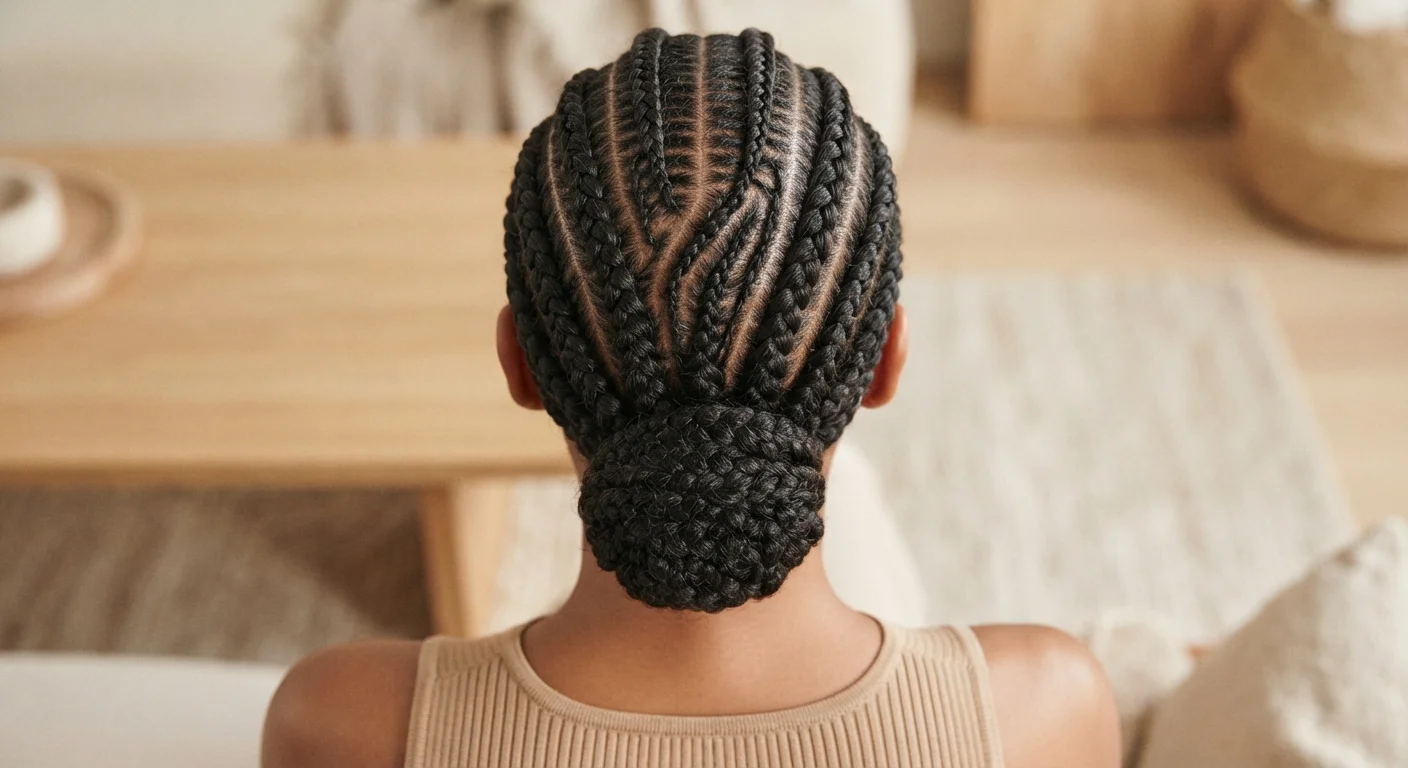
- Cornrows: Flat braids installed close to the scalp. They're versatile and can be worn alone or as a base for wigs and weaves.
- Wigs and weaves: These protect natural hair by covering it entirely or braiding it down as a base. The key to their effectiveness is proper installation and ongoing scalp care underneath.
- Low buns and updos: Simpler options for straighter textures or anyone who wants a no-extension protective style. The goal is keeping ends off the collar and away from friction surfaces.
Start Simple if You're New to This
If you've never worn a protective style before, a low bun or two-strand twists are a lower-commitment starting point than braids with extensions. They let you gauge how your hair and scalp respond to reduced manipulation without a long installation or removal process.
How to Maintain Your Hair Underneath
This is where most protective style routines fall short. Installing a style and then ignoring your scalp and hair for weeks is a common mistake — and it can leave you with more damage than when you started.
Moisturize regularly. Hair doesn't stop needing hydration because it's braided. Apply a lightweight leave-in or water-based moisturizer to your scalp and along the length of your braids every few days. Seal with a light oil if your hair is prone to dryness.
Cleanse your scalp. Skipping washes for the duration of a style allows product buildup, sweat, and dead skin to accumulate. A diluted cleanser applied directly to the scalp with a nozzle bottle — rinsed carefully — can keep the scalp environment healthy without fully dismantling the style. See our guide on what conditioners and deep conditioners actually do for a refresher on keeping strands hydrated between washes.
Protect at night. A satin or silk bonnet or pillowcase reduces friction while you sleep — a small step that makes a meaningful difference in how your edges and braids hold up over weeks.
Don't exceed the recommended wear time. Most styles are best kept in for four to eight weeks. As new growth comes in, the point where your natural hair meets the braid or extension shifts, and tension patterns change. Wearing a style past its window increases the risk of matting and breakage.
When Protective Styles Go Wrong
Protective styles can cause real damage when installed or maintained incorrectly. The most common culprit is tension. Styles that are too tight — particularly at the hairline and edges — put sustained mechanical stress on the follicle. Over time, repeated or prolonged tension can contribute to a form of hair loss called traction alopecia, which begins as thinning along the edges and temples.
Pain Is Always a Warning Sign
A protective style should feel snug but never painful. If you experience pulling, headaches, or bumps along your hairline immediately after installation, that's a signal the tension is too high. Leaving a too-tight style in place hoping it will loosen can accelerate follicle stress — have it adjusted or removed promptly.
Weight is a related concern. Very heavy extensions or styles that concentrate weight at a few anchor points can strain the follicle even when the initial tension seemed acceptable. Distributing weight evenly across the scalp and opting for lighter extensions when possible reduces this risk.
Neglect is the other major failure mode. Skipping moisture, going months without cleansing, and sleeping without any protection can leave hair more brittle and tangled than before you installed the style. The protective style itself isn't protective under those conditions.
When you take the style down, treat that transition carefully. Protein treatments and proper trimming habits can help restore strand integrity after a long protective style. Remove extensions slowly, detangle in sections with plenty of slip, and follow up with a deep conditioning session before you resume any heat styling. See also our guidance on heat styling and hair damage before picking up a flat iron post-takedown.