
Why Heat Styling Myths Persist
Heat styling is one of the most discussed — and most misunderstood — topics in hair care. Advice circulates quickly on social media, often presenting oversimplified rules as universal truths. The reality is more nuanced: the same flat iron setting that works fine for one hair type can cause real damage on another.
Understanding what heat actually does to the hair shaft helps cut through the noise. Hair is primarily composed of a protein called keratin, arranged in overlapping cuticle layers that protect the inner cortex. Heat affects the hydrogen bonds within that structure, temporarily reshaping the hair. Problems arise when heat is too high, applied too frequently, or used on hair that is wet or unprotected. With the right approach, heat styling can be part of a manageable routine — not a guaranteed path to breakage.
Below, we address the most persistent myths directly. See also our piece on habits that quietly cause breakage over time for a fuller picture of cumulative damage.
Common Heat Styling Myths — Corrected
These myth-and-fact pairs address the questions we hear most often, drawing on widely accepted hair science principles.
Myth
Heat styling always damages hair, no matter what you do.
Fact
Heat styling causes damage primarily when temperatures are excessive, technique is poor, or hair is unprepared — not as an automatic outcome.
Blanket statements about heat damage ignore the role of preparation and method. Research on hair fiber mechanics shows that damage accumulates when the cuticle is repeatedly stressed beyond its recovery threshold — something that depends on temperature, dwell time, and the hair's baseline condition. Using an appropriate temperature with a heat protectant and limiting daily exposure keeps most hair well within a manageable range.
Myth
The highest heat setting gets the job done faster and is no worse than lower settings.
Fact
Higher temperatures increase the risk of protein degradation in the hair cortex and do not necessarily improve styling results.
Efficiency in heat styling comes from the right combination of temperature and technique, not from maxing out the dial. Studies on keratin structure indicate that sustained temperatures above approximately 450°F (232°C) begin to cause irreversible changes to hair proteins. Many hair types style effectively at 300–380°F. Using the lowest effective temperature for your hair type is a straightforward way to reduce cumulative stress.
Myth
Heat protectant sprays are mostly marketing — they don't actually do much.
Fact
Heat protectants can meaningfully reduce surface temperature and slow moisture loss when applied correctly before styling.
Independent hair science literature has documented that silicone- and polymer-based heat protectants form a film over the cuticle that acts as a partial thermal barrier, slowing the rate at which heat transfers into the hair shaft. The key word is correctly: applying protectant to wet hair and then blow-drying without allowing it to set first reduces its effectiveness. Apply to nearly dry hair, allow a moment to absorb, then style.
Myth
Air drying is always safer than using any heat tool.
Fact
Prolonged air drying — particularly for porous or fine hair — can cause hygral fatigue, a form of damage from repeated swelling and contracting of the hair shaft.
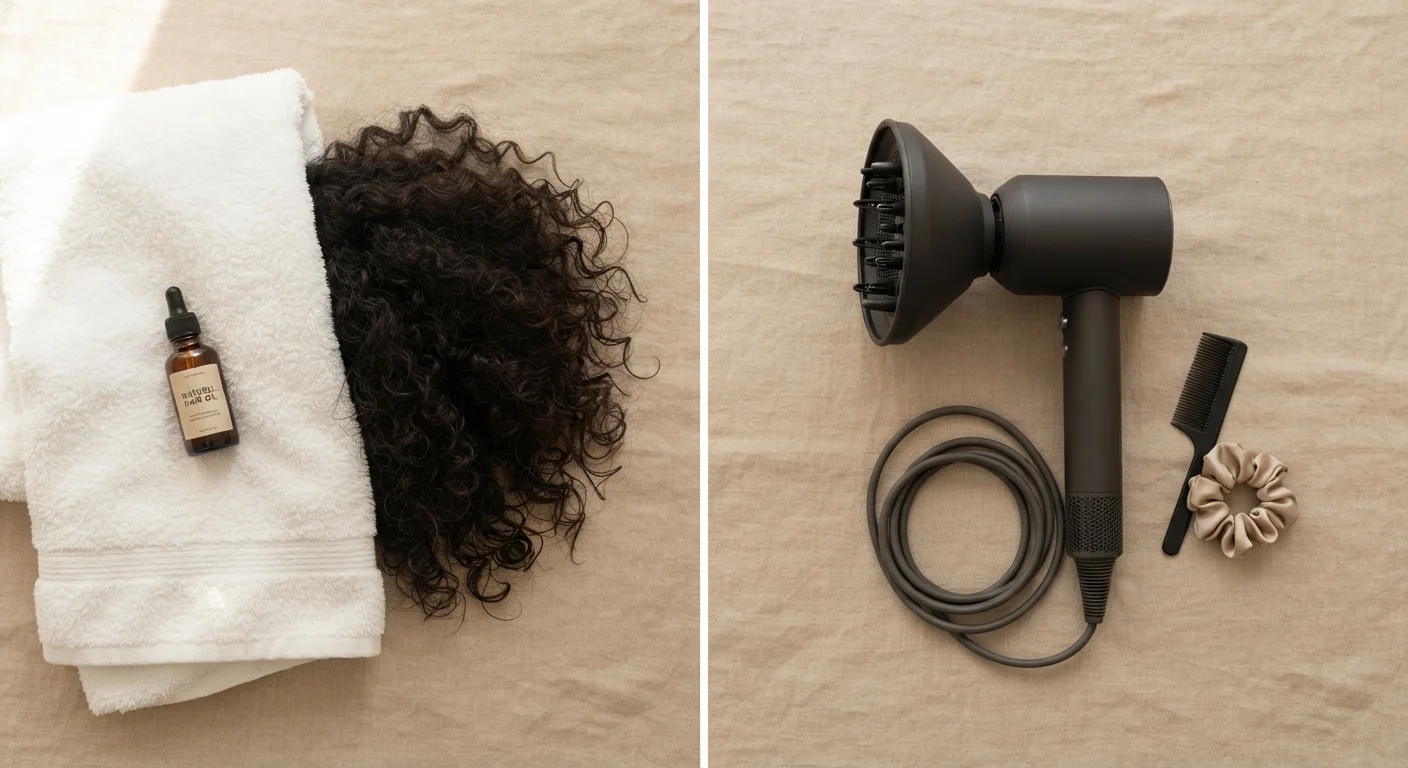
Hygral fatigue occurs when the cortex repeatedly absorbs and releases water, stressing the internal fiber bonds over time. Hair that stays wet for extended periods is also more fragile and prone to mechanical breakage from friction against clothing or pillow fabric. A brief low-heat blow-dry phase to reduce water content before air drying the rest of the way is a reasonable middle-ground approach for many hair types. For a fuller comparison, see air drying vs. blow drying trade-offs.
Myth
If your hair looks fine, heat isn't causing any damage.
Fact
Heat damage often accumulates below the visible threshold before it becomes apparent — by the time breakage or dullness is obvious, significant structural change has already occurred.
The cuticle layer provides a cosmetic surface that can look smooth even as the underlying cortex weakens. Porosity changes, reduced elasticity, and protein loss happen gradually. A simple elasticity check — gently stretching a wet strand to see if it springs back — can give an early signal of stress before breakage becomes visible. Routine conditioning and periodic trims help manage damage before it compounds.
Practical Guidance for Safer Heat Styling
Correcting myths is only half the equation — translating that knowledge into a routine is what protects your hair long-term.
Never Apply Heat Tools to Soaking-Wet Hair
Using a flat iron or curling wand on hair that is still very wet can cause the water within the hair shaft to vaporize rapidly, creating internal pressure that damages the cortex — sometimes audible as a sizzling sound. Always blow-dry or air-dry hair until it is at least 80–90% dry before using direct-heat styling tools. This applies especially to fine or already-damaged hair.
- Match temperature to texture: Fine or chemically treated hair generally tolerates lower temperatures (around 300°F or below). Medium to coarse hair may require higher settings, but rarely the maximum.
- Apply heat protectant before every session: Use it on nearly dry hair rather than soaking-wet strands. Most protectants work by forming a barrier that slows heat conduction into the cortex.
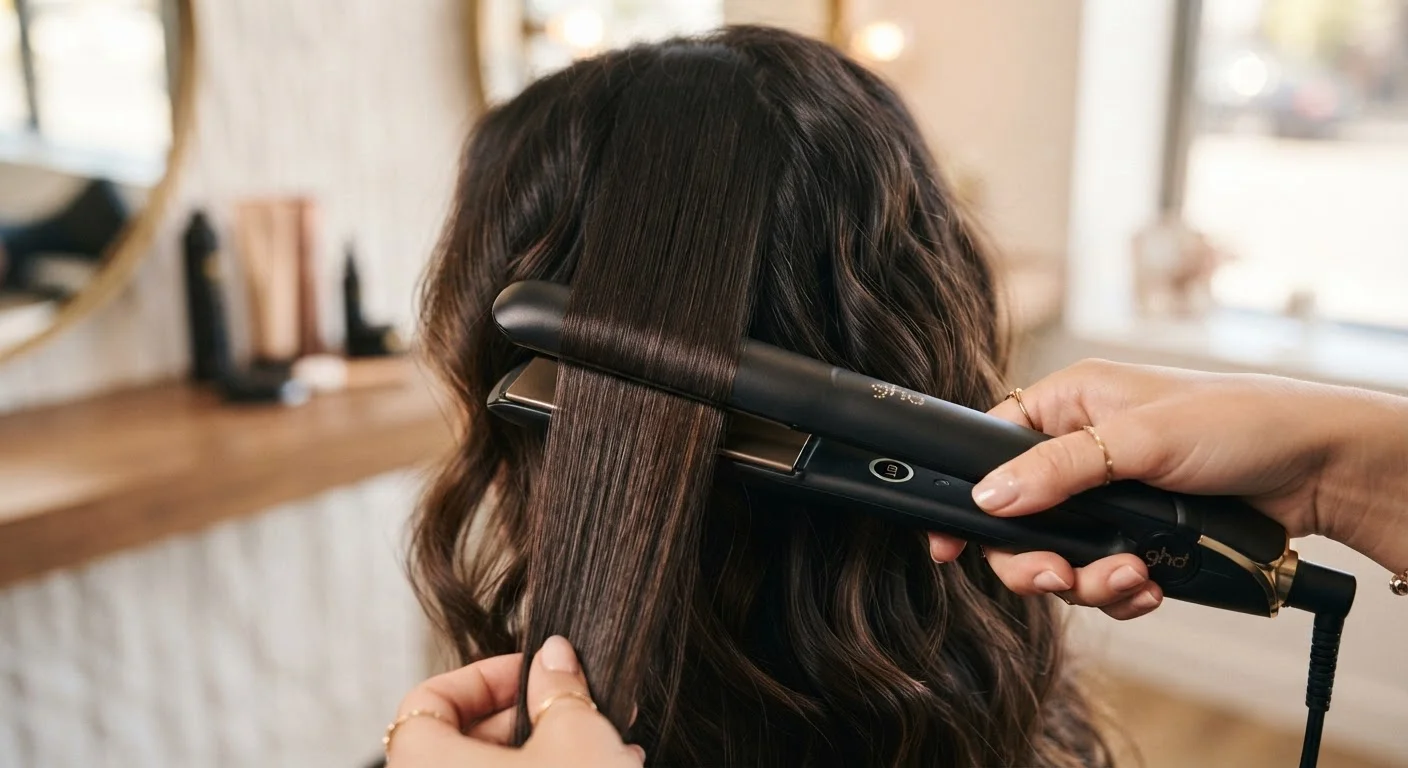
- Limit passes: Multiple slow passes with a flat iron cause more cumulative heat exposure than a single smooth pass at an appropriate temperature.
- Prioritize hair health between sessions: Deep conditioning, trimming split ends regularly, and reducing other sources of stress — like tight elastics — all improve how well hair withstands heat.
If heat styling is a regular part of your routine, consider alternating with protective styles to give your hair genuine rest periods. And if you're weighing heat tools against air drying, our breakdown of air drying vs. blow drying trade-offs can help you make an informed choice.
~450°F
Temperature threshold for irreversible keratin protein changes
Hair science literature consistently identifies sustained temperatures above approximately 450°F as the range where irreversible protein degradation in the hair cortex becomes a significant concern.
~30%
Reduction in surface temperature with heat protectant use
Laboratory assessments of thermal protection products have reported surface temperature reductions in the range of 20–30% compared to unprotected hair, depending on the formulation and application method.