
Why Curly Hair Responds Differently to Washing
Curly and coily hair has a structurally distinct shape at the follicle level, which causes the hair strand to curl or coil as it grows. That curved shape also means the cuticle — the outermost protective layer of the hair shaft — lies less flat than it does on straight hair. As a result, curly hair tends to be more porous, more prone to moisture loss, and more reactive to friction and heat.
When water hits curly hair, the cuticle swells as moisture enters the shaft. If the hair is then rubbed, tangled, or dried aggressively, the cuticle lifts further and the curl pattern can collapse into frizz. Understanding this dynamic is the foundation of washing curly hair well.
Before adjusting your wash routine, it helps to understand your specific hair type, texture, and density — three distinct characteristics that shape which products and methods work best. See our guide to hair type, texture, and density for a clear breakdown of each.
Let Your Curl Pattern Guide Frequency
Looser curl patterns (wavy to loose curl) often tolerate more frequent washing because sebum from the scalp travels down the hair shaft more easily. Tighter coil patterns generally need fewer wash days because natural oils move more slowly down the strand. Adjust your wash schedule based on how your scalp feels — not a fixed calendar.
What You'll Need
Gather everything before stepping into the shower. Having products within reach prevents fumbling while your hair is wet and tangled.
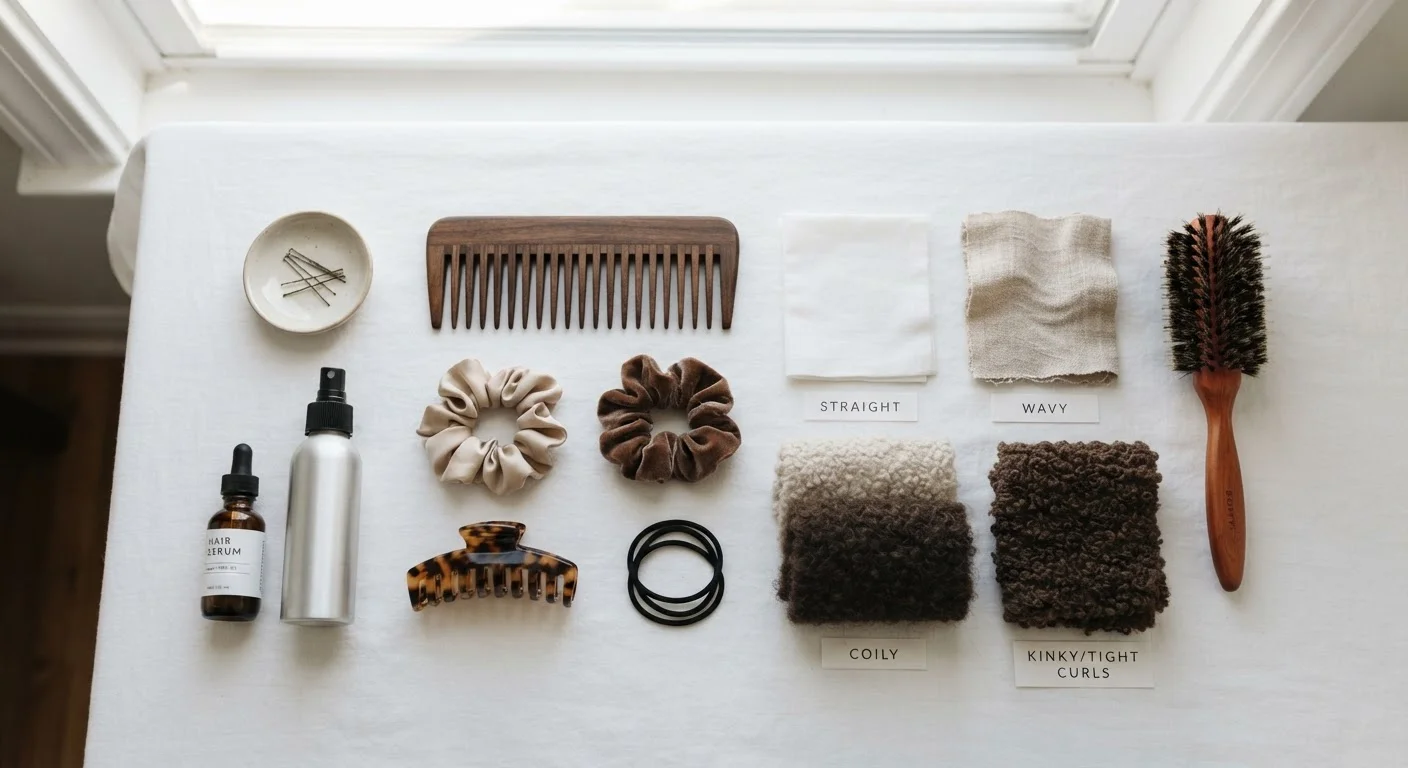
What you will need
Sulfate-Free or Low-Sulfate Shampoo
Cleanses the scalp and hair without stripping the natural oils that help curls stay defined and moisturized.
Wide-Tooth Comb or Detangling Brush
Used on wet, conditioner-coated hair to detangle gently without disrupting the natural curl pattern.
Rinse-Out Conditioner
Restores moisture to the hair shaft after cleansing and provides the slip needed for safe detangling.
Microfiber Towel or Cotton T-Shirt
Absorbs excess water with minimal friction to reduce frizz and preserve curl clumping.
Clarifying Shampoo
Used occasionally to remove product buildup that a regular shampoo cannot lift; not for every wash.
Leave-In Conditioner or Curl-Defining Gel
Applied to soaking-wet hair immediately after washing to lock in moisture and hold curl definition as hair dries.
Step-by-Step: Washing Curly Hair for Maximum Definition
Follow these steps in order. Each stage builds on the last, and skipping one — particularly detangling or rinsing — can undo the rest.
Detangle Before Wetting
Using your fingers or a wide-tooth comb, work through any knots or tangles while hair is still dry. Start at the ends and work upward toward the roots. Dry detangling before the wash prevents single shed hairs from binding into large knots when wet, which are harder to remove without breakage.
Saturate Hair Thoroughly with Warm Water
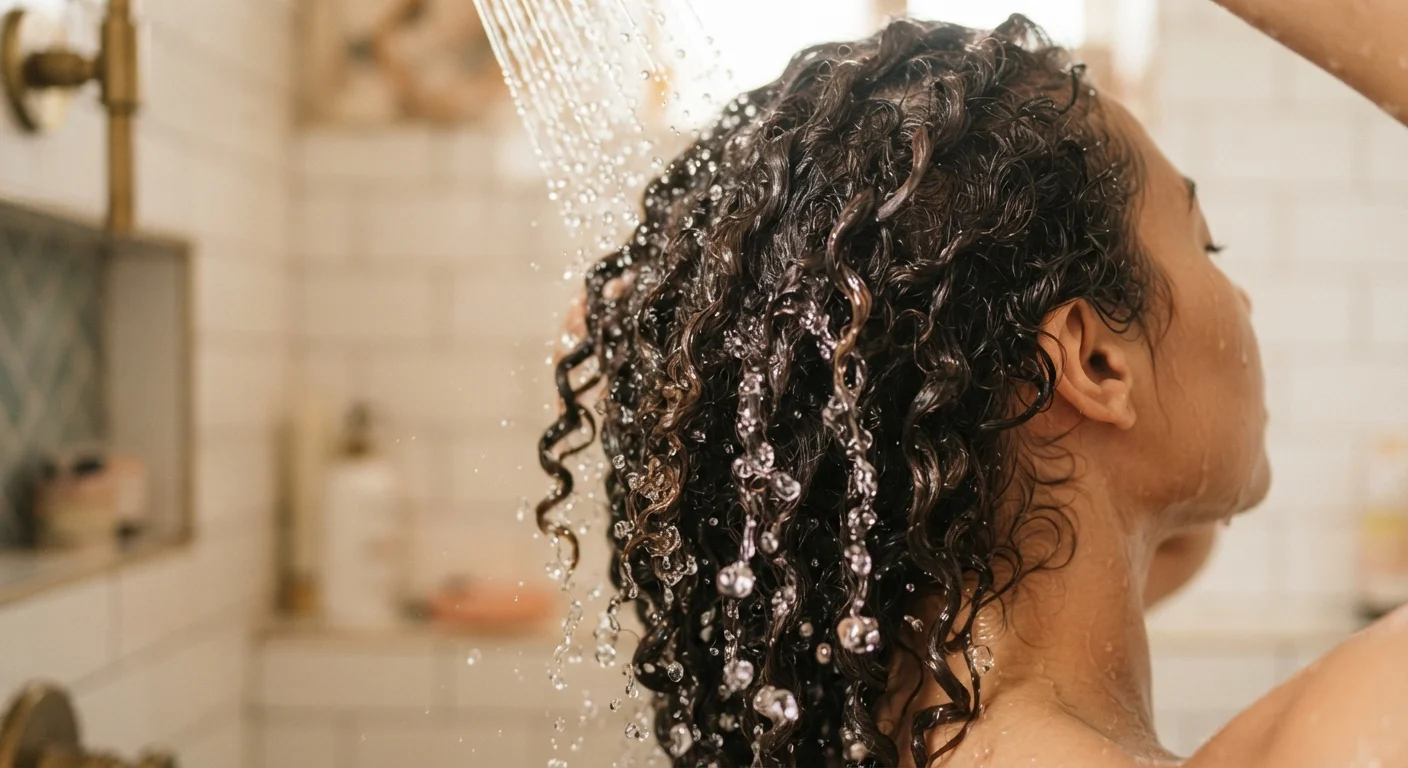
Before applying any product, make sure hair is fully saturated. Curly hair can resist water — coily textures especially — so spend 60 to 90 seconds letting water penetrate the strands. Use warm (not hot) water. Full saturation helps shampoo distribute evenly and prevents over-applying product to compensate for dry patches.
Apply Shampoo to the Scalp Only
Dispense shampoo into your palms, emulsify it with a little water, then apply it directly to your scalp — not the length of your hair. Use the pads of your fingers (not your nails) to massage in small circular motions across the scalp. The shampoo will travel down the length as you rinse, providing enough cleansing without stripping the mid-shaft and ends.
For guidance on choosing between a clarifying and a moisturizing shampoo — and how often to use each — see our shampoo comparison article.
Rinse Thoroughly, Then Apply Conditioner Generously
Rinse shampoo out completely with warm water. Any residue left on the scalp can cause buildup and itchiness. Then apply a generous amount of conditioner from mid-shaft to ends — this is where curly hair loses moisture fastest. For very dense or highly porous hair, don't be shy with the amount.
Detangle with Conditioner In
With the conditioner still coating the hair, use a wide-tooth comb or your fingers to detangle from ends to roots. Work in sections if your hair is thick or dense. The conditioner acts as a lubricant, allowing knots to release without tearing the strand. This is the safest moment to detangle curly hair.
Rinse with Cool Water
Switch the water to cool before your final rinse. Cool water encourages the cuticle to close, which helps lock in moisture and gives curls a smoother, more defined surface. Rinse until the water runs clear and no product residue remains.
Scrunch Out Excess Water — Don't Rub
Gently scrunch sections of hair upward using a microfiber towel or a clean cotton T-shirt. This removes excess water while encouraging curls to clump into their natural pattern. Never rub the towel back and forth across your hair — this motion disrupts the curl structure and generates the frizz that defined it before drying.
Wet Hair Is at Its Most Vulnerable
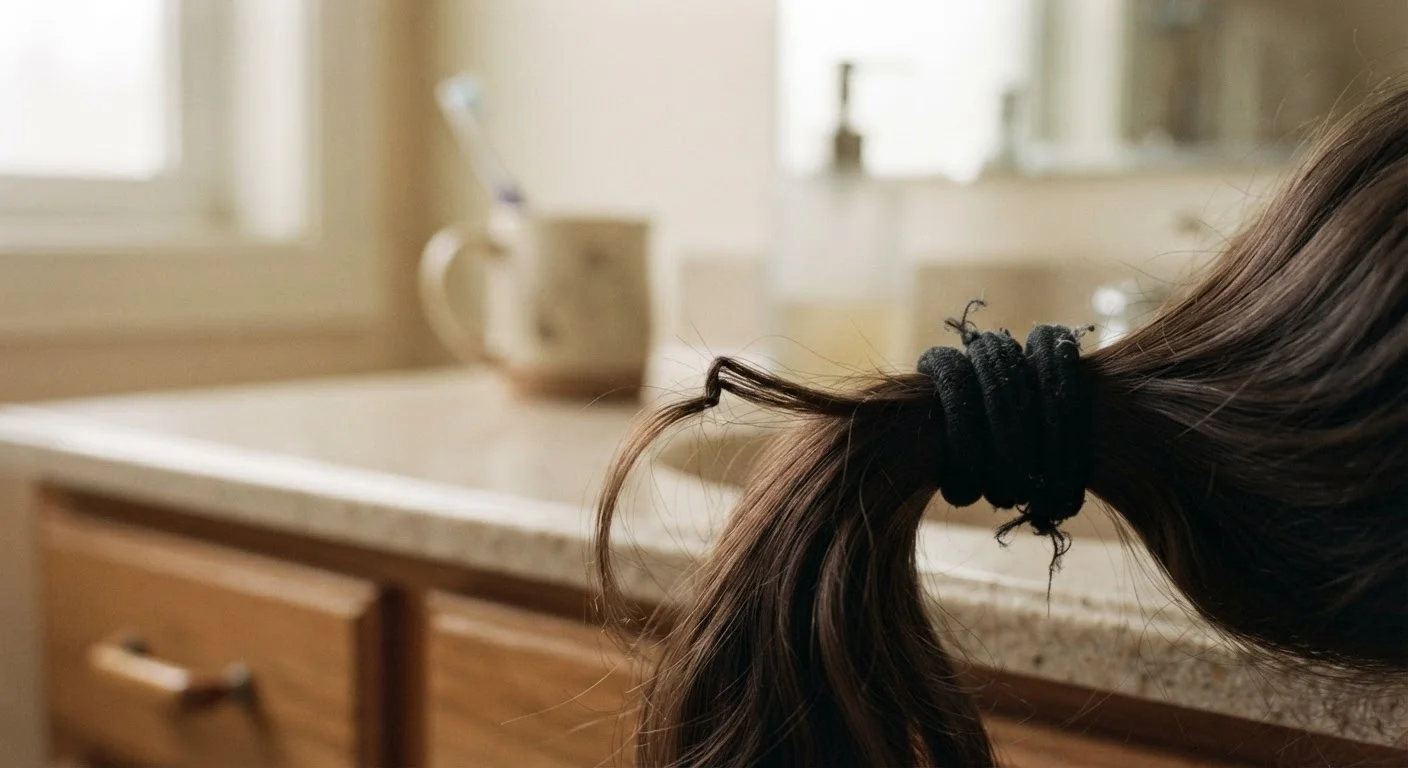
Hair elasticity increases when wet, which means it stretches further before it snaps — but it also snaps more easily under repeated stress. Avoid brushing, tying, or pulling wet curls. If you must handle them, work in sections with a detangling tool and minimal tension.
Common Mistakes That Cost You Definition
Even with the right products, a few technique errors can flatten curls. The most frequent culprits:
- Rubbing with a terry-cloth towel: Standard towels create friction that lifts the cuticle and breaks up curl clumps. A microfiber towel or a plain cotton T-shirt absorbs water with far less disruption.
- Rinsing with hot water: Hot water forces the cuticle open, making it harder for curls to close back into a defined pattern. Cool or lukewarm water helps seal the cuticle after conditioning.
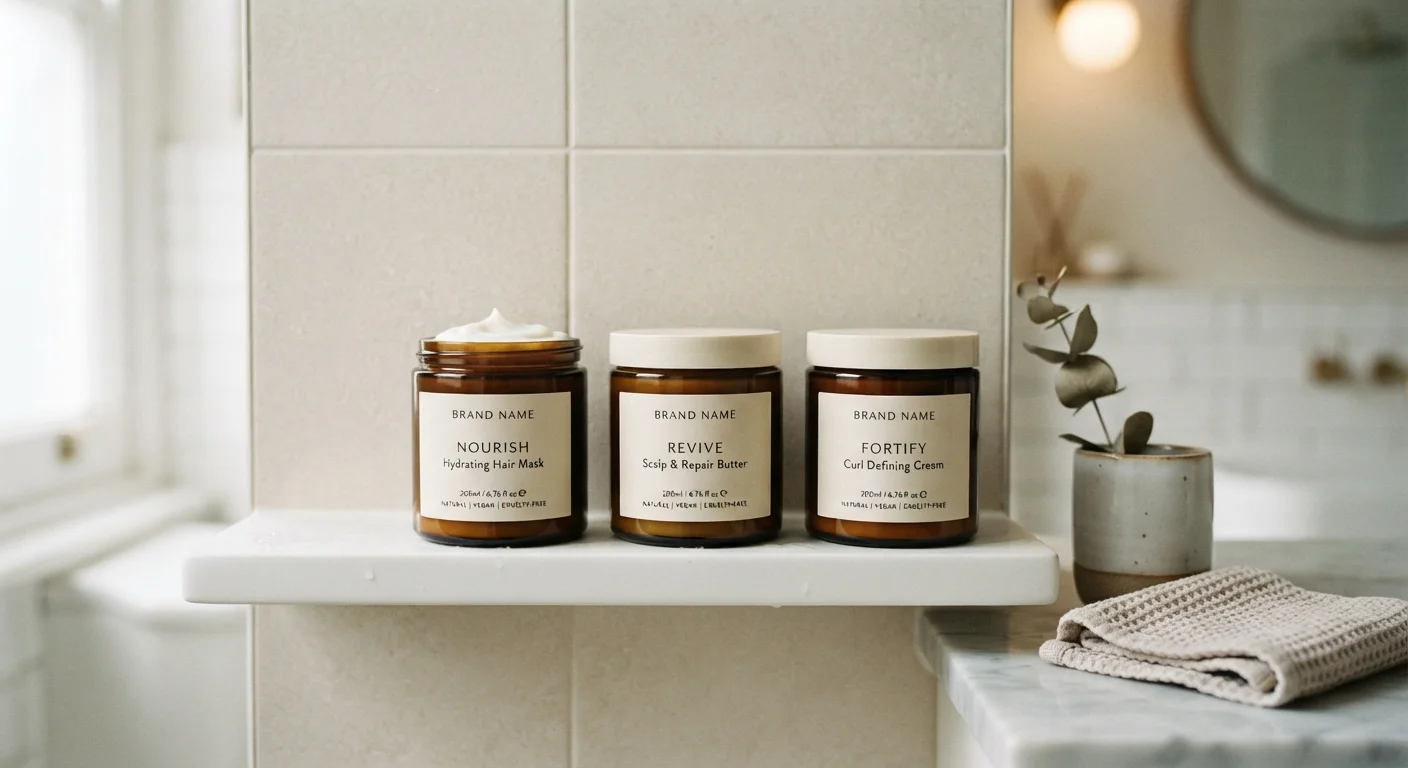
- Skipping conditioner or under-applying it: Curly hair requires consistent moisture replenishment at every wash. If you're unsure whether your routine calls for a rinse-out conditioner, a deep conditioner, or a hair mask, our breakdown of conditioner types explains what each one does and how often to use each.
- Washing too frequently: Over-washing strips natural oils that help curl strands clump and stay defined. Most curly hair types do well with one to three washes per week, though the right frequency depends on your scalp, lifestyle, and hair density.
Many of these habits are subtle and cumulative. Our guide to habits that quietly cause breakage covers how friction, tension, and routine gaps compound over time.
Product Buildup Undermines Every Technique
If your curls feel heavy, limp, or stop responding to conditioning, product buildup on the hair shaft is a common cause. Silicones and heavy waxes in some stylers coat the cuticle and block moisture from entering. A periodic clarifying wash can reset the hair, but use it only as needed — overuse strips the moisture curly hair depends on.