
Three Terms, Three Distinct Concepts
If you've ever tried to decode a hair care label or follow an online routine only to find it doesn't work for you, the confusion often starts here: hair type, hair texture, and hair density are three separate characteristics that are routinely used interchangeably — and they shouldn't be.
Each describes something distinct about your hair's physical structure. Understanding the difference gives you a clearer framework for choosing products and techniques that actually suit your hair — rather than defaulting to what works for someone with a completely different profile.
| Hair Type categories | Types 1–4, with subcategories a, b, c (André Walker hair typing system, widely adopted in the industry) |
| Hair Texture categories | Fine, medium, coarse |
| Hair Density categories | Low, medium, high |
| Average scalp hairs (adults) | Approximately 80,000–120,000 strands (General dermatological reference range) |
| Follicle shape influence | Rounder = straighter; more oval = curlier (Established trichology principle) |
These three properties interact with each other and with additional factors like hair porosity to determine how your hair behaves with moisture, heat, and styling products.
Hair Type: The Shape of Your Curl Pattern
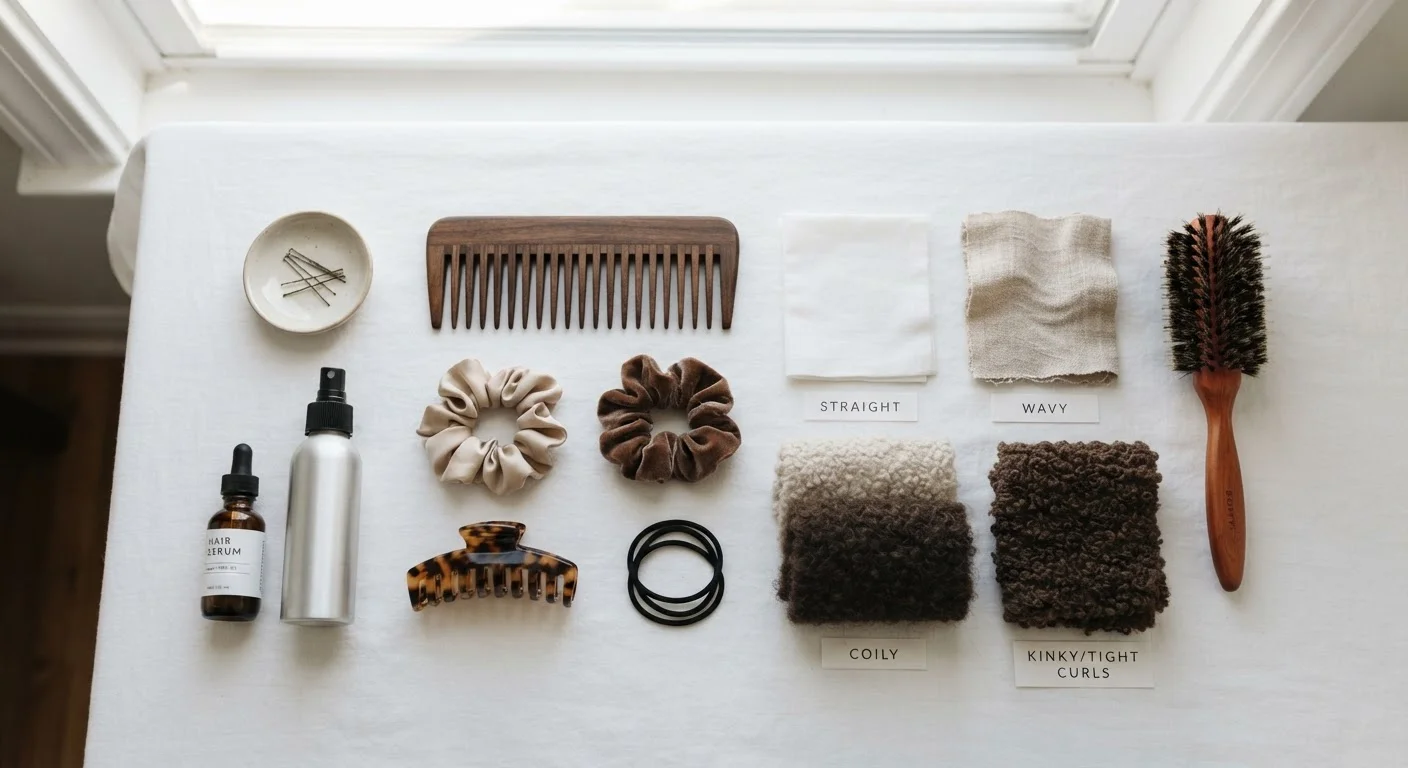
Hair type refers to the natural shape or curl pattern of an individual strand. The most widely used classification system groups hair into four broad categories — straight (Type 1), wavy (Type 2), curly (Type 3), and coily or kinky (Type 4) — with subcategories (a, b, c) that reflect tighter or looser variations within each group.
Hair type is determined primarily by the shape of the follicle. Rounder follicles tend to produce straighter hair; more oval or asymmetrical follicles produce curlier growth. This is a genetic trait and cannot be permanently changed by products, though chemical treatments can alter the pattern temporarily or until new growth appears.
Knowing your hair type helps you anticipate how your hair dries, how much it shrinks in length, and how likely it is to frizz. However, hair type alone tells you relatively little about how much moisture your hair needs or how much product it can handle — that's where texture and density come in.
Hair Type
The natural curl or wave pattern of your hair strands, ranging from straight to coily. Determined primarily by follicle shape and is a genetic characteristic.
Hair Texture
The diameter or thickness of an individual hair strand — classified as fine, medium, or coarse. Affects how much product weight hair can tolerate and how easily it absorbs moisture.
Hair Density
The total number of hair strands on your scalp, described as low, medium, or high. Influences how voluminous hair appears and how products distribute through it.
Curl Pattern
The specific shape a strand forms as it grows — straight, wavy, curly, or coily — used as the basis for most hair type classification systems.
Trichologist
A specialist who focuses on the health of the hair and scalp. Trichologists are not medical doctors in all regions, but they are trained to evaluate hair and scalp conditions.
Porosity
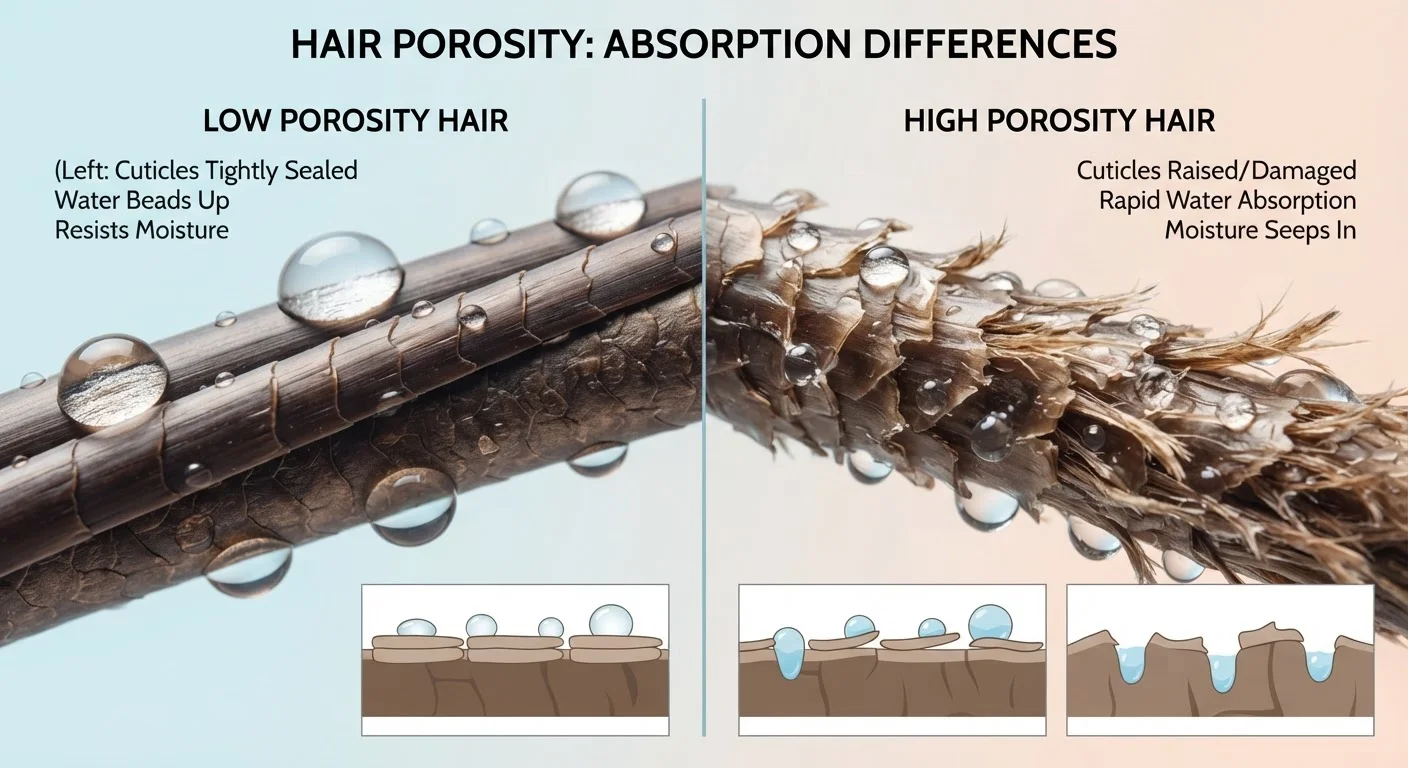
A hair property describing how readily strands absorb and retain moisture. Low porosity hair resists water; high porosity hair absorbs quickly but may lose moisture just as fast.
Hair Texture: The Width of a Single Strand
Hair texture describes the diameter — or thickness — of an individual strand. It is commonly classified as fine, medium, or coarse (sometimes called thick).
- Fine hair has a smaller diameter, which means it can be more prone to breakage, tends to lie flat, and is easily weighed down by heavy products.
- Medium hair falls in the middle range and is generally considered the most versatile in terms of product compatibility.
- Coarse hair has a wider diameter, making it stronger but often more resistant to moisture penetration and slower to absorb conditioning ingredients.
A simple way to gauge your texture: hold a single strand up to the light. Fine hair may be nearly invisible; coarse hair is clearly visible and may feel like a thread between your fingers.
Texture is separate from hair type. Someone with Type 4 coily hair can have fine strands; someone with Type 1 straight hair can have coarse strands. Getting this distinction right matters because it directly affects how much product weight your hair can tolerate — something relevant when you're reading a hair ingredient glossary to understand what's actually in your products.
Hair Density: How Much Hair You Have
Hair density refers to the number of individual strands on your scalp — not how thick each strand is. It is typically described as low, medium, or high density.
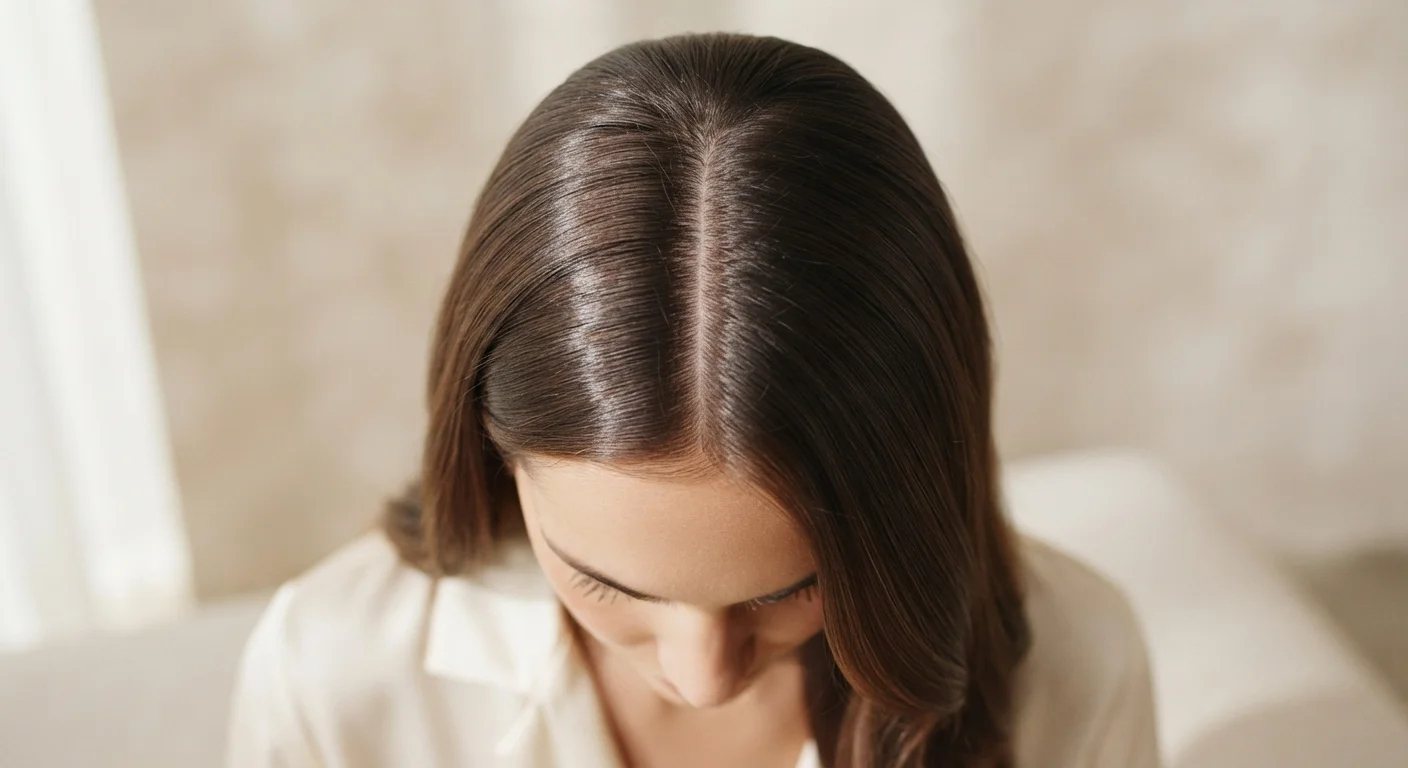
You can do a rough self-assessment: if you can easily see your scalp through your hair when it's dry and unstyled, you likely have low density. If your scalp is barely visible or not visible at all, density is likely high. Medium density falls between those points.
80,000–120,000
Typical strand count on an adult scalp
This range reflects general dermatological estimates; individual counts vary by genetics and age.
~50–100
Strands shed per day considered typical
Daily shedding within this range is generally considered part of normal hair cycling, according to widely cited dermatological guidance.
Density affects how voluminous your hair looks and how long styling products need to be worked through. High-density hair may require more product to achieve even distribution; low-density hair is more prone to looking flat or limp even with lightweight products.
Density is also distinct from hair loss. Changes in density over time can reflect a variety of factors — hormonal shifts, nutritional status, stress, or scalp conditions — and are worth discussing with a dermatologist or trichologist if they're significant or sudden. For a closer look at the foundation that supports hair growth, see our article on scalp health and hair growth.
Why All Three Matter Together
The practical value of understanding these distinctions is that they help you ask better questions about your routine. If a deep conditioner leaves your hair feeling limp, it may be a texture or density issue rather than a formula problem. If your curls aren't holding their shape, curl pattern (type) and porosity together are likely the relevant variables — not just the product you chose.
These three characteristics also interact with hair porosity, which describes how readily your hair absorbs and retains moisture. Together, type, texture, density, and porosity give a much more complete picture of your hair's behavior than any single trait can.
If your hair still feels dry after conditioning despite knowing your curl pattern, several other factors may be at play. And once you have a handle on these fundamentals, you'll be better equipped to evaluate evidence-backed hair care habits rather than chasing trends.