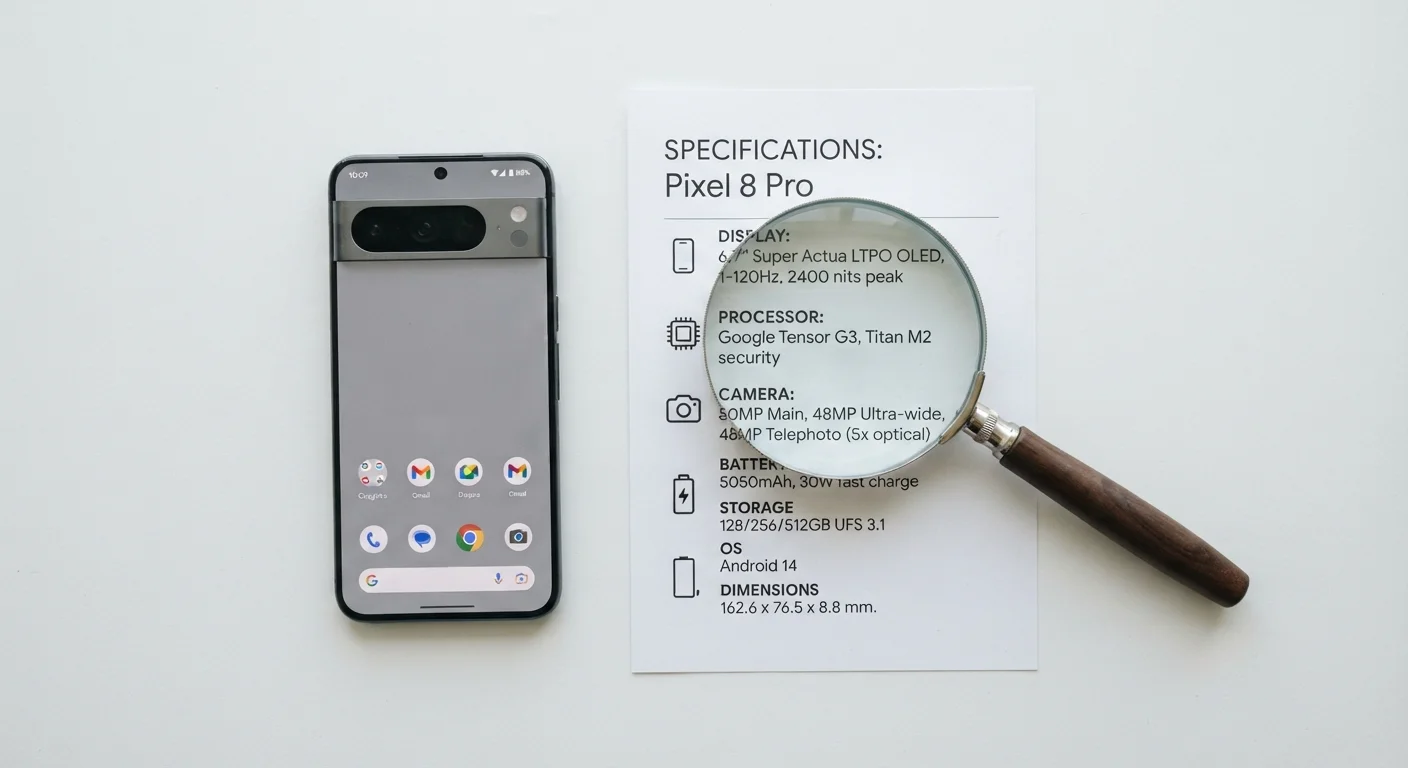

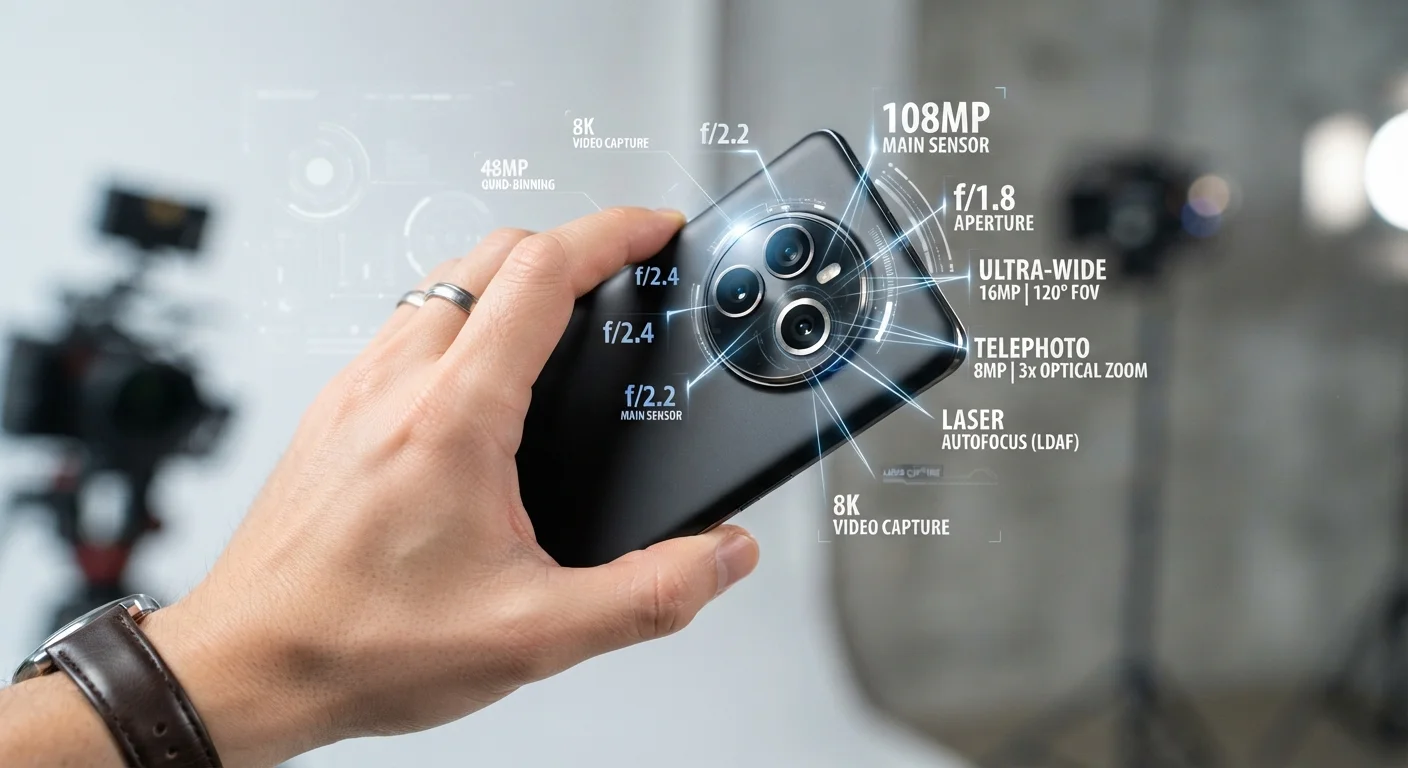
Why Spec Sheet Numbers Can Mislead
When smartphone makers advertise cameras, the megapixel number is almost always the headline. It's a clean, easy-to-compare figure — and it's frequently the least useful one for predicting real-world photo quality. Camera performance is the product of several interacting factors, and focusing on a single number is a bit like judging a car by its paint color.
This isn't just a camera problem. The same pattern shows up across consumer tech — from laptop specs to audio gear. If you've ever wanted to decode what actually matters on a spec sheet, our guide on what smartphone specs actually mean walks through RAM, storage, and processors using the same no-jargon approach.
Below, we address the most common camera spec myths and replace them with what the evidence actually supports.
Myth
More megapixels always means better photo quality.
Fact
Megapixels determine maximum image resolution, not overall quality. Sensor size, aperture, and processing algorithms have a greater influence on the final image.
A megapixel is simply one million pixels — the tiny dots that make up a digital image. Higher megapixel counts allow for larger prints and tighter crops, but they say nothing about color accuracy, dynamic range, or low-light performance. In fact, cramming more pixels onto a small sensor can make each individual pixel smaller, which often reduces the amount of light each one captures — potentially degrading quality in dim conditions.
Myth
A higher zoom number means you can always get a sharp, detailed close-up.
Fact
Optical zoom and digital zoom are fundamentally different. Only optical zoom maintains image quality; digital zoom is essentially a software crop that reduces detail.
Optical zoom physically moves lens elements to magnify a subject, preserving sharpness. Digital zoom simply enlarges the center portion of what the sensor already captured — the same as cropping a photo after the fact. Many phones advertise a combined figure (e.g., "up to 30x zoom") that blends both types. A modest optical zoom paired with good software processing will typically outperform a high digital zoom value in real shots.
Myth
Night mode just brightens a dark photo after it's taken.
Fact
Night mode typically captures multiple exposures in rapid succession and merges them computationally to reduce noise and recover shadow detail.
When you tap the shutter in night mode, the camera usually takes a burst of frames at different exposure levels over one to several seconds. Software then aligns and combines these frames, averaging out random noise while preserving consistent detail. The result is meaningfully different from simply raising brightness — which amplifies noise — and the quality of the algorithm varies considerably between devices and software versions.
Myth
The camera specs listed on the box describe every camera on the phone.
Fact
Most modern phones have multiple cameras with different sensors and capabilities; the advertised spec typically refers only to the primary lens.
A phone marketed as having a "50MP camera" may pair that primary sensor with an ultrawide camera at 12MP and a telephoto at 10MP — each with its own aperture, sensor size, and stabilization. When you switch between lenses, you're using a completely different optical system. This means the quality you experience at wide-angle or zoom settings may differ substantially from the headline number advertised on the packaging.
Myth
A wide aperture (low f-number) is always better for every kind of photo.
Fact
Wide apertures excel in low light and for shallow depth-of-field effects, but may reduce sharpness across a wide scene in bright conditions.
Aperture controls both light intake and depth of field — how much of the scene appears in sharp focus. A very wide aperture like f/1.4 lets in a lot of light and creates a blurred background, which is desirable for portraits. For landscape or group shots in good light, a slightly narrower aperture often produces more consistent sharpness from edge to edge. Many phones automatically adjust aperture or simulate its effects through software to balance these trade-offs.
The Specs That Actually Shape Your Photos
Once you move past megapixels, three factors do most of the real work: sensor size, aperture, and computational processing.
Sensor size refers to the physical dimensions of the light-capturing chip inside the camera. A larger sensor collects more light per pixel, which translates directly into better color depth and less digital noise — especially in dim conditions. Sensor size is often listed in fractions of an inch (e.g., 1/1.28″), but bigger denominators mean a smaller sensor, so the notation can feel counterintuitive.
Aperture is expressed as an f-number (like f/1.8 or f/2.4). A lower f-number means a wider lens opening, letting in more light. This matters enormously for indoor and evening shots. Two cameras with the same megapixel count but different apertures will produce noticeably different results in the same low-light scene.
Computational photography is the software layer that processes raw sensor data into a finished image. Features like HDR (High Dynamic Range), portrait mode background blur, and night mode are all software-driven. This is why two phones with similar hardware can produce very different photos — the algorithms doing the post-capture work vary significantly.
12MP
Resolution used by many professional cameras for years
Professional DSLR cameras used 12MP sensors throughout much of the 2010s while consistently outperforming higher-megapixel consumer devices on image quality metrics.
~50%
Image quality contribution from software processing
Camera engineers and imaging researchers widely acknowledge that computational photography — software-based processing — accounts for a substantial share of final image quality in modern smartphones.
For a broader look at how marketing numbers can obscure practical performance in other tech categories, see our piece on laptop specs that actually matter.
Putting It Into Practice
When you're evaluating a phone camera, ask these questions instead of comparing megapixel counts:
- What is the sensor size? Larger is generally better, especially for low-light use.
- What is the maximum aperture? An f/1.8 lens outperforms an f/2.4 lens in dim conditions, all else being equal.
- Does the phone use optical image stabilization (OIS)? OIS uses physical lens movement to reduce blur from hand shake — a distinct advantage over software-only stabilization.
- How does its night mode perform in real-world samples? Look for published camera tests using standardized conditions, not manufacturer demo shots.
Manufacturer Demo Shots Are Not Neutral Tests
Camera samples published in press materials and on manufacturer websites are typically selected to show a device at its absolute best under controlled conditions. They are not representative of average shooting scenarios. For a more grounded evaluation, look for independent camera comparisons that use standardized, repeatable test conditions across multiple devices.
It's also worth noting that cameras don't operate in isolation. The images you take are shaped by how you share and display them — compression from messaging apps, social media platforms, and even printing can strip away detail regardless of original capture quality. A 200MP photo shared via a compressed messaging platform may look nearly identical to a 12MP one by the time it reaches the recipient.
Understanding what's being captured versus what's being displayed is a useful habit — similar in spirit to recognizing how real estate listing photos use lens choices and staging to shape perception. Our article on how listing photos can mislead explores that dynamic in a different context.