
What an Itinerary Actually Tells You
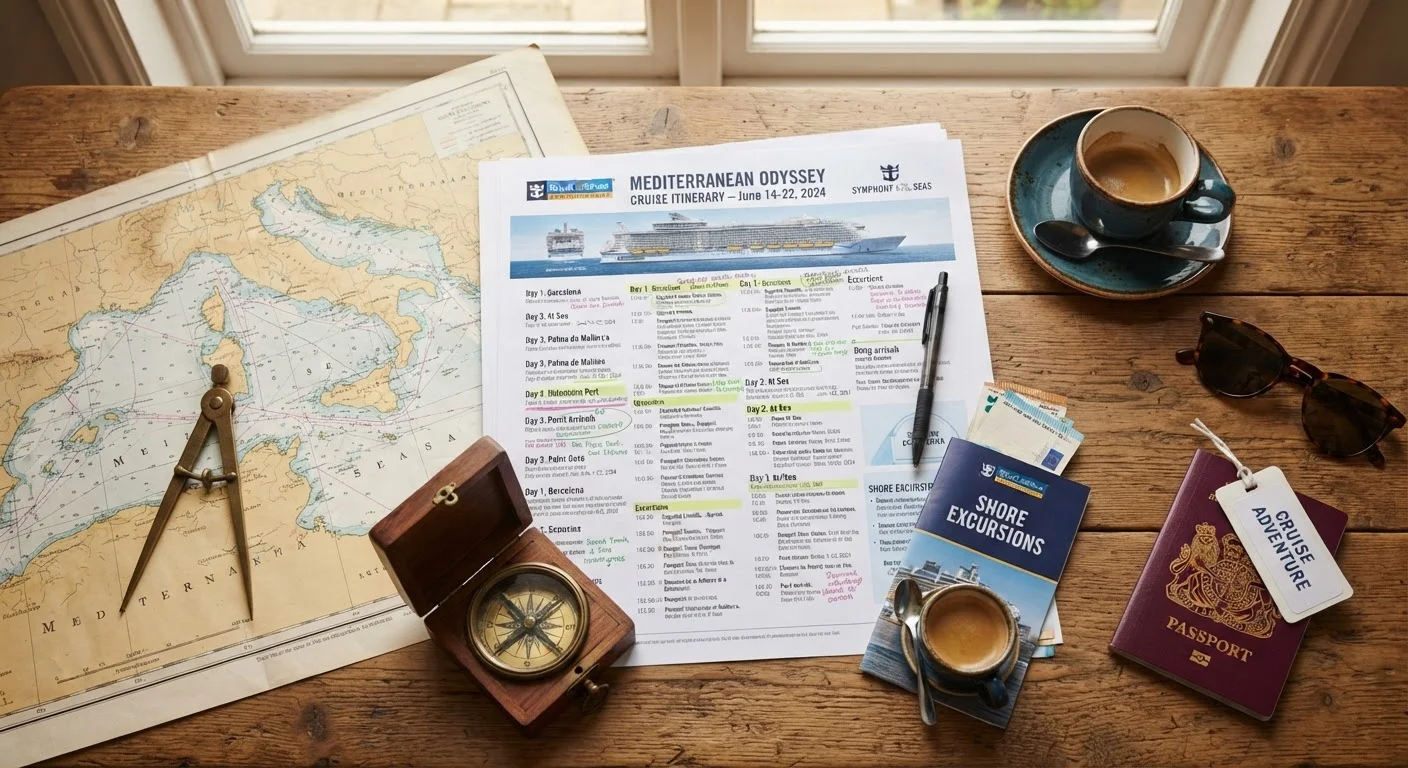
A cruise itinerary looks straightforward at first glance — a list of ports, dates, and times. But the information embedded in those columns rewards closer reading. For first-time cruisers especially, the gap between what an itinerary appears to promise and what it actually delivers can shape the entire experience. If you're still orienting yourself to how cruise travel works broadly, our guide for first-time ocean cruisers covers the foundational framework before you dive into scheduling specifics.
Every itinerary line contains at minimum a date, a port name, and listed arrival and departure times. Those times — not the destination name — are the most operationally significant details on the page. A port listed as 07:00–14:00 is a fundamentally different experience than one listed as 10:00–22:00, even if both say "Naples" or "Nassau." Seven hours is enough to reach a ruin site and return with buffer time. Four hours may only support a walk through the immediate port area.
Check Local vs. Ship Time Before Going Ashore
Some cruise lines maintain a single onboard clock throughout the entire voyage, regardless of the local time zone at each port. Before disembarking, confirm whether the departure time listed is in ship time or local time. Mixing the two up is one of the most avoidable — and consequential — mistakes a cruise passenger can make.
Pay equal attention to whether times are listed in local port time or ship time. Some lines operate on a single onboard clock throughout the voyage regardless of time zones. Misreading this detail has caused passengers to cut port visits short or miss sailings entirely.
Pier Ports vs. Tender Ports
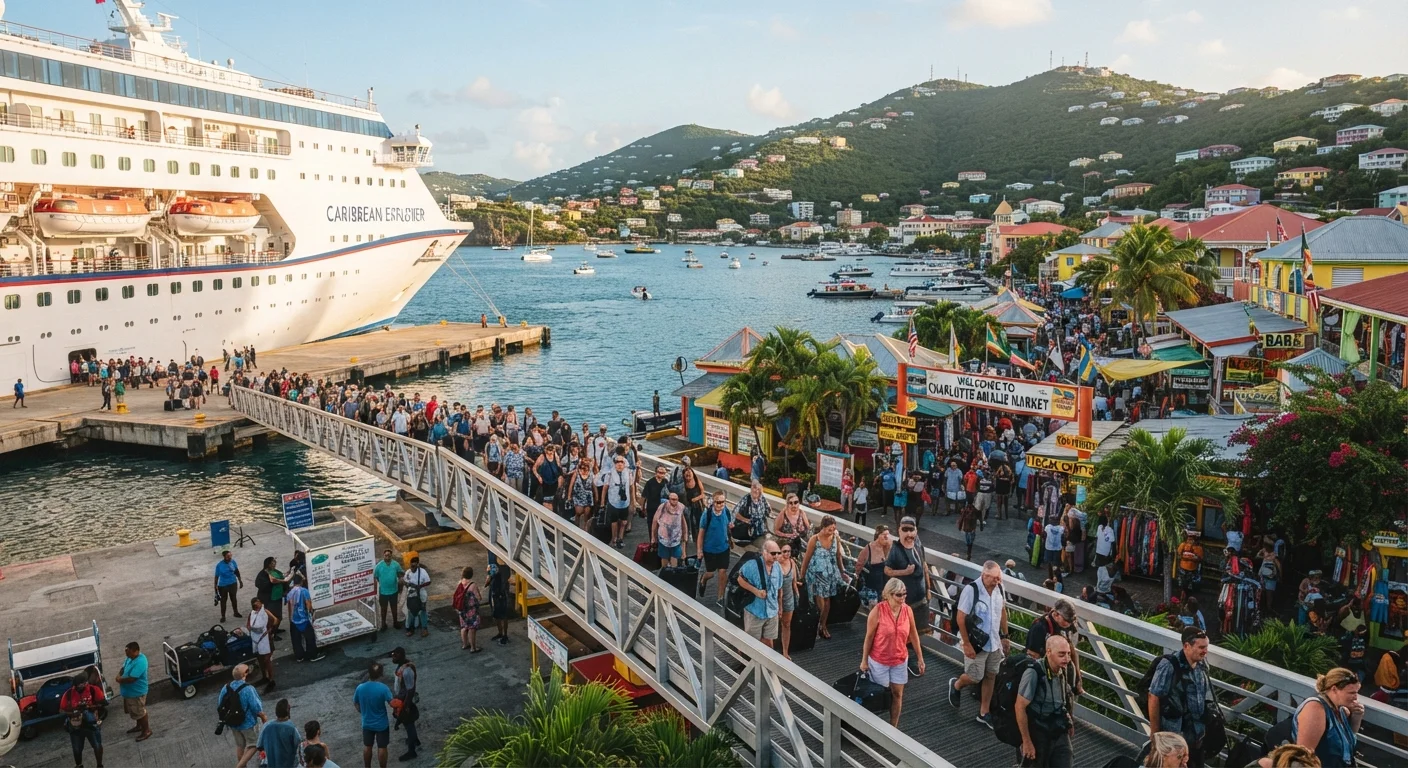
Not every destination on a cruise itinerary is reached by walking off a gangway onto a dock. When a port's harbor is too shallow, or the anchorage sits offshore, ships anchor at sea and ferry passengers ashore using smaller boats called tenders. The itinerary typically notes this — look for language like "anchor" or "tender required" — but not always prominently.
Tender operations add meaningful time to your shore visit. Passengers wait their turn in a queue (often by deck or by whether they've booked ship excursions), board a vessel that holds perhaps 150 people, complete a 10–20 minute crossing, then reverse the process to return. On a popular port day, that round-trip transfer could consume 45–90 minutes of your allotted time ashore. Planning accordingly — choosing fewer activities, prioritizing proximity to the tender pier — makes the difference between a satisfying visit and a rushed one. For a deeper look at how to structure time once you're ashore, understanding shore excursion logistics is worth reading before you book anything.
Tender Queues Can Be Lengthy on Busy Days
At popular tender ports during peak season, wait times for a tender boat can stretch to an hour or more, particularly in the morning when most passengers are eager to go ashore at once. If your port window is short, consider waiting until mid-morning when queues thin, or book a ship-organized excursion, which typically receives tender priority boarding.
Sea Days, Turnaround Ports, and Schedule Architecture
Sea days — days when no port is listed — are sometimes viewed as wasted time by passengers focused on destinations. They're better understood as a necessary feature of how ocean routing works. A ship traveling from Barcelona to Lisbon simply needs two or three days at sea to cover that distance. Lines schedule programming accordingly: lectures, cooking demonstrations, fitness classes, and entertainment fill sea days with intentional structure. Many experienced cruisers count sea days among their favorites aboard.
Turnaround ports deserve separate attention. These are the embarkation and debarkation cities — typically the first and last entry on an itinerary, though repositioning cruises may have different start and end points. The ship is operationally focused on passenger logistics on these days: provisions are loaded, cabins are turned over, thousands of passengers move through customs and terminal checks. Sightseeing in a turnaround port is possible but requires independent planning, early disembarkation, and careful attention to reboarding deadlines. If your turnaround port is a city you want to explore seriously — say, Civitavecchia as a gateway to Rome, or Piraeus near Athens — building in a pre- or post-cruise hotel night is often more practical than attempting it on embarkation day. A destination-by-destination overview of the Mediterranean coast can help you assess which ports merit extended stays.
Itinerary Changes Are Contractually Permitted
Cruise contracts universally allow lines to modify or cancel port calls due to weather, mechanical issues, geopolitical conditions, or port congestion. This is standard industry practice and is generally not grounds for a refund. If a specific port is the primary reason you're booking a particular voyage, read the contract language carefully and discuss your expectations with the booking agent before committing.
Cruise contracts universally allow lines to modify or cancel port calls due to weather, mechanical issues, geopolitical conditions, or port congestion. This is standard industry practice and is not grounds for refund in most cases. If a specific port is the primary reason you're booking a particular voyage, it's worth reading the contract language carefully and discussing your expectations with the booking agent before committing.
For a broader look at how cruise pricing and inclusions work alongside itinerary planning, understanding what all-inclusive actually covers on a cruise provides essential context that affects how you budget for port days and excursions.