
What Counts as a Large Cruise Ship?
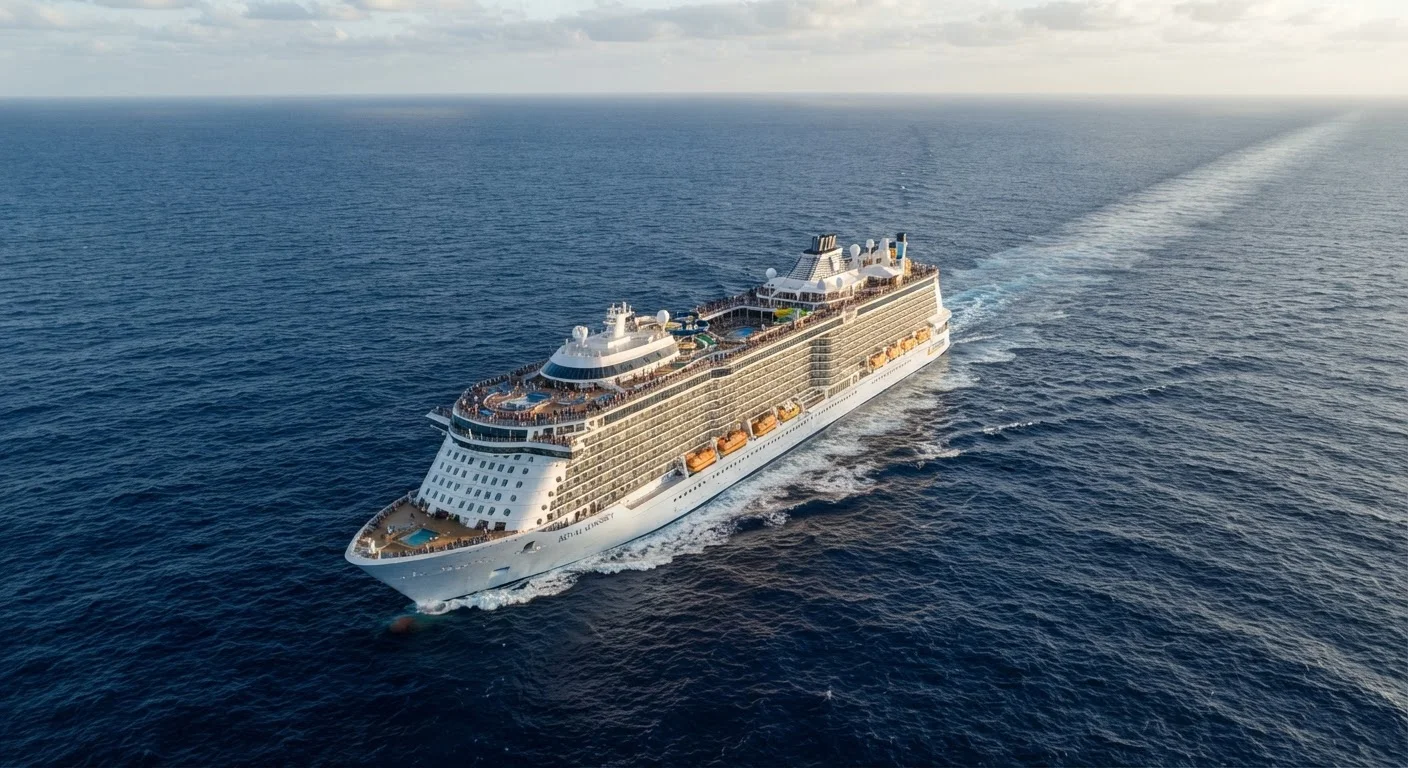
The cruise industry uses tonnage and passenger capacity to classify vessels. Ships carrying roughly 3,000 passengers or more — and gross tonnage above 100,000 — are generally considered large or "mega" ships. Some of the newest vessels in service hold upward of 6,000 to 7,000 guests at full occupancy, making them among the largest moving structures ever built.
These ships are floating cities, complete with multiple restaurant venues, theaters, water parks, sports courts, and retail areas. If you're new to ocean travel, our guide for first-time cruisers covers the basics of how ships work and what fares typically include before you compare vessel sizes.
The Advantages of Going Large
Scale creates real benefits — particularly for families or groups with diverging interests.
Enormous variety of onboard dining and entertainment
Large ships may feature a dozen or more restaurant concepts, multiple bars, theaters, and nightlife venues operating simultaneously, giving passengers options that smaller ships simply cannot replicate.
Family-friendly amenities in one place
Water parks, youth clubs, sports courts, and supervised kids' programming make large ships particularly well-suited to multigenerational travel where different age groups have different needs.
Stabilization technology reduces motion discomfort
Larger hulls and modern stabilizer systems typically produce a smoother ride in moderate seas, which can be meaningful for passengers prone to motion sickness.
Competitive base fares relative to amenity count
High passenger volumes allow operators to spread fixed costs broadly, often resulting in base fares that appear favorable when measured against the range of included facilities.
Self-contained resort experience at sea
For travelers who want entertainment and activity built into the voyage itself, a mega-ship offers enough variety that sea days never feel empty or unstructured.
6,988
Maximum passenger capacity of the world's largest cruise ship
According to publicly available vessel specifications, the largest cruise ships currently in service can carry nearly 7,000 passengers at full double-occupancy plus berths.
~50%
Share of cruise passengers who sail on large or mega-ships
Industry analyses suggest the majority of global cruise passengers travel on large vessels, reflecting the market dominance of high-capacity fleet deployment.
For travelers who want entertainment built into the voyage itself rather than relying entirely on ports, a large ship removes the need to plan every hour. Multiple dining styles, live shows, kids' clubs, and wellness facilities running simultaneously means different family members can genuinely do different things at the same time.
Large ships also tend to offer more competitive base fares relative to their amenity count, since the economics of volume allow operators to spread fixed costs across a larger passenger base.
The Genuine Tradeoffs
Size introduces friction that smaller ships sidestep almost entirely.
Crowds affect nearly every onboard experience
Popular venues, pool decks, and buffet areas can feel congested during peak hours, and wait times for specialty dining or shows are common on fully booked sailings.
Limited access to smaller, character-rich ports
Historic harbors and boutique island destinations often cannot accommodate very large ships at the dock, requiring passengers to tender ashore by small boat — a process that adds time and can be inaccessible for some travelers.
Shore-excursion groups can overwhelm small destinations
A ship carrying thousands of passengers disembarking into a small coastal town simultaneously can significantly alter the atmosphere and strain local infrastructure.
Less intimate social and onboard atmosphere
With thousands of passengers aboard, the sense of community that characterizes smaller ships is harder to achieve; repeat guests and crew-to-passenger ratios often differ notably from boutique vessels.
Navigation limited to major cruise ports
Draft and size restrictions confine large ships to ports with purpose-built cruise terminals, excluding a wide range of destinations that smaller or expedition vessels can reach.
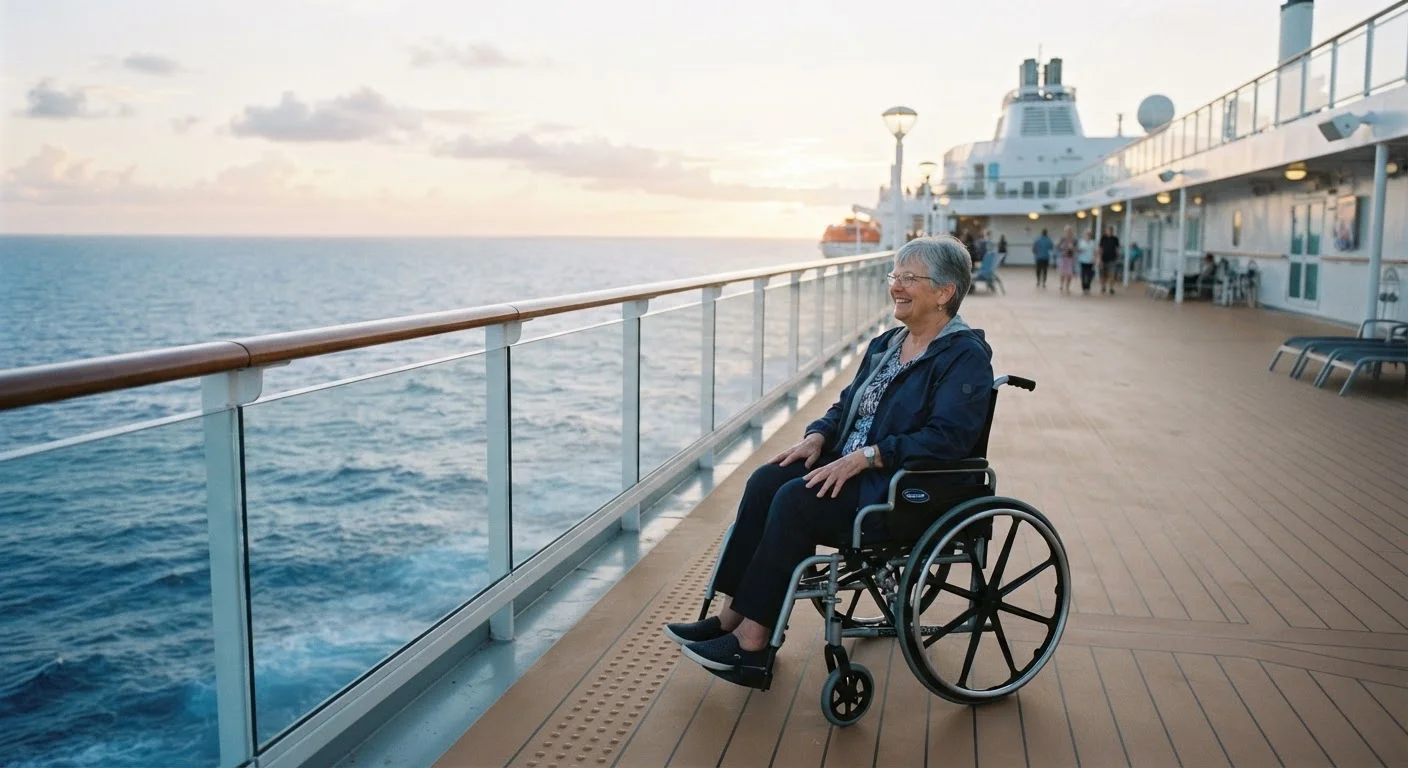
Perhaps the most overlooked issue is port access. Many historic harbors — particularly in the Mediterranean and the Caribbean — have dock infrastructure designed for smaller vessels. A mega-ship may be required to anchor offshore and tender passengers to land by small boat, adding time and limiting access for travelers with mobility concerns. For guidance on navigating cruising with health considerations, see our article on cruising with a chronic health condition.
Crowds compound quickly. A ship carrying 5,000 passengers with even modest shore-excursion uptake can overwhelm a small destination town. That changes the character of the port experience significantly — and it's worth factoring in before choosing an itinerary built around intimate cultural stops.
Port Tendering: What to Expect
When a large ship cannot dock directly, passengers are transported to shore by smaller tender boats operating on a timed rotation. This process typically adds 20–45 minutes each way and may be suspended in rough sea conditions, occasionally causing a port stop to be skipped entirely. Travelers with limited mobility should review a specific ship's tendering requirements before booking itineraries that include anchor-only ports.
How Large Ships Compare to Other Options
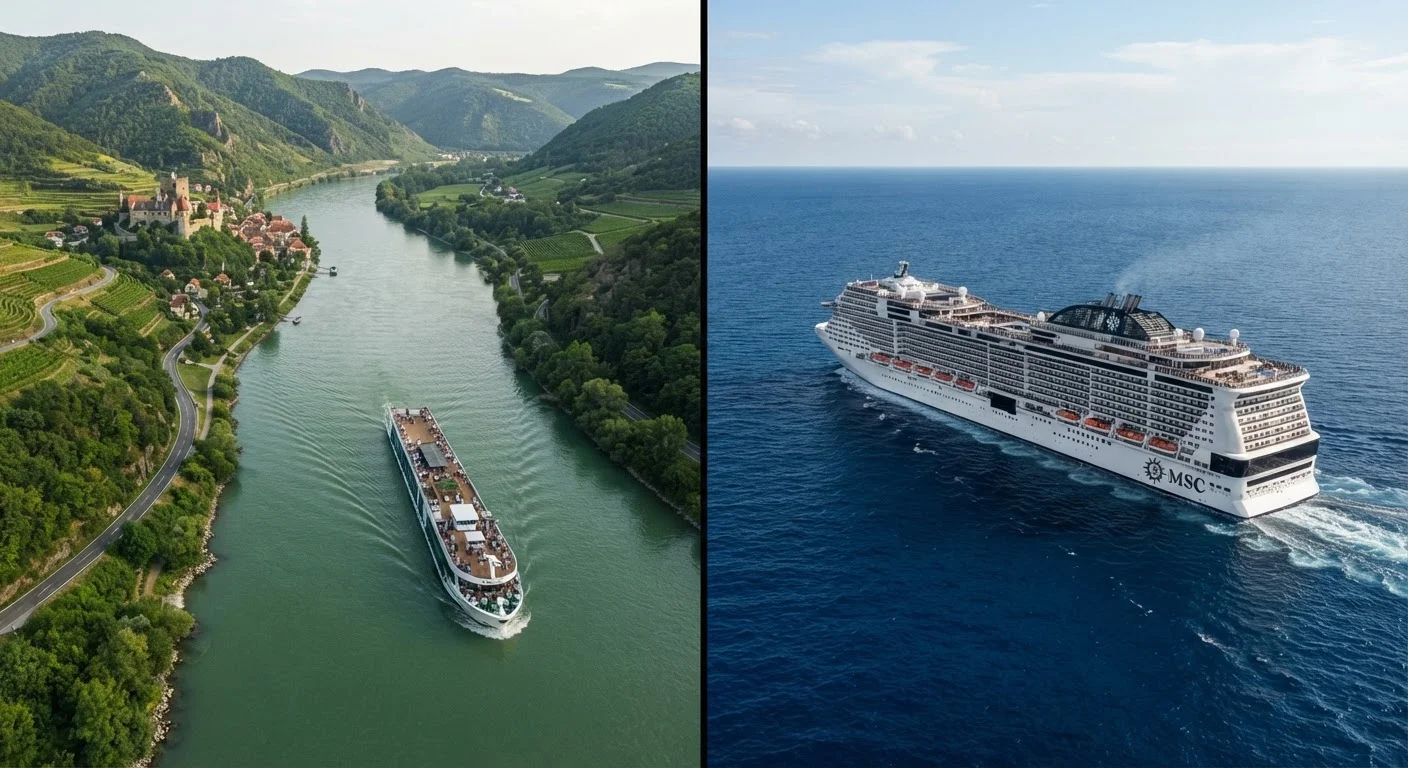
The large-ship experience sits at one end of a wide spectrum. River cruises, expedition vessels, and private charters operate at the opposite end — far fewer passengers, deeper destination access, but a very different cost and amenity profile. Our comparison of river versus ocean cruising breaks down how those two formats diverge in itinerary design and onboard life.
Travelers drawn to longer, less port-intensive voyages might also explore repositioning cruises, which move ships between seasonal homeports and often include extended sea days — a format where a large ship's onboard amenities actually work in its favor, since passengers have more time to use them. For those weighing maximum privacy and flexibility, chartered yachts versus cruise ships explores what each format genuinely delivers.