
Why People Are Looking Up More While Traveling
Something shifted in how many travelers think about nighttime. For generations, the hours after sunset were largely dead time between dinner and sleep. Now, for a growing segment of visitors worldwide, the dark is the destination.
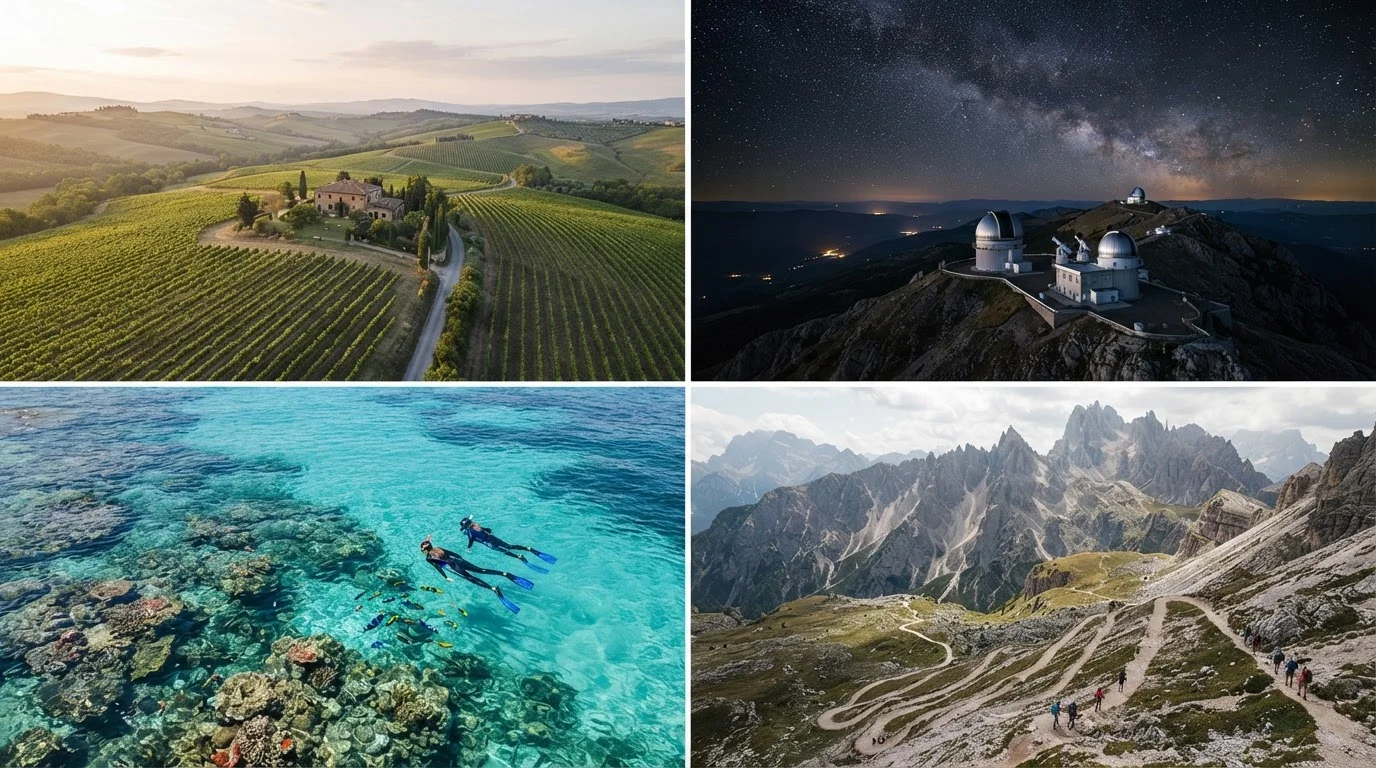
Astrotourism has emerged as one of the more quietly compelling categories within what travel writers broadly call specialty or niche travel. It fits alongside other deliberate, experience-driven forms of exploration that reframe the purpose of a trip — moving away from landmark-checking and toward something more immersive and singular.
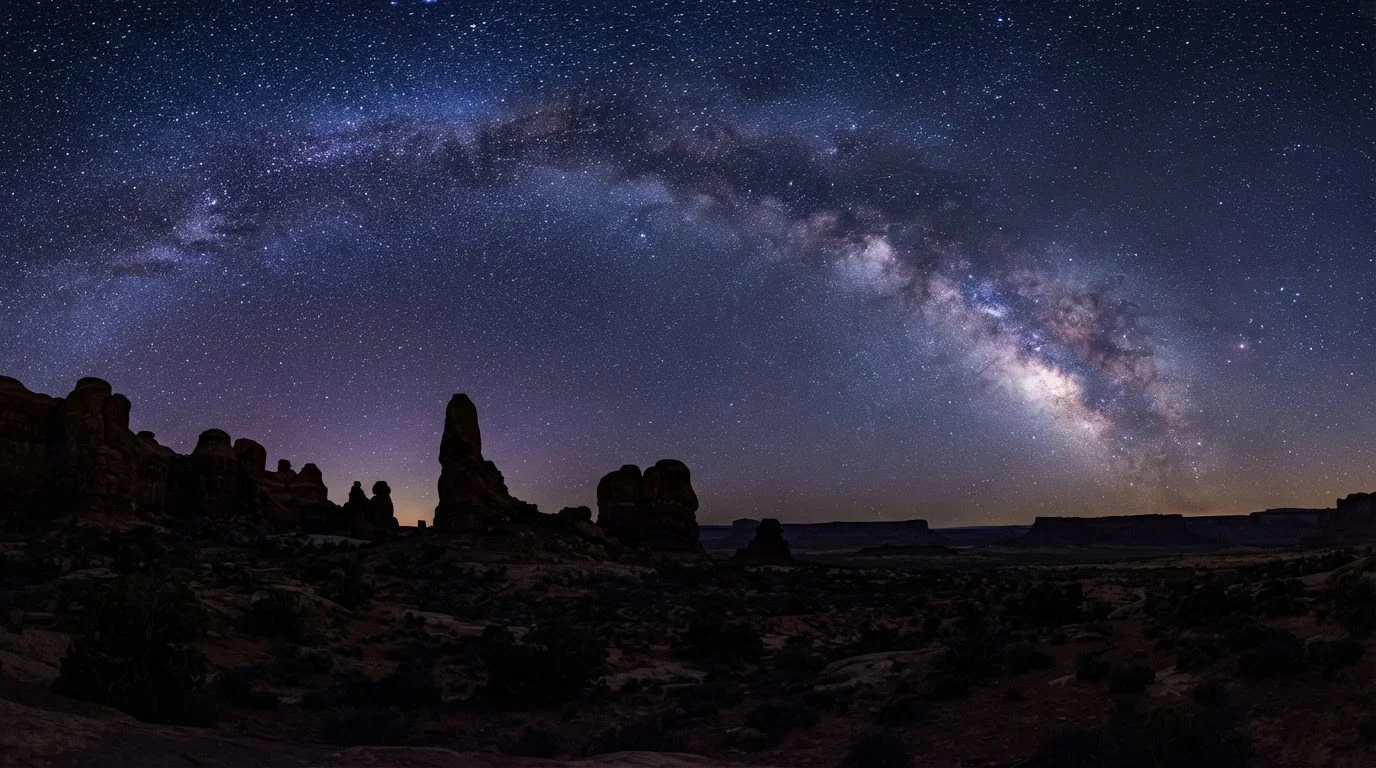
The simplest explanation for astrotourism's growth is loss. Light pollution now washes out the Milky Way for an estimated one-third of humanity. For most urban residents, a truly dark sky — dense with stars, bisected by the galaxy's soft band — is no longer something they have ever witnessed firsthand. Traveling to see it is, for many, their first genuine encounter with the night sky as it would have appeared to every previous generation of humans.
~1/3
Of humanity cannot see the Milky Way
According to a 2016 study published in the journal Science Advances, approximately one-third of the global population lives under skies too bright to see the Milky Way.
99%
Of Americans live under light-polluted skies
The same 2016 Science Advances research found that 99% of the U.S. and European population experiences some level of light-polluted night sky.
200+
Certified IDA dark-sky places worldwide
The International Dark-Sky Association has certified more than 200 dark-sky parks, reserves, and communities globally across dozens of countries.
What Makes a Location Suitable for Dark-Sky Travel
Not every rural or remote place qualifies as a meaningful dark-sky destination. The key variable is the Bortle scale, a nine-point system that measures night-sky brightness from heavily light-polluted urban centers (Class 9) down to pristine, naturally dark environments (Class 1 or 2). Experienced stargazers and destination planners routinely consult this scale alongside light-pollution maps to assess a location's viability.
Elevation also plays a role. Higher altitudes thin the atmosphere, reducing the column of air that light must pass through — which is why observatories tend to sit on mountains. Dry climates reduce cloud cover and atmospheric moisture that can scatter light. And geographic isolation from major population centers keeps ambient glow — the diffuse brightening caused by distant cities — off the horizon.
Formal certification, such as that awarded by the International Dark-Sky Association, signals that a location has not only good natural conditions but also community commitment to preserving them through regulated outdoor lighting ordinances. This matters for travelers planning trips years in advance: certified dark-sky places are less likely to see conditions degrade over time.
Check Lunar Phase Before You Book
The moon's brightness can overpower faint stars and even the Milky Way's core. Planning your visit around new-moon periods — when the moon is below the horizon for most of the night — significantly improves the quality of naked-eye and telescope viewing. Free lunar-phase calendars are widely available online and should be your first planning tool.
Where Astrotourism Is Happening
Dark-sky destinations span a wide geographic range. In the American West, large swaths of national park land — particularly in Utah, Arizona, and Nevada — have earned international recognition for their night-sky quality. Internationally, the Atacama Desert in Chile hosts some of the world's most powerful observatories and now welcomes a growing number of non-scientist visitors. New Zealand's Aoraki Mackenzie International Dark Sky Reserve in the South Island covers hundreds of thousands of hectares. The Canary Islands, Wales, and parts of Namibia have also emerged as recognized destinations.
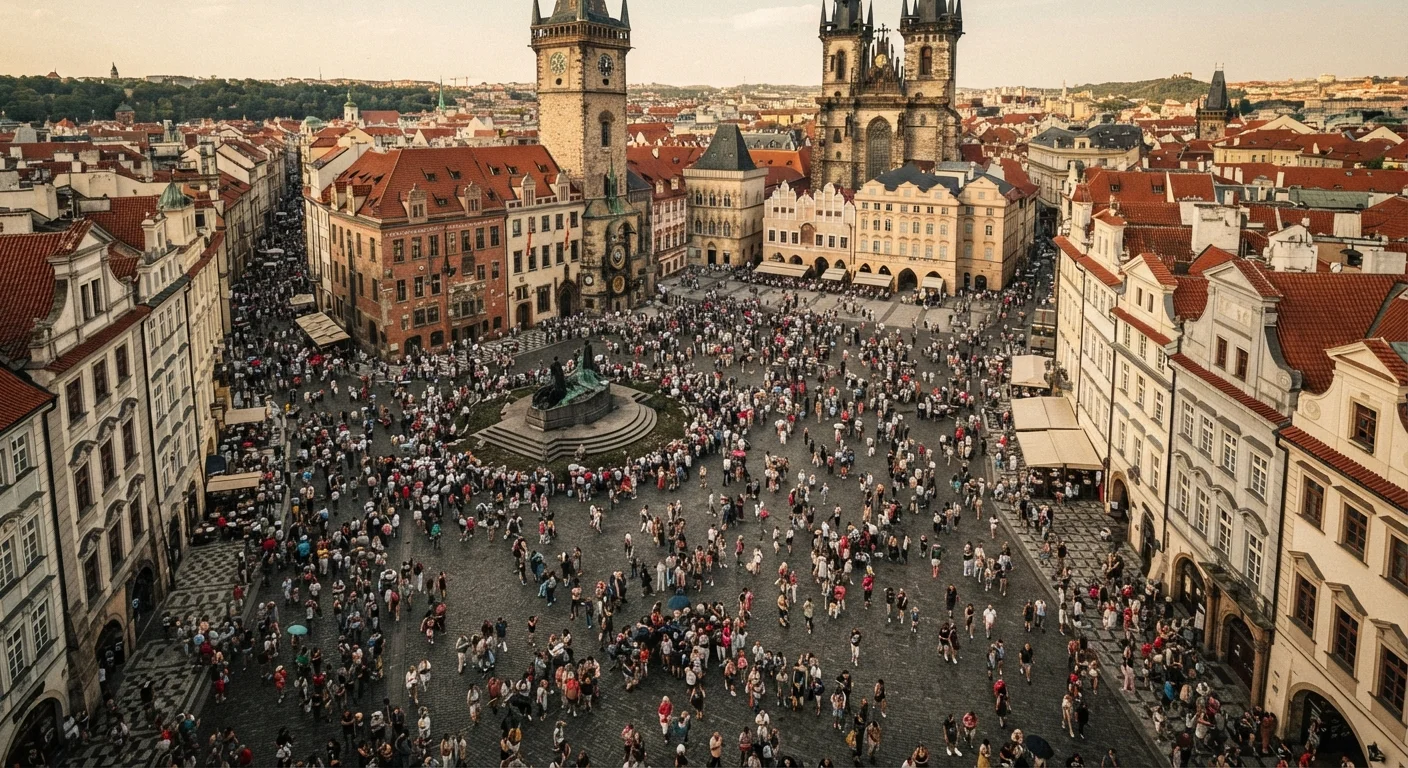
What these places share is low population density, limited industrial development, and geographic features — deserts, plateaus, open ocean surrounds — that naturally limit light intrusion. Many are worth considering as off-the-beaten-path destinations that offer a genuine alternative to crowded landmark tourism, which itself carries well-documented costs explored in discussions of overtourism and its effects on places.
Astrotourism also intersects naturally with slow travel principles. The experience rewards patience — staying in one place across multiple nights to catch optimal conditions, adjusting plans around lunar cycles, and arriving without a rigid itinerary.
Planning Practical Realities for a Dark-Sky Trip
Because genuine dark-sky destinations are almost by definition far from urban centers, travelers should plan infrastructure carefully before committing. Accommodation options near top sites can be limited and book out months ahead, particularly around known events like meteor showers or eclipses. Assessing a destination's infrastructure in advance is especially relevant here, as remote areas may have restricted healthcare access, limited connectivity, and few transportation alternatives once you arrive.
The experience itself has a learning curve. Adapting to true darkness takes the human eye roughly 20 to 30 minutes — so plan to arrive early and limit white-light exposure. Red-spectrum flashlights are standard among stargazers because red light preserves night vision. Many destinations offer ranger-led programs or guided tours that handle equipment and orientation, which can be a practical entry point for first-time visitors.
Weather and seasonality deserve serious attention. Cloud cover can erase an entire trip's primary purpose. Checking historical weather patterns and building flexibility into the itinerary — rather than planning a single fixed night — meaningfully improves the odds of success.
“The night sky is one of the last truly universal natural wonders — it belongs to everyone, and preserving it requires treating it as seriously as we treat land and water conservation.”
— Ruskin Hartley, Executive Director, International Dark-Sky Association