
What Dark Tourism Actually Covers
The phrase may sound provocative, but dark tourism describes one of humanity's oldest travel impulses: the desire to stand where history happened, especially when that history was tragic. People have visited battlefields, execution sites, and places of catastrophe for centuries. The academic term, introduced in 1996 by researchers John Lennon and Malcolm Foley, simply gave a name to the pattern.
Today, the category is broad. It includes Holocaust memorials and Nazi concentration camps, atomic bomb sites, slave trade heritage routes, former gulags, tsunami disaster zones, and sites of assassination or massacre. It also spans prisons like Alcatraz, which blends dark history with mainstream tourism, and places like Chernobyl's Exclusion Zone, which draws visitors curious about nuclear catastrophe and Soviet history.
As part of the wider world of specialty travel categories, dark tourism occupies a distinct space: unlike adventure tourism or culinary travel, its draw is rooted in historical reckoning rather than personal pleasure.
~1M
Annual visitors to Auschwitz-Birkenau
Auschwitz-Birkenau Memorial and Museum reports approximately one million visitors per year, making it one of the most visited dark tourism sites globally.
150+
Countries with recognized dark tourism sites
According to the Institute for Dark Tourism Research, sites associated with tragedy, atrocity, or disaster exist in more than 150 countries worldwide.
Most
Visitors motivated by history and tribute
Research from the Institute for Dark Tourism Research indicates that the majority of visitors to managed memorial sites cite historical education or tribute as their primary motivation.
Why People Go: Motivations Beyond Morbidity
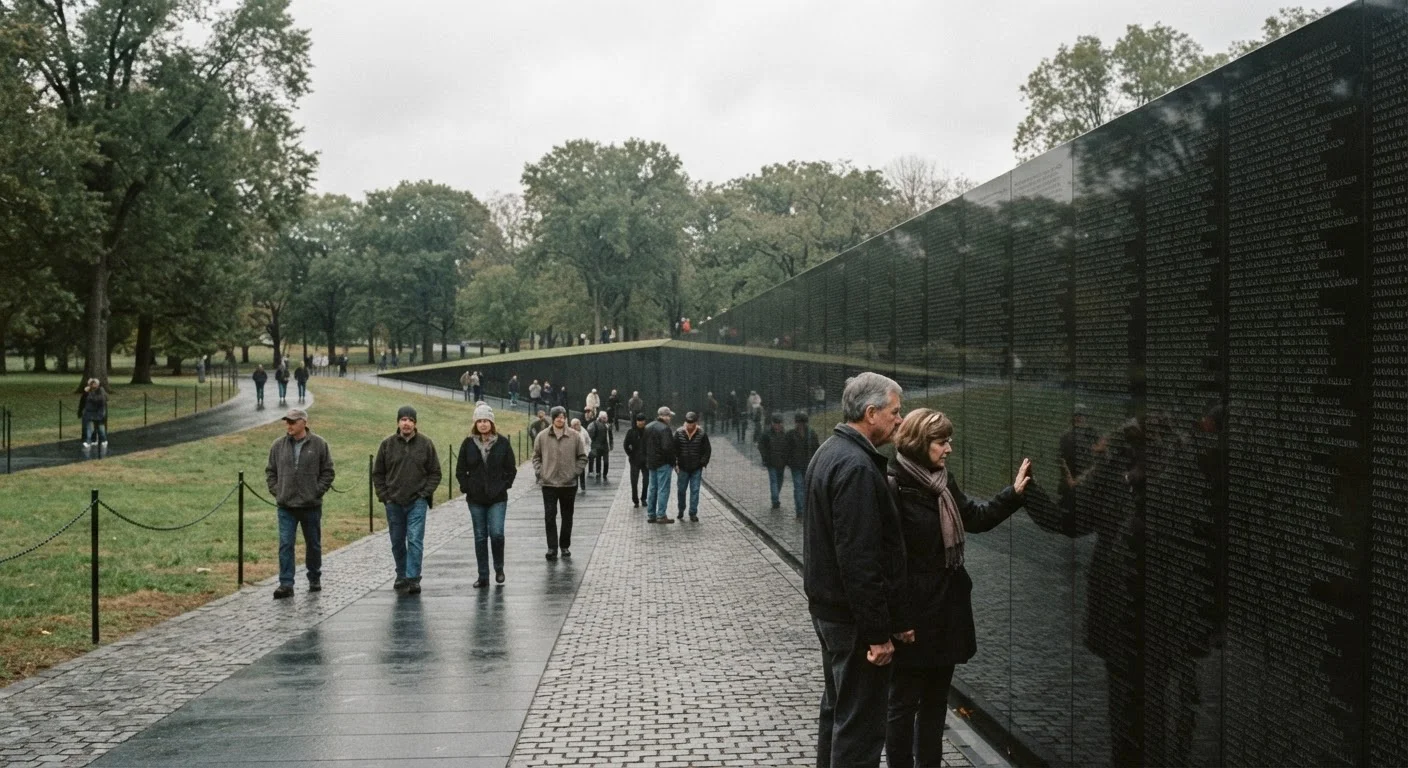
Popular culture sometimes reduces dark tourism to ghoulish curiosity, but research paints a more nuanced picture. Most visitors to sites like Auschwitz or the Hiroshima Peace Memorial are motivated by a genuine desire to bear witness — to connect with events they have read about, to honor victims, or to understand history in a way that textbooks alone cannot provide.
Grief and tribute are also significant drivers, particularly for descendants of victims or survivors visiting relevant sites. For others, the motivation is philosophical: confronting mortality and mass suffering in a real, physical location can prompt reflection that reshapes worldview. Educators and students represent a substantial portion of visitors at many managed memorial sites.
What is less common than assumed is pure sensation-seeking. Studies from the Institute for Dark Tourism Research suggest that even visitors who arrive with vague or mixed motivations often leave with a more solemn orientation, shaped by what the site presents and how it is interpreted.
“Dark tourism is not about voyeurism or death-seeking. For the vast majority of visitors, it is about bearing witness — recognizing that some places demand to be experienced rather than merely read about.”
— Philip Stone, Founding Director, Institute for Dark Tourism Research, University of Central Lancashire
The Ethics of Visiting Tragedy Sites
Dark tourism raises genuine ethical questions that thoughtful travelers should sit with before booking. Who benefits from admission fees? Does the site's presentation respect victims or sensationalize their suffering? Are local and survivor communities involved in how the place is managed and interpreted?
Sites exist on a wide spectrum. A rigorously curated Holocaust memorial, run with input from survivor organizations, occupies very different ethical terrain from a commercialized disaster tour that prioritizes spectacle over substance. The same destination can be visited ethically or carelessly depending on how a traveler engages with it.
Overtourism adds another layer of complexity. Even the most respectful sites can be overwhelmed by volume, creating conditions that undermine the contemplative atmosphere victims' families and historians consider essential. This tension connects directly to the broader pressures discussed in our piece on overtourism and the traveler's role in it.
Research the Site's Management Before Visiting
Before booking, look into who manages the site, how funds are used, and whether survivor or community organizations are involved in its operation. Reputable dark tourism sites typically publish mission statements, visitor guidelines, and information about how proceeds support preservation or community programs. This research helps ensure your visit contributes meaningfully rather than merely transactionally.
What Responsible Visitation Looks Like in Practice
Respectful dark tourism is less about a checklist and more about orientation. Visitors who arrive informed — having read about the site's history before they go — tend to engage more meaningfully and behave more appropriately. Many sites provide official visitor guidelines, and following them is a baseline expectation, not a suggestion.
Photography norms vary by site and should be researched in advance. At some memorials, photography is prohibited entirely; at others, it is permitted with the expectation that it will be handled with restraint. Using a tragedy site as a social media backdrop — particularly with performative or lighthearted poses — is widely regarded as disrespectful and is sometimes explicitly banned.
Local guides, when available, can substantially enrich the experience. They often carry personal or community connections to the history, and their interpretation adds a dimension that self-guided visits cannot replicate. Supporting local economies through these engagements aligns with the principles outlined in responsible tourism broadly — principles explored further in our overview of responsible tourism practices.
Before You Go: Practical Preparation
Beyond ethics, practical preparation matters. Some dark tourism sites — particularly those in politically sensitive regions or areas still affected by disaster — require travelers to verify entry conditions, safety advisories, and local regulations before arrival. Government travel advisories from sources like the U.S. Department of State are essential reference points, and conditions can change.
Assessing a destination's broader infrastructure — healthcare access, transportation, connectivity — is equally important, especially for sites in remote or developing regions. Our guide to reading a destination's tourism infrastructure covers these considerations in depth.
Finally, emotional preparation deserves acknowledgment. Many dark tourism sites are genuinely harrowing, and visitors sometimes underestimate the psychological weight of walking through places associated with mass death or atrocity. Approaching these spaces with intention — and giving yourself time to process what you encounter — is not just respectful toward others; it tends to make the experience more meaningful for the traveler as well.
This article provides general informational content about dark tourism as a travel phenomenon. It is not a comprehensive ethical or academic analysis. Visitors should verify site-specific guidelines, entry requirements, and safety conditions through official sources before travel.