
Why the VIN Is a Classic Car's Birth Certificate
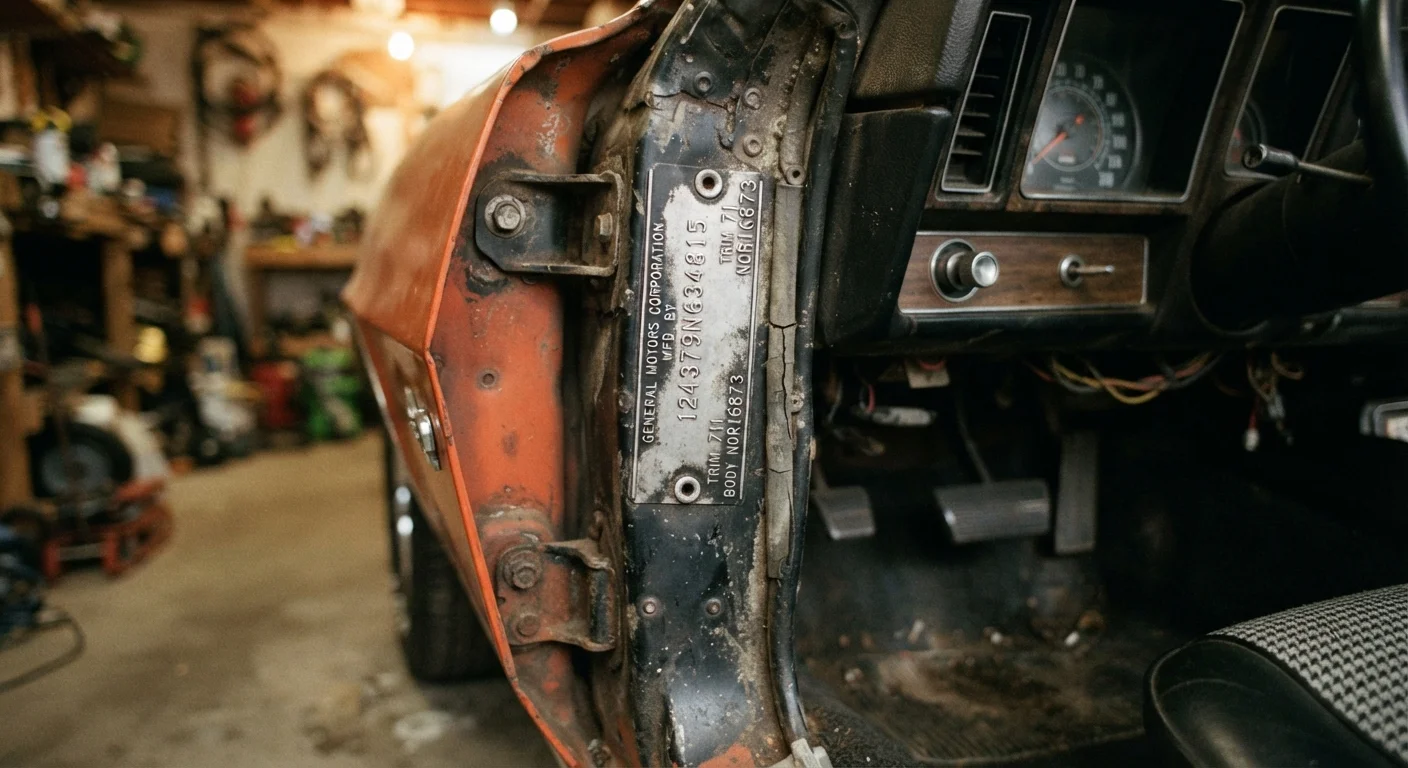
When collectors talk about verifying a classic car, the VIN is almost always the first document they examine — because it's not really a document at all. It's a code stamped directly into the metal at the factory, encoding facts about that specific vehicle that no paper record can fully replicate.
For cars built before the federal 17-character standard took effect in 1981, the VIN is also a window into how each manufacturer organized production. General Motors, Ford, Chrysler, American Motors, and smaller independent makers each developed their own systems. Some used 11 characters; others used 13. The position of each digit or letter carried specific meaning — and that meaning varied by brand, division, and even model year.
Understanding this history matters because classic cars are routinely represented — and misrepresented — based on what their VINs supposedly say. What qualifies as a true classic is already a nuanced question; knowing whether a car is authentically what it's claimed to be adds another layer of complexity.
1981
Year NHTSA standardized the 17-character VIN format
The National Highway Traffic Safety Administration mandated a uniform 17-character VIN for all vehicles sold in the U.S. beginning with the 1981 model year, replacing the patchwork of manufacturer-specific systems used previously.
17
Characters in a modern standardized VIN
The current federal VIN standard uses 17 alphanumeric characters, with specific positions designated for world manufacturer identifier, vehicle descriptor, and vehicle identifier sections.
Varies
Length of pre-1981 classic car VINs by manufacturer
Before federal standardization, VIN length among major American automakers ranged from roughly 9 to 13 characters, with no cross-brand consistency in how information was encoded.
What the Characters Actually Encode
In a typical pre-1981 American VIN, individual characters or groups of characters encode specific facts. While the exact positions differ by manufacturer, the categories of information are broadly consistent:
- Division or brand: The first character often identifies the manufacturing division — for example, distinguishing a Chevrolet from a Pontiac within General Motors.
- Model line and body style: Subsequent characters narrow down the series (a full-size sedan versus a sport coupe, for instance) and body configuration.
- Engine code: One character typically identifies the engine type installed at the factory — a critical detail for matching-numbers verification.
- Model year: A single character encodes the model year, though some early systems used numeric rather than alpha codes.
- Assembly plant: One character identifies which factory built the car, which can matter for regional authenticity claims and certain rare plant-specific options.
- Production sequence: The final digits represent the sequential build number, placing the car's position in that year's production run.
Decoding these characters accurately requires marque-specific reference materials. Most major marque clubs publish detailed guides, and some manufacturers' historical divisions maintain archives that can be accessed for verification.
“The VIN is the DNA of a classic car. Every digit has a meaning, and if you know how to read it, the car tells you its own story — where it was born, what it was built to be, and whether it's still what it started as.”
— Marque Historian and Concours Judge, Senior judge and research consultant for a major American marque preservation registry
The Matching Numbers Standard
Beyond the primary VIN plate — usually found on the dashboard or door jamb — classic cars often have secondary stampings on the engine block, transmission case, and sometimes the rear axle. These partial stamps are meant to correspond with the full VIN, confirming that the drivetrain components are original to that vehicle.
A car described as matching numbers means these secondary codes align with what factory records indicate was installed. This is one of the most significant authenticity factors in the collector market, and for good reason: an engine swap may be invisible to a casual observer but immediately apparent to anyone who knows where to look and what the numbers should say.
Check All Stamping Locations Before Buying
Don't limit your VIN check to the dashboard plate alone. Ask to inspect the engine block pad, transmission case, and any other factory-stamped locations specific to the marque. Discrepancies between these secondary stamps and the primary VIN are one of the clearest indicators of a non-original drivetrain or potential title issues.
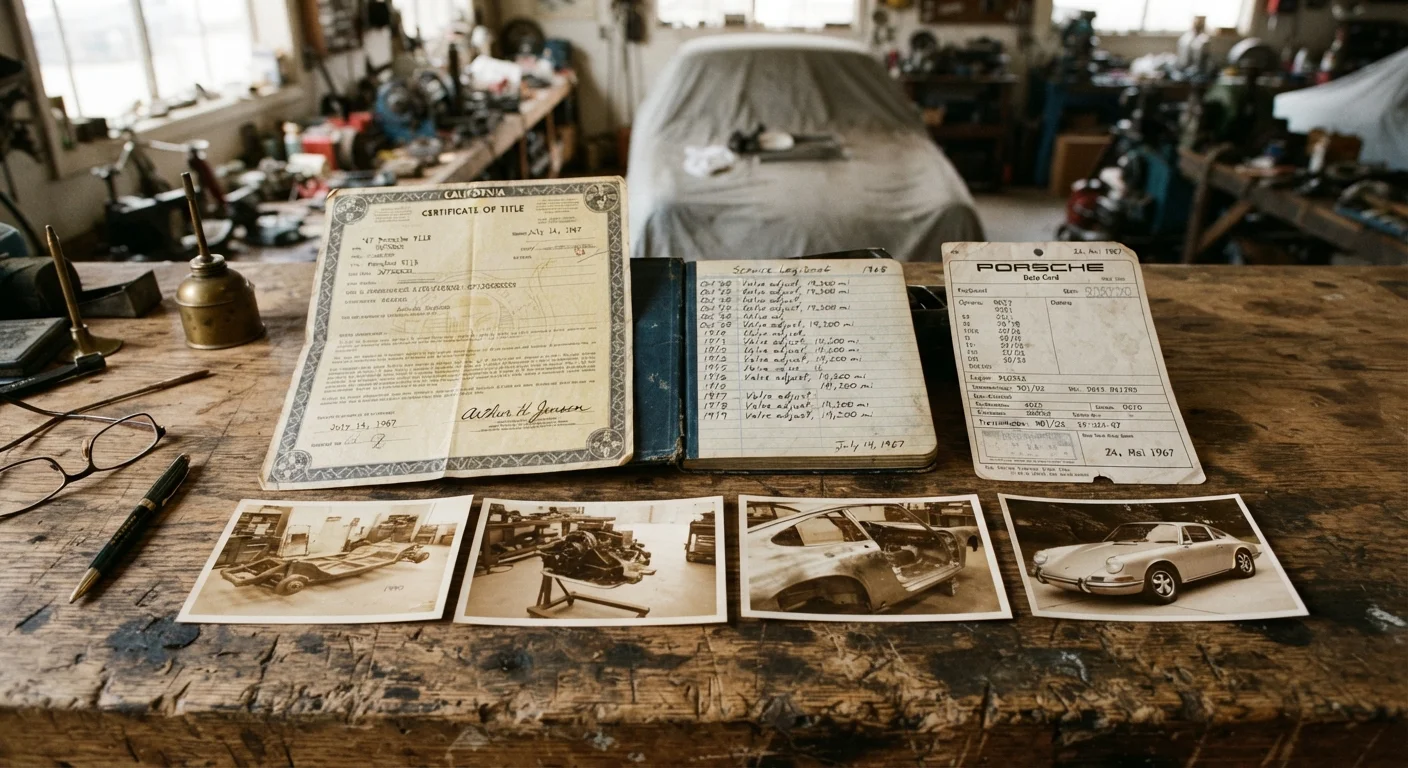
When evaluating a potential purchase, the VIN is just one part of a broader documentary trail. Every classic car should have supporting paperwork — titles, build sheets, and service records — that corroborates what the VIN encodes.
Red Flags and Verification Steps
VIN fraud, while not universal, does occur in the classic car world. Common concerns include restamped or altered VINs, VINs transferred from a low-value car to a high-value clone, and entirely fabricated plates. Spotting these issues requires careful physical inspection and cross-referencing.
Key verification steps collectors and buyers typically take include:
- Comparing the primary VIN plate with secondary engine and transmission stampings for consistency.
- Cross-referencing the VIN with any available factory documentation, such as a build sheet or window sticker.
- Consulting marque-specific registries or clubs that track known surviving vehicles.
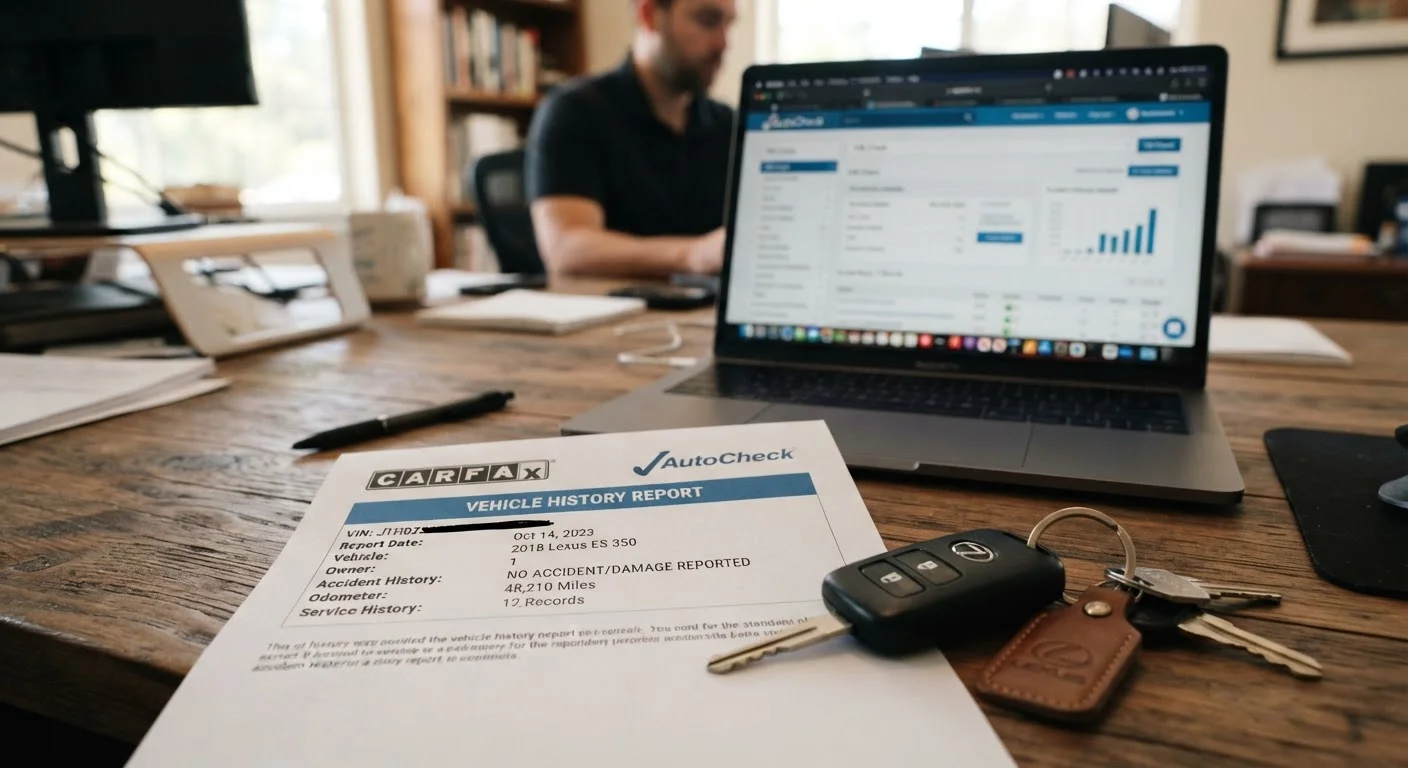
- Running the VIN through a vehicle history service to check for title anomalies, reported theft, or ownership gaps — see what a vehicle history report actually contains for context on what these reports can and can't reveal.
- Having a qualified independent appraiser with marque expertise physically inspect the car before any transaction.
Factory Records Availability Varies by Marque
Not every manufacturer preserved detailed production records for classic-era vehicles. Some marques have robust historical archives or registry programs; others have significant gaps. If factory documentation isn't available for a specific car, marque club experts and physical inspection become even more important verification tools.
For anyone new to this process, a broader orientation to the classic car world can help establish the context needed to interpret what a VIN does and doesn't confirm about a vehicle's history.