
The Two-Door Family: More Variety Than You Might Expect
When most people picture a two-door car, they imagine something low-slung and sporty. That instinct isn't wrong, but the two-door category is broader than it appears. Coupes, convertibles, and roadsters each represent a distinct architectural approach — differing in roofline, structure, passenger capacity, and intended driving experience.
Understanding these distinctions matters whether you're shopping for a vehicle, decoding a window sticker, or simply trying to make sense of automotive terminology. For a broader look at how all vehicle types fit together, see our guide to American vehicle types.
| Defining feature of a coupe | Fixed rigid roof with two doors |
| Defining feature of a convertible | Retractable or removable roof system |
| Defining feature of a roadster | Two seats, open-air, performance-focused |
| Typical coupe passenger capacity | 2–4 passengers |
| Convertible roof types | Soft top (fabric) or retractable hard top (rigid panels) |
| Roadster passenger capacity | 2 passengers only |
Coupes: The Closed Two-Door Standard
A coupe (sometimes spelled coupé) is a fixed-roof, two-door vehicle with a sloping roofline that typically gives it a sportier silhouette than a sedan. The defining characteristic is the permanent, rigid roof — no retractable panels, no folding fabric.
Traditionally, a coupe was defined by having a shorter roofline and a trunk compartment distinct from the passenger area, placing it in the same structural family as a three-box sedan but with two fewer doors. In modern automotive usage, manufacturers sometimes apply the "coupe" label to four-door models with a steeply raked rear roofline — a marketing convention that purists debate but consumers encounter regularly.
Coupes typically seat two to four passengers. Rear seating, when present, is often cramped relative to a comparable sedan, a trade-off accepted in exchange for the coupe's visual profile. Comparing hatchbacks and sedans can also illuminate how closed-roof body styles differ in everyday practicality.
Coupe
A two-door vehicle with a fixed, rigid roof and a sloping roofline. Coupes typically seat two to four people and prioritize a sporty silhouette over interior volume.
Convertible
A vehicle with a retractable or removable roof that allows open-top driving. Convertible roofs may be fabric soft tops or rigid retractable hard tops.
Roadster
A two-seat, open-top vehicle built primarily for performance. Roadsters are lighter and more driver-focused than convertibles, with minimal weather protection and cargo capacity.
Soft Top
A convertible roof made from fabric or vinyl that folds mechanically or manually into a storage area behind the rear seats. Lighter and less expensive than a retractable hard top.
Retractable Hard Top
A convertible roof made of rigid panels that fold mechanically into the trunk or a dedicated compartment. Offers better insulation and security than a soft top, but adds weight.
Chassis Reinforcement
Structural strengthening added to a vehicle's frame, sills, or floor to compensate for the rigidity lost when a fixed roof is removed. Common in convertible designs.
Convertibles: Open Sky on Demand
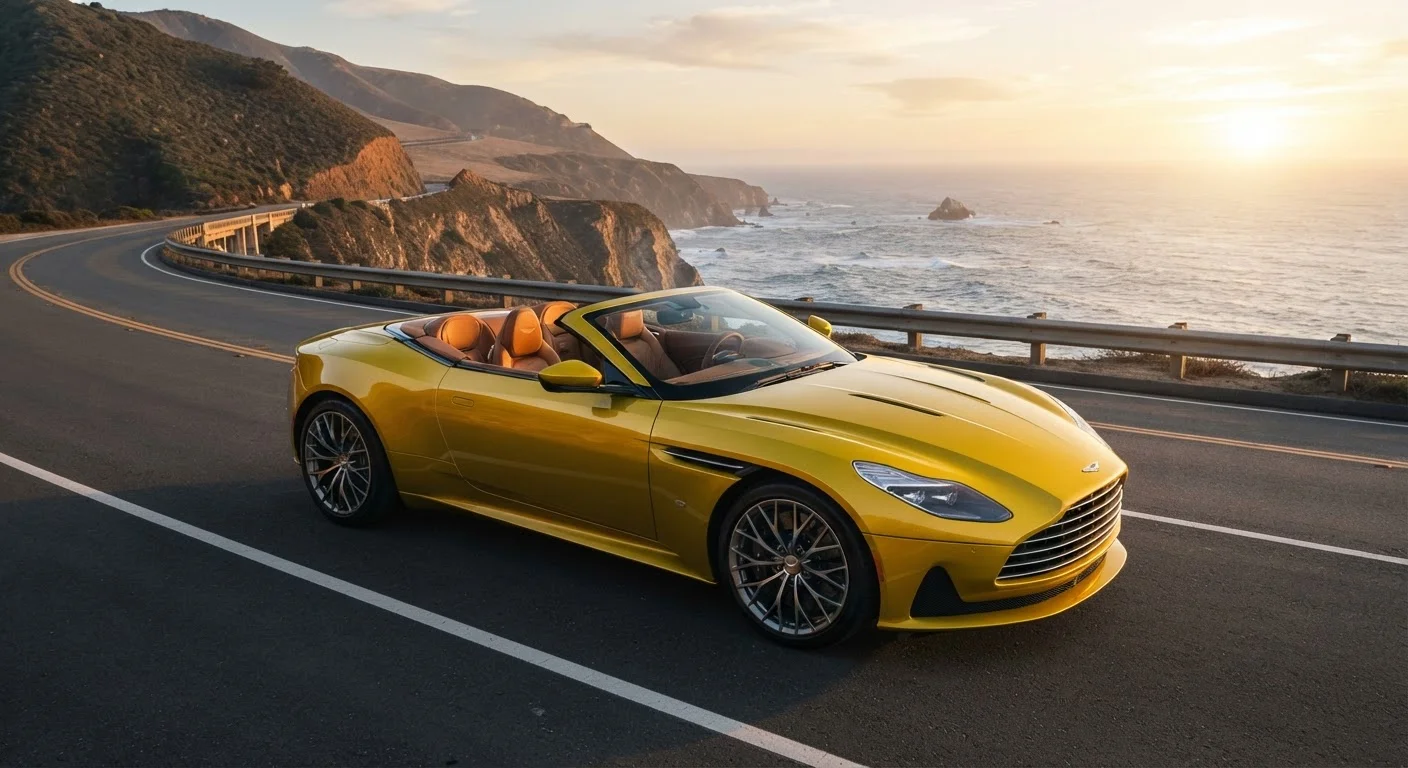
A convertible is any vehicle with a retractable or removable roof system, allowing the car to be driven with an open top. The body structure beneath the roof is typically coupe-like — two doors, a defined trunk — but the roof itself can fold away mechanically or be detached manually.
Convertible roofs come in two main forms:
- Soft tops — fabric or vinyl hoods that fold into a storage compartment behind the rear seats. Generally lighter and less expensive, though more susceptible to wear over time.
- Hard tops (retractable) — rigid panels, often in multiple sections, that fold mechanically into the trunk or a dedicated storage area. They provide better insulation and security at a higher weight and cost penalty.
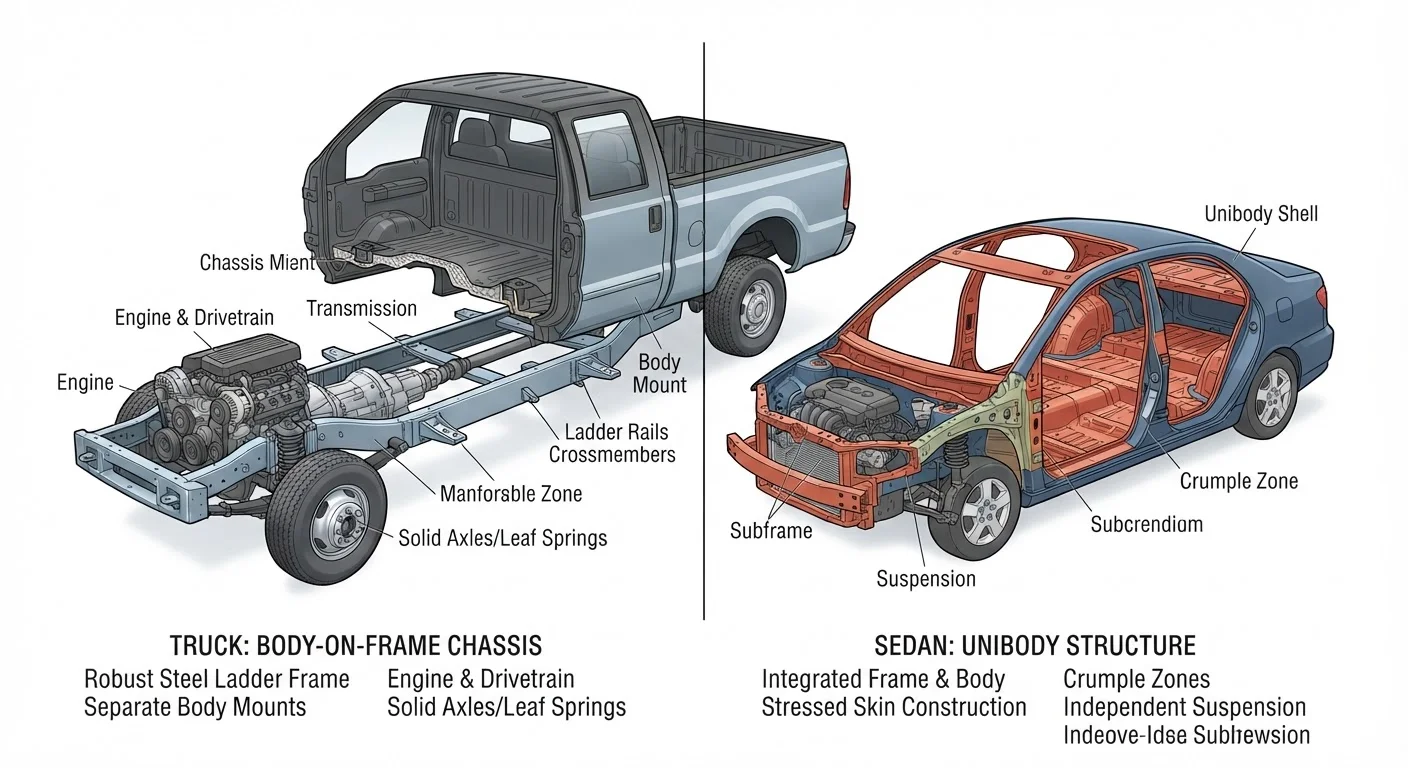
Because convertibles lack the structural rigidity of a fixed roof, manufacturers reinforce the chassis, door sills, and floor to compensate — a factor that affects both vehicle weight and handling characteristics. This is directly related to how a vehicle's construction shapes its driving dynamics; unibody versus body-on-frame engineering plays a role in how convertibles are built and how they feel on the road.
"Four-Door Coupe" — Marketing Term or Contradiction?
Some manufacturers market four-door vehicles with steeply raked rooflines as "coupes." Technically, a coupe is a two-door design, but automakers have adopted the term to describe the visual character of certain four-door models. When researching a specific vehicle, check the door count and roofline rather than relying on the label alone.
Roadsters: Two Seats, Open Air, No Compromises
A roadster is a two-seat, open-top vehicle designed primarily for performance and driving engagement. Unlike a convertible — which usually seats four and is engineered with daily usability in mind — a roadster prioritizes minimal weight, low seating position, and an unobstructed connection to the driving environment.
Roadsters may have a soft top, a simple tonneau cover, or no roof system at all. Weather protection is secondary to the driving experience. The cockpit is tight, cargo space is minimal, and the vehicle is typically engineered with a performance suspension tuning that would be considered stiff for everyday commuting.
The roadster's design heritage runs deep in automotive history, connecting the modern sports car to early 20th-century open-body racing machines. Enthusiasts interested in the evolution of these designs will find the Classic Vehicles hub a useful reference for historical context.
2
Maximum passenger seats in a true roadster
Roadsters are defined by their two-seat configuration, distinguishing them from convertibles that often accommodate four.
Two types
Convertible roof systems in common use
Modern convertibles use either a fabric soft top or a mechanically operated retractable hard top, each with distinct trade-offs in weight, cost, and weather resistance.
If you're deciding whether a two-door vehicle suits your actual driving patterns, our article on matching vehicle type to real driving habits offers a practical framework before you narrow to a specific body style.