
America's Perennial Best-Seller
Pickup trucks don't just sell well in the United States — they dominate. For more than four decades, full-size pickup trucks have held the top position on U.S. annual vehicle sales charts, consistently outpacing cars, crossovers, and SUVs alike. In most recent model years, three of the five best-selling individual vehicle models in the country are pickup trucks. This isn't a temporary trend — it's a structural feature of the American auto market, and understanding why requires examining both what pickups actually do and what they represent to millions of American drivers.
What Defines a Pickup Truck
A pickup truck is defined by its open cargo bed — an exterior load area at the rear that is structurally separated from the passenger cab. Most full-size American pickups use body-on-frame construction, in which a separately mounted body sits atop a rigid steel ladder frame. This design provides the structural rigidity needed for the towing and payload capacity that unibody vehicles typically cannot match.
Cab configurations expand buyer choice considerably: the regular cab has two doors and a longer bed, extended cabs add compact rear seating, and crew cabs offer four full-size doors with generous rear legroom. Bed lengths typically range from roughly five to eight feet. For a broader look at how pickups compare to other vehicle categories, see our overview of American vehicle types.
The Capability That Drives Demand
The engineering case for pickups rests on towing capacity, payload rating, and Gross Vehicle Weight Rating (GVWR — the maximum allowable total weight of the vehicle plus everything it carries). A properly configured light-duty half-ton pickup can tow from roughly 7,000 to over 13,000 pounds. Heavy-duty one-ton models can exceed 30,000 pounds. These figures matter to contractors hauling equipment, homeowners moving heavy materials, and outdoor enthusiasts trailering boats or campers.
For a detailed explanation of how duty classifications translate into real-world capability, see our guide to light-duty, medium-duty, and heavy-duty trucks. It's also worth reviewing common misconceptions — including the widespread belief that any truck can tow any trailer, which our piece on RV and towing myths addresses directly.
40+ years
Consecutive years F-Series led U.S. vehicle sales
The Ford F-Series has ranked as the best-selling vehicle in America for more than four decades, based on annual industry sales data.
Top 3
Best-selling U.S. vehicle models that are pickups
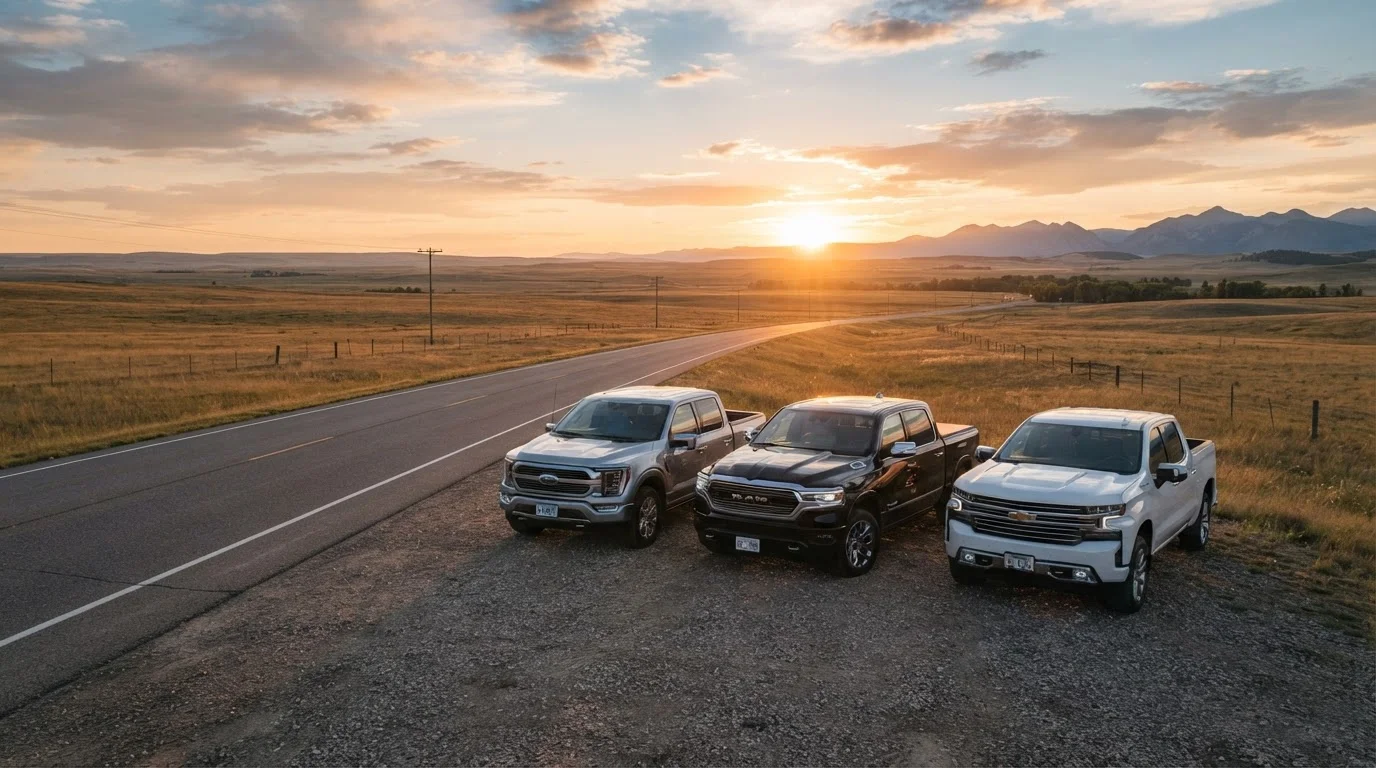
The three best-selling individual vehicle models in the United States are consistently full-size pickup trucks — the F-Series, Ram Pickup, and Chevrolet Silverado.
30,000+ lbs
Max conventional tow rating for heavy-duty pickups
The most capable heavy-duty one-ton pickup configurations are rated to tow in excess of 30,000 pounds when equipped with the manufacturer's maximum tow package.
Culture and Identity Behind the Wheel
Pickup trucks carry significant cultural weight in the United States, particularly in rural, suburban, and Sun Belt communities. For many owners, a truck signals self-reliance, a connection to outdoor life, or a professional identity — regardless of whether the bed regularly carries a load. Research has consistently found that a meaningful share of pickup truck owners seldom use their vehicles for heavy hauling or towing; the truck functions as a daily commuter and a personal statement simultaneously.
This isn't a contradiction. Modern full-size pickups are genuinely comfortable and technologically sophisticated, making them practical choices for drivers who want one vehicle capable of handling weekend work, outdoor recreation, and daily commuting without compromise.
Advertised Tow Ratings Are Configuration-Specific
The maximum towing capacity listed in advertisements applies only to a specific combination of engine, drivetrain, axle ratio, and tow package. The actual rating for any given truck depends on exactly how it was ordered and equipped. To find the figures that apply to a specific vehicle, consult the manufacturer's towing guide or the payload label on the driver's door jamb — ratings can differ by several thousand pounds between trim levels of the same model.
How the Modern Pickup Has Evolved
Today's pickup trucks bear little resemblance to the bare-bones work vehicles of earlier decades. Features once exclusive to luxury sedans — heated and ventilated seats, large touchscreen infotainment displays, adaptive cruise control, and multi-link rear suspensions — are now standard or widely available across mid-range trim levels. The mid-size truck segment has also expanded, offering more manageable dimensions and improved fuel efficiency for buyers who don't need a full-size footprint.
Electric and plug-in hybrid powertrains have entered the segment as well, though buyers should carefully evaluate real-world towing range, payload limits, and charging availability before committing. Compared to alternatives such as minivans or cargo vans, pickup trucks offer a distinct capability profile — but no single vehicle type suits every driver's needs or budget.