
Why Conditioning Alone Doesn't Always Work
If you condition your hair consistently but it still feels dry, rough, or brittle within hours, you're not alone — and you're likely not using the wrong product. More often, the problem is in the how, not the what. Conditioning is one part technique, one part product match, and one part understanding what your hair actually needs.
The following mistakes are among the most common reasons hair stays dry despite a regular conditioning routine. Identifying which applies to you is the first step toward real improvement.
Applying conditioner to soaking-wet hair without squeezing out excess water first.
Why it happens: Most people step out of the shampoo rinse and apply conditioner immediately, not realizing that dripping-wet hair is already saturated and can't absorb product efficiently.
Rinsing conditioner out with hot water, which strips moisture as fast as it was added.
Why it happens: Hot showers feel good and are a deeply ingrained habit. Most people don't connect water temperature to their hair's hydration levels.
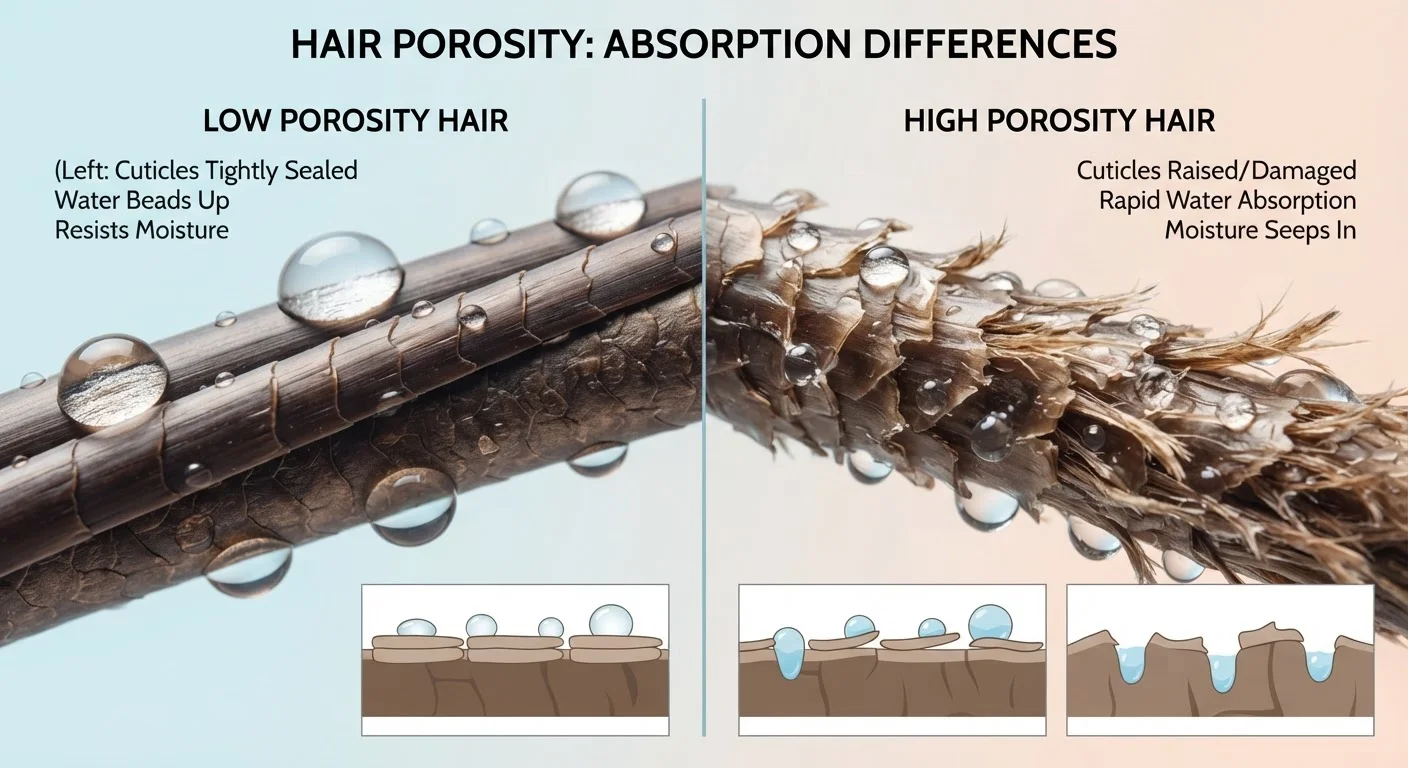
Ignoring hair porosity and using a conditioner that doesn't match how your hair absorbs moisture.
Why it happens: Porosity is rarely discussed on product labels, so most people choose conditioners based on marketing language like 'moisturizing' without understanding whether the formula suits their hair structure.
Skipping deep conditioning or relying solely on rinse-out conditioner for all moisture needs.
Why it happens: Many people assume that a daily rinse-out conditioner covers all bases. The difference between product types isn't always clear from packaging.
Over-relying on protein treatments without balancing them with moisture.
Why it happens: Protein products are often marketed as the solution to weak or damaged hair, leading some people to overuse them in hopes of faster results.
Applying conditioner only to mid-lengths and tips, missing the areas where dryness actually originates.
Why it happens: Common advice to avoid roots has led many people to under-apply conditioner across the bulk of their hair, particularly on textured or dense hair types.
When the Problem Goes Beyond Product Choice
Sometimes dry hair persists not because of application habits, but because of underlying damage or a structural mismatch between your hair and the products you're using. Heat styling, chemical processing, and even hard water can all compromise the hair cuticle — the outer protective layer — leaving strands unable to retain moisture effectively regardless of how well you condition.
Damage Can Mimic Dryness
Severely heat-damaged or chemically over-processed hair may feel chronically dry no matter which conditioner you apply. If your hair snaps easily when stretched, lacks elasticity, or feels gummy when wet, surface conditioning alone may not be enough. In these cases, a deeper structural issue is likely present, and consulting a licensed cosmetologist or trichologist is worth considering before switching products again.
It's also worth noting that habits unrelated to conditioning can quietly accelerate dryness. Rough towel-drying, tight elastics, and daily friction all wear on the cuticle over time. Our coverage of habits that cause breakage outlines what to look for.
Too Much Protein Can Backfire
Protein treatments are marketed as strengthening, and they can be — but overuse causes hair to become stiff, brittle, and paradoxically dry. If you've been using protein-rich masks or leave-ins frequently and your hair feels worse, not better, scale back protein and prioritize moisture-focused products instead. Balance between protein and moisture is essential for healthy hair.
Finally, consider the role of water. High porosity hair — common in color-treated or heat-styled hair — loses moisture quickly after washing. Understanding your porosity level is foundational, and it shapes every other decision in your routine.
~95%
Hair shaft composed of keratin protein
Hair is primarily keratin, which is why both protein and moisture balance directly affect how strands feel and behave.
3 types
Hair porosity categories affecting moisture absorption
Low, normal, and high porosity each respond differently to conditioning — using the wrong approach for your porosity can leave hair feeling dry regardless of product quality.