

What Ecotourism Actually Means
The word "eco" gets attached to everything from lodge names to hiking tour descriptions, which has made its meaning genuinely slippery. But the concept has a precise definition with decades of policy and research behind it. Ecotourism is travel to natural areas where the experience itself is designed to fund conservation, benefit local communities, and deepen visitor understanding of ecosystems and biodiversity.
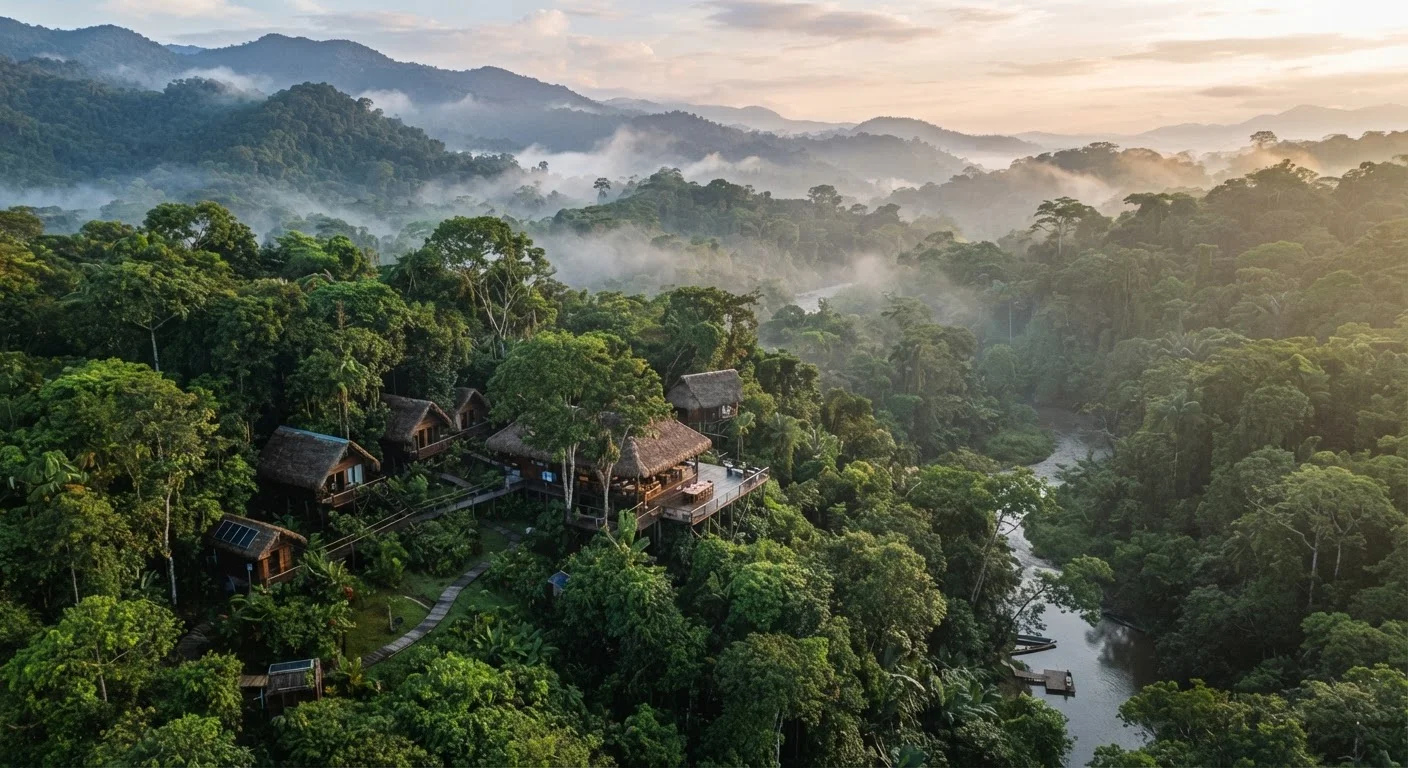
That last element — education and interpretation — matters more than most travelers realize. A lodge in a rainforest that simply sells scenic views isn't ecotourism. A lodge that employs local naturalist guides, contributes to a protected-area fund, and limits visitor numbers to prevent habitat damage is a much closer match.
For destinations grappling with mass visitor pressure, the distinction is consequential. Overtourism has degraded landscapes from the Galápagos to Southeast Asian beaches — often in places marketed as "eco" destinations. Calling something ecotourism doesn't insulate it from that dynamic.
Ecotourism vs. Nature Tourism
Not every trip to a national park or wildlife reserve qualifies as ecotourism. Nature tourism describes travel motivated by natural settings; ecotourism adds specific requirements around conservation funding, community benefit, and environmental education. The difference is in how the trip is structured and who benefits economically — not just where it takes place.
The Greenwashing Problem
The environmental travel market expanded faster than any consistent standard for verifying claims, which created ideal conditions for greenwashing — the practice of presenting a business as environmentally responsible without meaningful evidence. In travel, this can look like a hotel that recycles towels but draws water from a stressed local aquifer, or a wildlife tour that uses the word "conservation" while operating practices that stress the animals it showcases.
Independent certification is the clearest signal available to travelers, though even certifications vary in rigor. The Global Sustainable Tourism Council (GSTC) sets internationally recognized baseline criteria and accredits national certification bodies. Rainforest Alliance certification, recognized in many nature-travel markets, requires audited environmental and social standards.
When no certification is present, travelers can ask operators direct questions: What percentage of staff are hired locally? Does a portion of fees go to a named conservation fund? What is your wildlife interaction policy? Vague or defensive answers are themselves informative. For context on how to apply these principles across destinations, responsible tourism practices offer a useful framework regardless of where you travel.
Questions Worth Asking Any Eco Operator
Before booking, ask operators whether they hold third-party certification, what share of their workforce is locally hired, and how visitor fees contribute to conservation. A legitimate ecotourism operator will answer these questions readily and specifically — and will typically have that information available without prompting.
When Eco Travel Delivers Real Benefit
Done rigorously, ecotourism has a documented track record of creating economic alternatives to habitat destruction. In parts of Costa Rica and Rwanda, tourism revenue tied to intact forest or gorilla habitat has contributed to measurable conservation outcomes — not because travelers are inherently virtuous, but because communities gained a financial stake in protecting ecosystems rather than clearing them.
The mechanism matters: when local people are employed as guides, naturalists, and lodge staff — and when a meaningful share of revenue stays in the region — communities have concrete reasons to support conservation rather than resist it. Tourism structured otherwise, where profits flow to outside operators and local people see little benefit, tends to generate resentment rather than stewardship.
~8%
Share of global GDP from tourism
The World Travel and Tourism Council estimates tourism's broad economic contribution, underscoring the scale of potential community benefit when revenue is structured locally.
1 in 4
Travelers citing sustainability as a key factor
Industry surveys consistently find a significant share of travelers express interest in sustainable travel options, though stated preferences don't always translate into purchasing behavior.
2x
Local employment multiplier in community-based tourism
Research on community-based ecotourism models suggests income spent locally recirculates through a regional economy at roughly double the rate of revenue sent to outside operators.
Wildlife encounters sit at the intersection of ecotourism's highest potential and its most obvious risks. Responsible wildlife encounters require strict distance rules, limits on group sizes, and vetted operator policies — the kind of standards that distinguish genuine ecotourism from wildlife tourism in name only.
The Carbon Paradox and Honest Trade-Offs
Ecotourism carries an inherent tension that honest advocates don't shy away from: getting to remote natural areas almost always involves flying, and aviation is a meaningful source of greenhouse gas emissions. A traveler flying from New York to the Amazon to support a conservation lodge is still producing a substantial carbon footprint to get there. The conservation benefits on the ground may or may not offset that, and there's no universal formula for calculating the balance.
This doesn't mean eco travel is pointless, but it does mean travelers should engage with it honestly rather than treating it as automatically carbon-neutral. Practical responses include choosing longer stays to spread the impact of a single flight, favoring destinations accessible by train or shorter flights, and selecting operators that use local transportation rather than frequent charter flights within destinations.
Ecotourism also exists on a spectrum with other forms of values-aligned travel. Cultural immersion travel, for example, shares the emphasis on local benefit and depth of experience but centers human communities rather than natural ecosystems — a distinction worth understanding when planning intentional travel. Similarly, voluntourism presents its own complex trade-offs between good intentions and documented impact.
This article provides general travel information and educational context only. Environmental claims and certification standards vary by operator and region; verify details directly with providers and consult official sources for current travel conditions, entry requirements, and advisories before traveling.