
How Each System Works
Understanding the mechanical difference between drum and disc brakes helps restorers make informed decisions rather than following trends blindly.
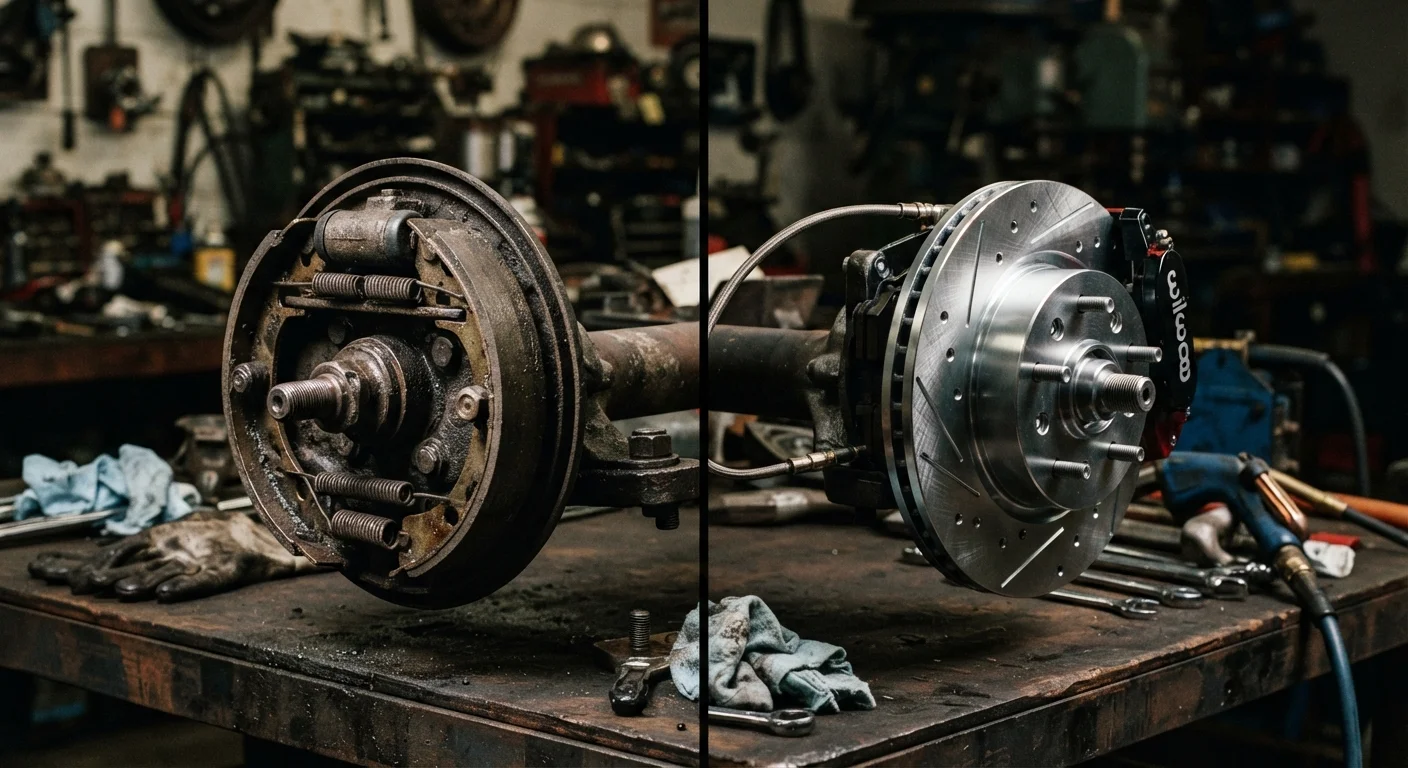
Drum brakes use curved brake shoes mounted inside a hollow drum that rotates with the wheel. When the driver presses the brake pedal, hydraulic pressure forces the shoes outward against the inner surface of the drum, creating friction to slow the vehicle. The enclosed design traps heat and, in wet conditions, can allow water to accumulate briefly — both of which reduce braking effectiveness under repeated or hard use.
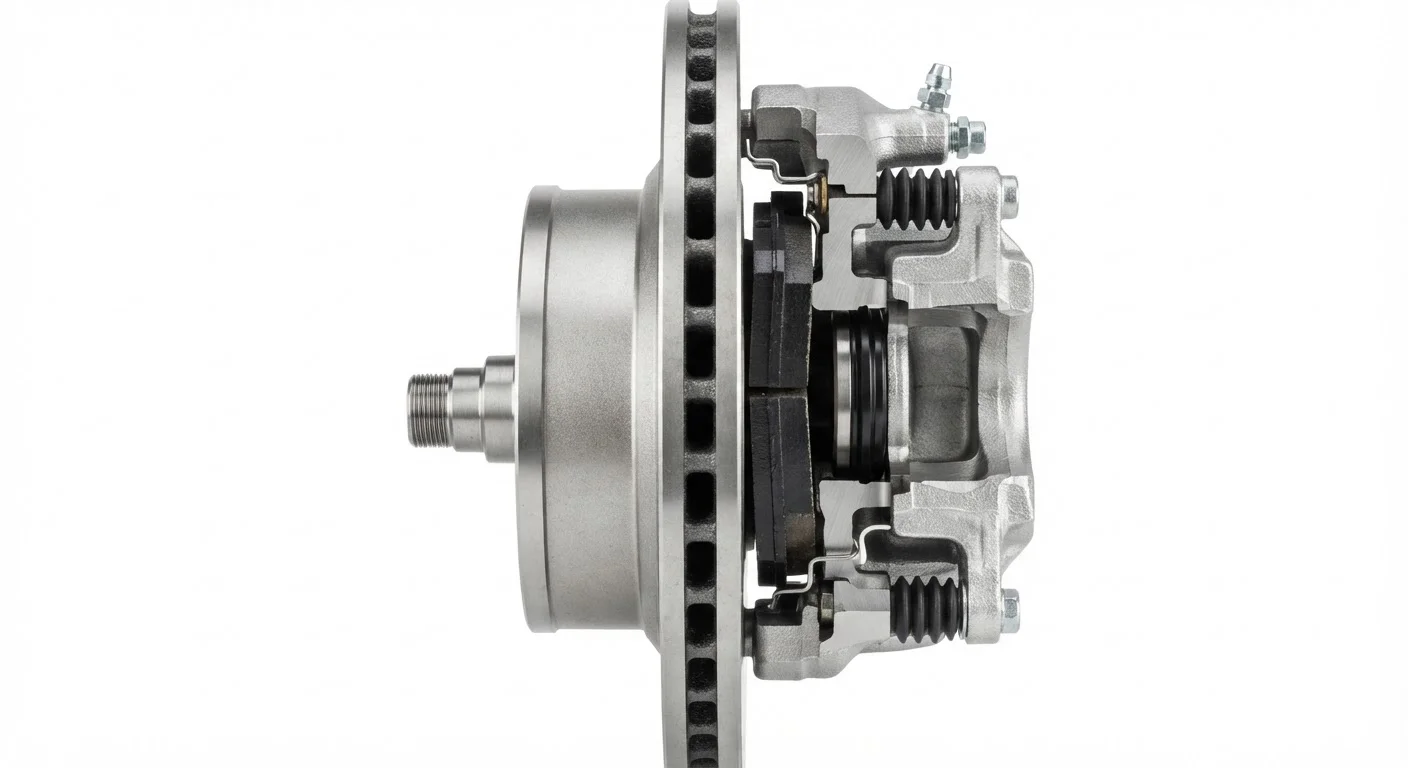
Disc brakes clamp a flat rotor (disc) between two brake pads via a hydraulic caliper. Because the rotor is exposed to open air, heat dissipates far more efficiently. Water is also shed quickly as the rotor spins, restoring braking grip almost immediately. For a deeper look at how pads, rotors, and calipers function together as a unit, see how the whole disc brake system works.
| Criterion | Drum Brakes | Disc Brakes |
|---|---|---|
| Factory fitment era | Standard on most pre-1970s classics | Became common from late 1960s onward |
| Heat dissipation | Poor — enclosed design traps heat | Excellent — open rotor sheds heat quickly |
| Wet-weather performance | Reduced — water can accumulate inside drum | Strong — rotor spins water off rapidly |
| Fade resistance | Low under repeated hard braking | High — consistent pedal feel under stress |
| Originality / show eligibility | Preserves factory spec | Non-original; may affect judging |
| Maintenance complexity | More involved to adjust and inspect | Easier visual inspection; simpler service |
| Conversion cost | No conversion needed | Moderate to high, depending on platform |
Performance and Safety Differences That Matter on the Road
The performance gap between drum and disc brakes becomes most apparent in three scenarios: repeated hard braking, high-speed stops, and wet conditions.
Brake fade is the primary concern with drums. As heat builds through repeated braking — descending a grade or navigating heavy traffic — drum brakes lose effectiveness progressively. Disc brakes, with their open-air design, resist fade considerably better. This is why front disc brakes became standard equipment on many vehicles through the 1960s and early 1970s before full four-wheel disc systems became common.
Stopping distances also differ meaningfully. Under a hard, panic-stop scenario, a vehicle with four-wheel disc brakes will generally stop in a shorter distance than an equivalent drum-equipped car — a real consideration when a classic is sharing roads with modern traffic traveling at highway speeds.
~25–30%
Typical stopping distance improvement
Engineering studies on brake system comparisons generally indicate disc brakes can reduce stopping distances by roughly 25–30% compared to comparable drum setups under hard braking.
1965
Year Mustang first offered front discs
Ford offered an optional front disc brake package on the Mustang beginning in 1965, reflecting industry recognition of discs' performance advantages even in that era.
For restorers building a car intended for regular road use, these performance differences have genuine safety implications worth weighing carefully.
Authenticity, Value, and the Restoration Philosophy Question
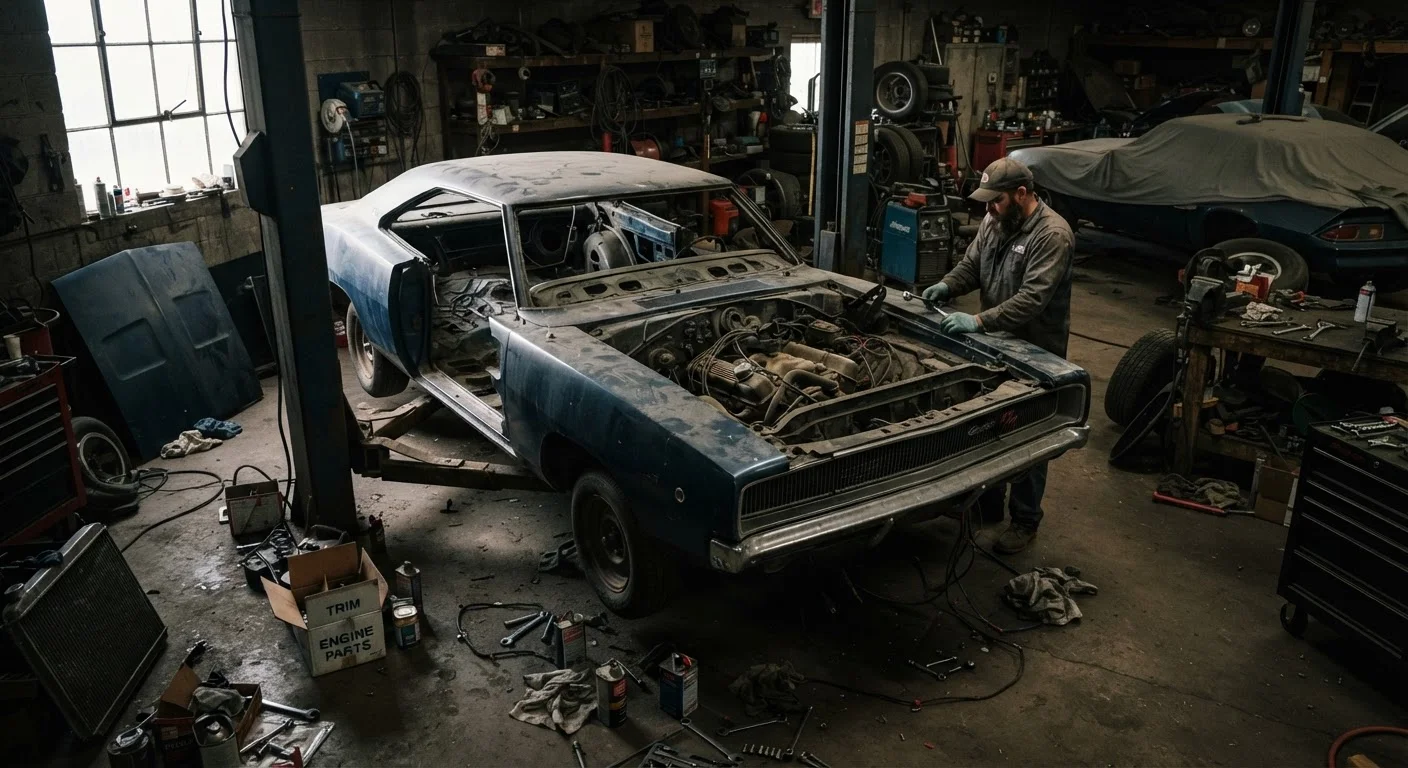
The decision to upgrade or retain factory brakes rarely exists in isolation — it reflects a broader philosophy about what the restoration is trying to achieve.
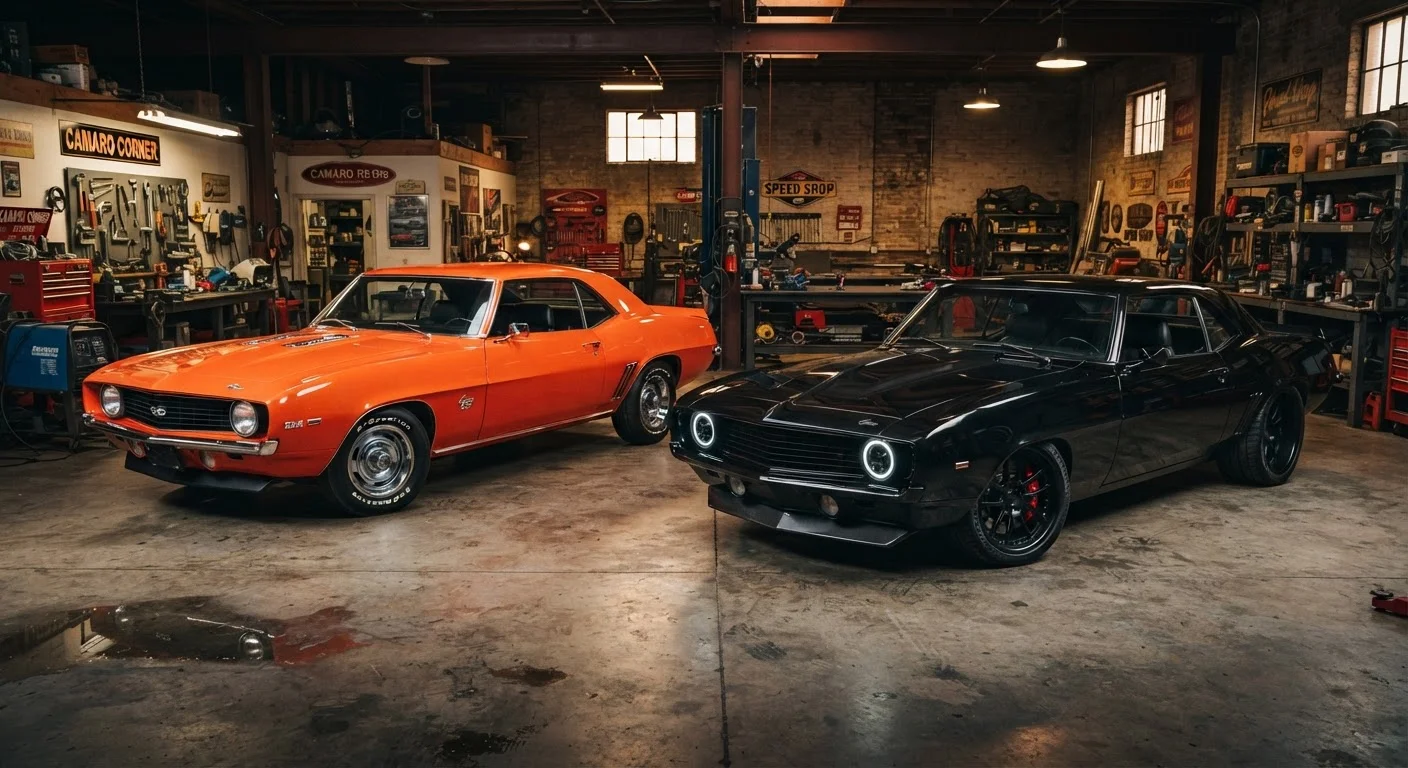
For a numbers-matching, concours-oriented project, converting to disc brakes introduces non-original components that show judges will note. Depending on the sanctioning body, a disc conversion on a drum-brake car could cost points or disqualify a class entry. Beyond judging, any significant departure from factory specification on a documented matching-numbers car can reduce its market value with serious collectors. Well-intentioned modifications — including brake upgrades — are among the changes that can quietly erode what a classic is worth to the right buyer.
For a resto-mod, however, the calculus is entirely different. Resto-mod builds embrace performance upgrades and buyers in that market often expect and value a disc brake conversion. The key is being transparent about modifications and matching the upgrade level to the overall build.
Documenting Any Modifications Is Essential
Whether a brake conversion adds or subtracts value depends heavily on documentation. Retaining original components, noting the conversion in build records, and keeping receipts for parts and labor creates a traceable history that future buyers and appraisers can evaluate honestly. Undisclosed modifications are among the most common sources of disputes in classic car transactions.
Practical Considerations for a Disc Brake Conversion
For restorers who determine a disc conversion is appropriate, several practical factors deserve attention before proceeding.
Conversion kits are commercially available for most popular American classic platforms — many bolt onto the existing spindles without fabrication. However, a conversion typically also requires upgrading the master cylinder, as drum and disc systems operate at different hydraulic pressures. Brake proportioning valves may also need adjustment or replacement to balance front-to-rear braking bias correctly.
Wheel clearance is another consideration. Disc brake calipers are physically larger than drum hardware, and some period wheels — particularly 14-inch or smaller units — may not clear the caliper. A wheel spacer or wheel swap is sometimes necessary, which introduces additional authenticity considerations.
All brake system work carries significant safety implications. Any conversion or rebuild should be performed or inspected by a qualified mechanic with experience on classic vehicles before the car is driven. The full restoration process covers mechanical rebuilding in its broader context. And for the ongoing realities of owning and maintaining a classic, maintenance principles for pre-diagnostic-era vehicles are worth understanding before any major system is modified.
This article is for general informational purposes only. Brake system work affects vehicle safety — always consult a qualified mechanic before performing or approving any brake repair, rebuild, or conversion on your vehicle.