
The Big Picture: How Disc Brakes Work
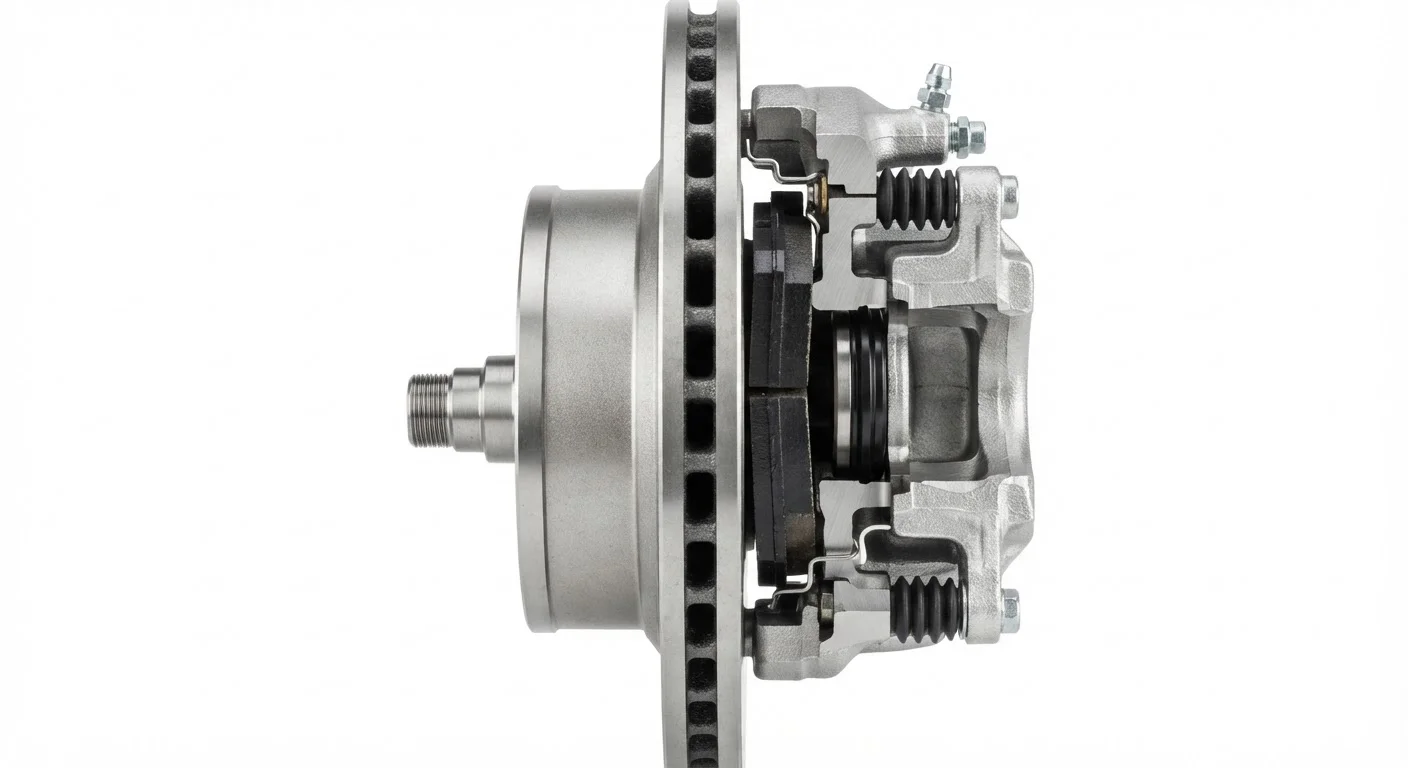
When you press the brake pedal, you're triggering a hydraulic chain reaction. Pressure travels through brake fluid to the calipers mounted at each wheel. Those calipers squeeze brake pads against a spinning metal disc — the rotor — generating friction that converts kinetic energy into heat and slows the vehicle.
That's the entire system in one paragraph. But the reason brake service gets complicated is that each of the three main components — pad, rotor, and caliper — wears differently, fails differently, and affects the others when it does. Understanding how they interact helps you recognize warning signs early and have more informed conversations with your mechanic.
Brake rotor
The metal disc that rotates with the wheel. Brake pads clamp against it to create the friction that slows the vehicle.
Brake caliper
A hydraulic clamp mounted near the wheel that squeezes brake pads against the rotor when you press the brake pedal.
Brake pad
A friction material block pressed against the rotor to slow the wheel. It's designed to wear down over time and be replaced periodically.
Wear indicator
A small metal tab on the brake pad that contacts the rotor and produces a squealing sound when pad material has worn to a low level.
Minimum thickness spec
The manufacturer's stated minimum safe thickness for a rotor. Once a rotor wears below this measurement, it must be replaced.
Seized caliper
A caliper whose piston or sliding pins have corroded and can no longer move freely, keeping a pad in constant or partial contact with the rotor.
Brake Pads: The Wear-and-Replace Component
Brake pads are flat friction material bonded to a metal backing plate. They're engineered to be the sacrificial part of the system — designed to wear down gradually so the rotor surface is protected. Most pads include a wear indicator: a small metal tab that contacts the rotor when pad material gets thin, producing the high-pitched squeal many drivers recognize as a replacement signal.
Pad compounds vary. Organic pads run quieter and produce less dust but wear faster. Semi-metallic pads offer better heat tolerance and longevity. Ceramic pads tend to produce less dust and noise while handling heat well, though they are typically more expensive. The right compound depends on your vehicle type and driving conditions — a factor worth discussing with a qualified technician rather than assuming one type fits all situations.
Replacing pads as a set — both sides of an axle at once — ensures balanced braking. Replacing only one side creates uneven stopping force, which can cause the vehicle to pull under braking.
Rotors: The Surface That Takes the Heat
The rotor (also called a brake disc) is the large metal disc that rotates with the wheel. When calipers squeeze the pads against it, friction slows the wheel. Rotors absorb and dissipate enormous amounts of heat — a single hard stop from highway speed can briefly raise rotor temperature by hundreds of degrees.
Repeated heat cycles cause rotors to wear thinner over time. Every rotor has a manufacturer-specified minimum thickness, and once it falls below that measurement, the rotor must be replaced regardless of surface appearance. A rotor that's too thin can't absorb heat safely and may warp or crack under stress.
Surface condition matters too. Deep grooves scored into the rotor by worn-out metal-on-metal contact, or visible cracks and warping that causes a pulsing sensation under braking, are signs a rotor is past its useful life. In some cases a rotor with minor surface variation can be machined (resurfaced) to restore a flat friction surface — but only if sufficient material remains above minimum spec.
Check Your Rotors When Replacing Pads
Any time brake pads are replaced, have the rotors measured for thickness and inspected for surface condition. Fitting new pads to a rotor that's below minimum spec or deeply grooved will compromise braking performance and shorten the life of the new pads. The cost of measuring rotors at the same service visit is minimal compared to a repeat repair.
Calipers: The Hydraulic Clamp
The caliper houses one or more pistons that push the brake pads against the rotor when hydraulic pressure is applied. Most passenger vehicles use a floating caliper design: one piston pushes the inner pad inward while the caliper body slides and pulls the outer pad inward from the other side. Higher-performance vehicles often use fixed calipers with pistons on both sides for more even clamping force.
Calipers are generally durable, but they can develop two main failure modes. First, the piston seals can deteriorate, leading to fluid leaks — a serious safety issue that reduces hydraulic pressure. Second, the caliper can seize: the piston or sliding pins corrode and stop moving freely, leaving a pad in partial or constant contact with the rotor. A seized caliper generates excessive heat, wears one pad far faster than the other, and can cause the vehicle to pull under braking.
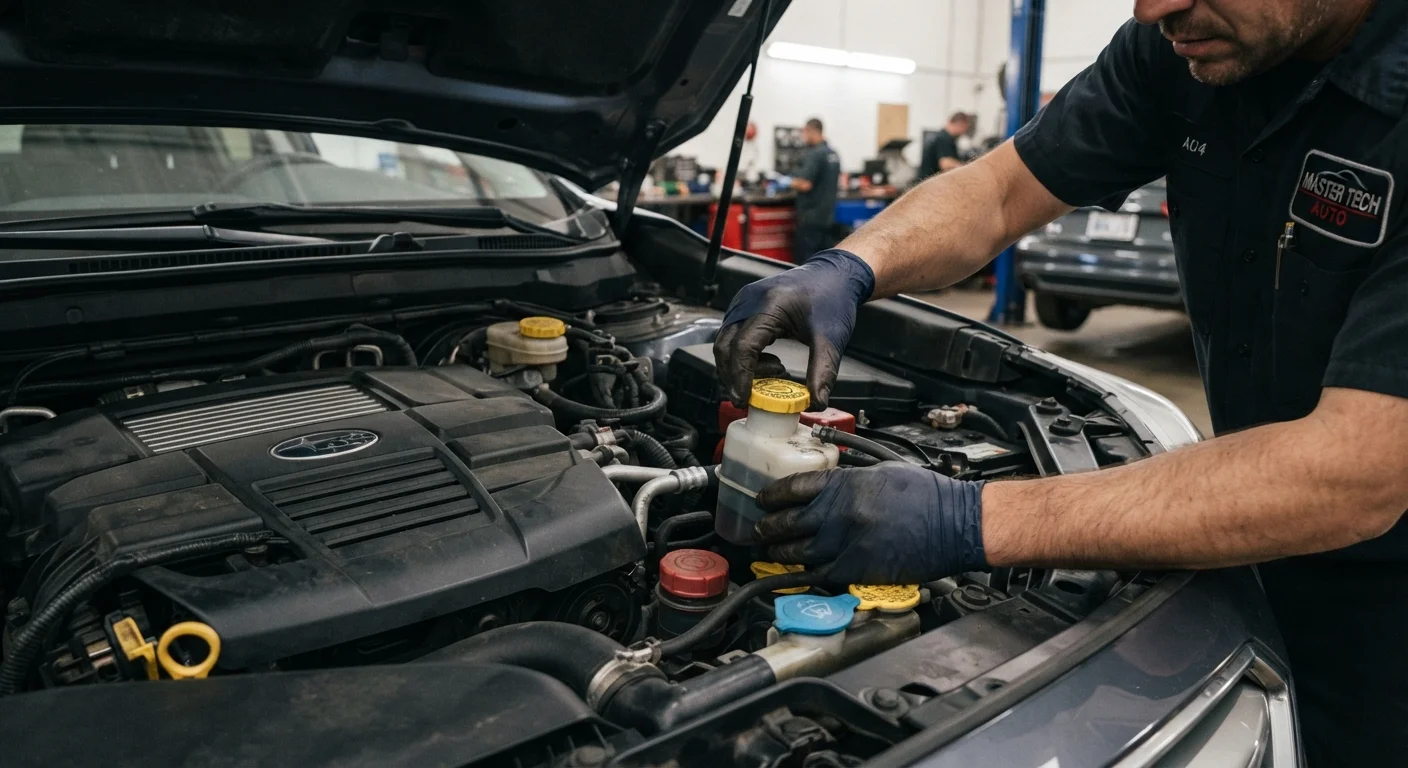
Because brake fluid is integral to caliper function, maintaining proper fluid condition is part of caliper care. For context on how brake fluid fits alongside other often-neglected fluids, see our guide on vehicle fluids most drivers forget.
When One Component Fails, the Others Suffer
The three components are interdependent in ways that make deferred maintenance costly. Consider the most common failure sequence:
- Worn pads ignored: Once pad material is depleted, the metal backing plate contacts the rotor directly. This gouges deep grooves into the rotor surface — damage that can't be reversed by resurfacing.
- Seized caliper unnoticed: Constant pad-to-rotor contact from a stuck piston overheats both components, warping the rotor and glazing the pad surface, reducing friction efficiency even under normal braking.
- Rotor replaced too late: A severely damaged rotor can, in extreme cases, affect caliper piston alignment and stress the wheel bearing assembly.
None of these failures happen in isolation. This is why mechanics typically inspect the entire brake assembly rather than just the part that prompted the visit. If you're weighing which brake work is appropriate to attempt yourself versus leaving to a professional, our article on DIY car maintenance outlines where the risks lie.
A Soft Pedal Is an Emergency
A brake pedal that sinks toward the floor or feels spongy rather than firm indicates a possible fluid leak or air in the hydraulic system — both of which significantly reduce braking force. Do not continue driving the vehicle until the system has been inspected by a qualified mechanic. This symptom is not a watch-and-wait situation.
Warning Signs and Maintenance Basics
Brake systems communicate their condition through several sensory cues. Knowing what each symptom typically suggests helps you act before a minor issue becomes a major one:
- High-pitched squeal: Often the wear indicator — pads are near end of life.
- Grinding or metal-on-metal scraping: Pads have worn through; rotor damage is likely occurring or has occurred.
- Pulsation or vibration through the pedal: Rotor warping or uneven thickness variation.
- Vehicle pulling to one side under braking: Uneven pad wear or a seized caliper on one side.
- Soft or spongy pedal feel: Air in the brake lines or a fluid leak — requires immediate professional attention.
- Burning smell after driving: Possible seized caliper or overheated brakes from sustained hard use.
Brake inspections are typically recommended at least once a year or whenever tires are rotated. Speaking of which — tire rotation and wheel-related maintenance often go hand-in-hand with brake checks. Our overview of tire rotation, balancing, and alignment explains those services and when they're warranted.
Brake work carries real safety implications. While minor tasks like a visual inspection can be self-performed with the wheels removed, replacing pads, resurfacing rotors, and rebuilding calipers involve safety-critical procedures best left to a qualified mechanic. If you're uncertain about any symptom, have the vehicle inspected before your next drive.