
The Three Stages of Rust — and Why They Matter
Not all rust is equal, and understanding the distinction between stages is the first practical step for any restorer. Automotive corrosion generally progresses through three recognizable phases.
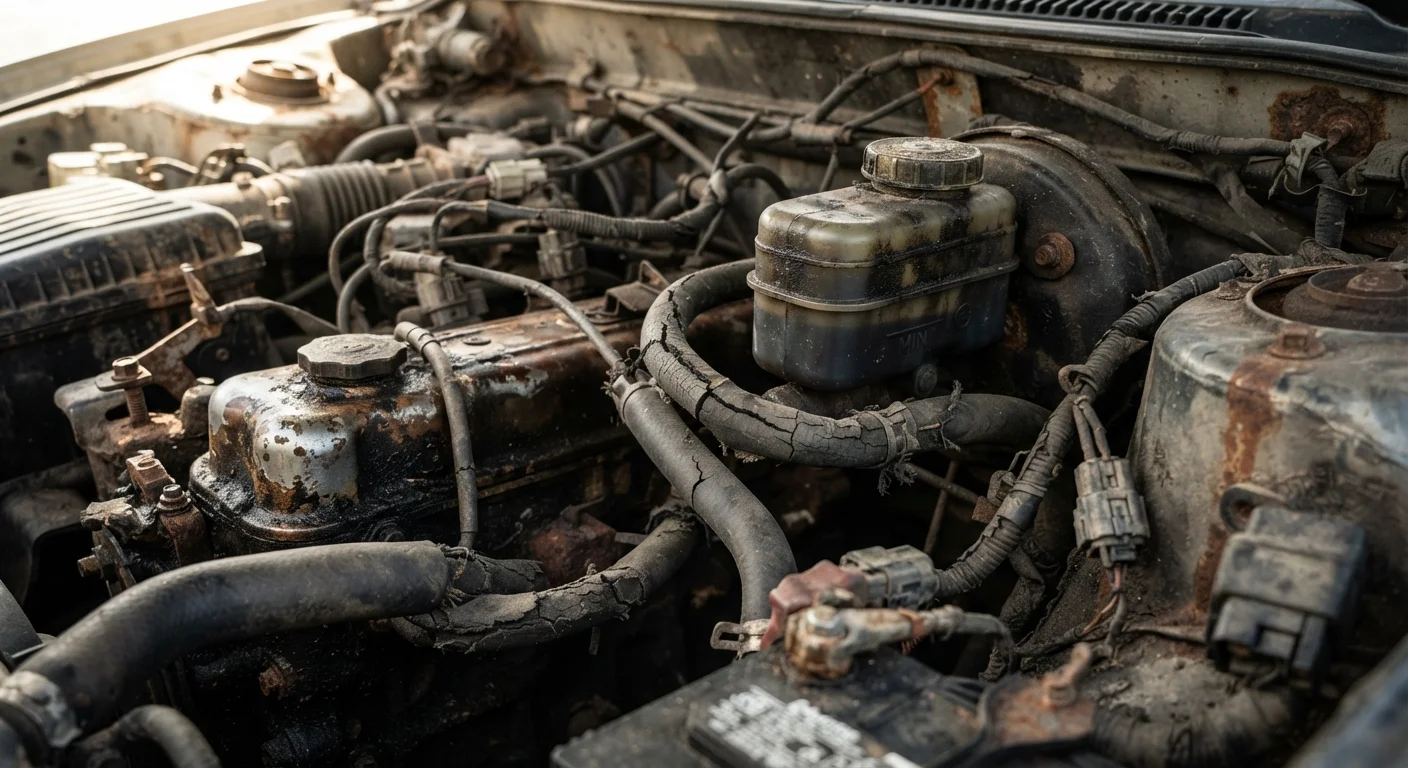
Surface rust is the earliest stage — a thin reddish discoloration where paint has chipped or scratched and bare metal has been briefly exposed to moisture. At this stage, the metal beneath is still largely intact and the fix is relatively straightforward: remove the oxidation, treat the metal, and re-seal with primer and paint.
Scale rust occurs when surface rust is left unaddressed. The oxidation layer thickens and begins to pit the metal surface, creating texture and micro-craters that trap additional moisture. The metal is weakened but may still be solid enough to treat with grinding, chemical conversion, and careful bodywork.
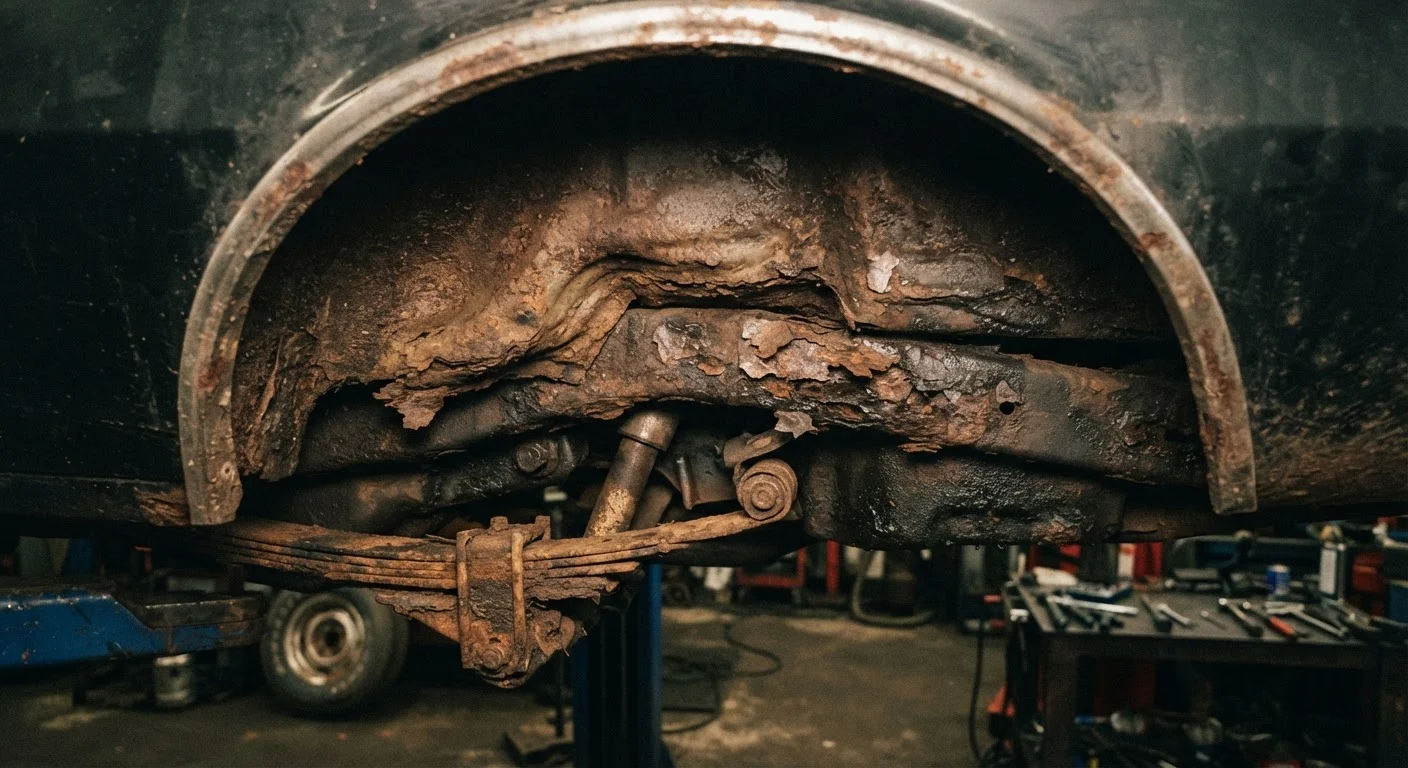
Penetrating rust — sometimes called structural rust — is the stage restorers fear most. The iron oxide has consumed the metal entirely, leaving holes, flaking sections, and compromised structural panels. At this point, treatment shifts from surface preparation to metal fabrication: cutting out the damaged section and welding in new steel. As noted in our guide on repairs that compound when ignored, rust is one of the clearest examples of a problem that escalates exponentially the longer it goes unaddressed.
~$3B
Annual U.S. cost of vehicle corrosion damage
The Federal Highway Administration has documented billions in annual costs attributable to corrosion affecting vehicles and infrastructure across the United States.
10–15 yrs
Time for penetrating rust to develop from initial exposure
Corrosion timelines vary widely based on climate, salt exposure, and coating quality, but structural rust on unprotected steel typically develops within a decade in high-humidity or road-salt environments.
17 states
U.S. states that use road salt heavily each winter
States in the northern Rust Belt and Mid-Atlantic regions apply the heaviest road salt loads, significantly accelerating underbody corrosion on vehicles driven year-round.
Where Rust Hides on Classic Vehicles
Classic cars — particularly those built before modern corrosion-resistant coatings and galvanized steel became standard — have predictable rust hot spots that every restorer should inspect methodically.
- Floor pans and trunk floors: Water intrudes through weatherstripping failures, drainage blockages, or leaking seals, then sits on flat horizontal surfaces where it cannot evaporate.
- Inner rocker panels: The hollow cavity behind the outer rocker is invisible without a mirror or borescope, yet it collects road spray and debris constantly. Many restorations uncover completely rotted inner rockers hidden behind cosmetically sound outer panels.
- Wheel wells and quarter panel lips: Road debris chips paint from the inside out, and packed dirt retains moisture against bare metal.
- Windshield and rear window channels: Failed rubber seals allow water to pool in pinch-weld seams, which are among the thinnest sections of sheetmetal on most vehicles.
- Frame rails and crossmembers: On body-on-frame classics, the frame is the structural backbone. Rust here is a safety concern, not merely a cosmetic one.
- Door bottoms and lower sail panels: Factory drain holes in door shells clog with debris over decades, trapping water inside the door cavity.
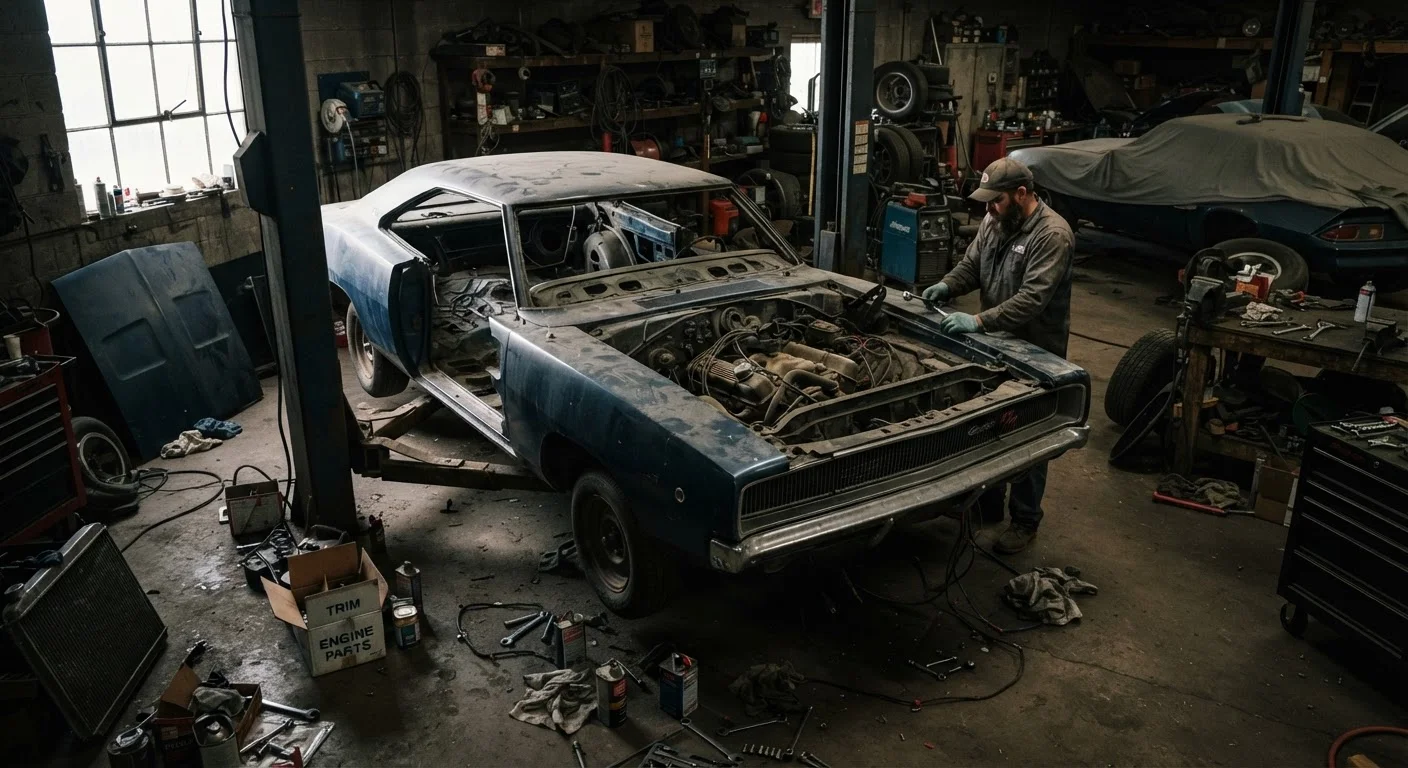
A full restoration disassembly reveals rust in all of these locations simultaneously — which is why experienced restorers inspect bare, stripped shells rather than assembled vehicles when assessing a project's true condition.
How Restorers Address Each Type
The treatment approach must match the severity of the damage. Applying a cosmetic fix to structural rust is one of the mistakes that quietly destroy a classic car's value.
Surface and Scale Rust
For surface rust, mechanical removal — using wire wheels, orbital sanders, or hand tools — strips the oxidation back to clean metal. A phosphoric acid-based rust converter or metal prep solution can neutralize any remaining oxidation before primer is applied. The goal is to seal the metal completely against future moisture exposure.
Scale rust requires more aggressive grinding or media blasting (such as soda blasting or fine glass bead blasting) to reach solid metal beneath the pitting. The resulting surface must be thoroughly primed — epoxy primer is widely favored in restoration work for its excellent adhesion and moisture-barrier properties.
Penetrating and Structural Rust
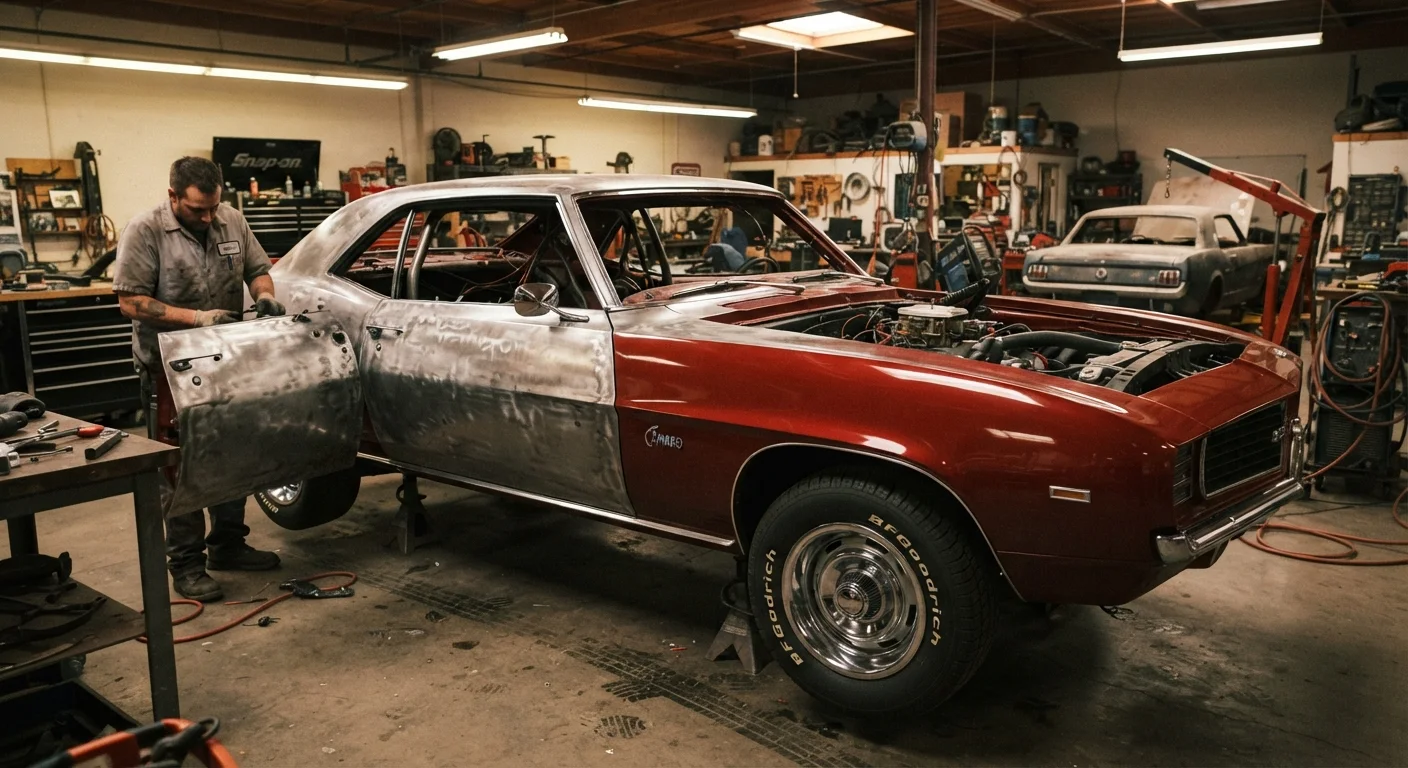
Once rust has eaten through metal, no chemical treatment can restore structural integrity. A qualified metal fabricator or restoration shop will cut out the compromised section to solid material, then weld in patch panels or custom-fabricated steel. MIG welding is common for panel work; some restoration shops prefer TIG welding for thinner gauge sheetmetal where heat control is critical.
Entire floor pan assemblies, rocker panel skins, and frame sections are available as reproduction parts for many popular classic vehicles. For rarer models, a skilled fabricator can form replacement panels from raw sheet steel.
Inspect Before You Prime
Before applying any primer over repaired metal, probe the surrounding area carefully with a pick or screwdriver. Rust often extends beyond the visible boundary, and priming over weakened metal simply delays — and sometimes hides — further deterioration. Always work back to confirmed solid steel before sealing.
After all metalwork is complete, cavity wax or rust-inhibiting coatings sprayed into enclosed sections — rockers, door bottoms, frame rails — provide ongoing protection that paint alone cannot deliver. Proper long-term storage preparation further slows corrosion between driving seasons.
Prevention as an Ongoing Practice
For vehicles already restored, preventing rust recurrence is an active responsibility rather than a one-time fix. Regular inspection of drainage channels, prompt repair of paint chips, and annual application of corrosion-inhibiting sprays to enclosed cavities are standard practice among serious collectors.
The philosophy behind restoration also influences how aggressively rust is addressed. A concours-level restoration demands bare-metal work and factory-correct finishes throughout, while a resto-mod approach may prioritize modern corrosion-resistant coatings over period accuracy. Understanding these two philosophies helps restorers align their rust remediation strategy with their broader goals for the vehicle.
“The single biggest mistake restorers make is treating rust as a cosmetic problem. By the time you can see it clearly, the damage underneath is almost always worse than what's on the surface.”
— Kevin Tetz, Automotive refinishing educator and restoration television host
Rust is never truly finished — it is only interrupted. The most effective long-term defense is a combination of thorough initial treatment, sealed and coated metalwork, and consistent inspection habits that catch new exposure before it progresses.