

What Each Shampoo Type Is Actually Doing
Every shampoo cleans hair, but the mechanism and depth of that cleaning varies considerably. Understanding what happens at the hair shaft level makes the choice between clarifying and moisturizing formulas much clearer.
Clarifying shampoos use stronger surfactants — the cleansing agents that lift oil and debris from the hair and scalp. These formulas are designed to dissolve product buildup, hard water mineral deposits, chlorine residue, and excess sebum. They create a thorough, almost squeaky-clean result, which is exactly the point. The tradeoff is that they also remove the natural oils your hair uses to stay protected and hydrated.
Moisturizing shampoos use milder surfactants paired with hydrating and conditioning ingredients like glycerin, panthenol, or plant-based oils. They cleanse effectively for everyday dirt and light oil without aggressively stripping the hair cuticle. The result is a cleaner scalp without the dryness that often follows a clarifying wash.
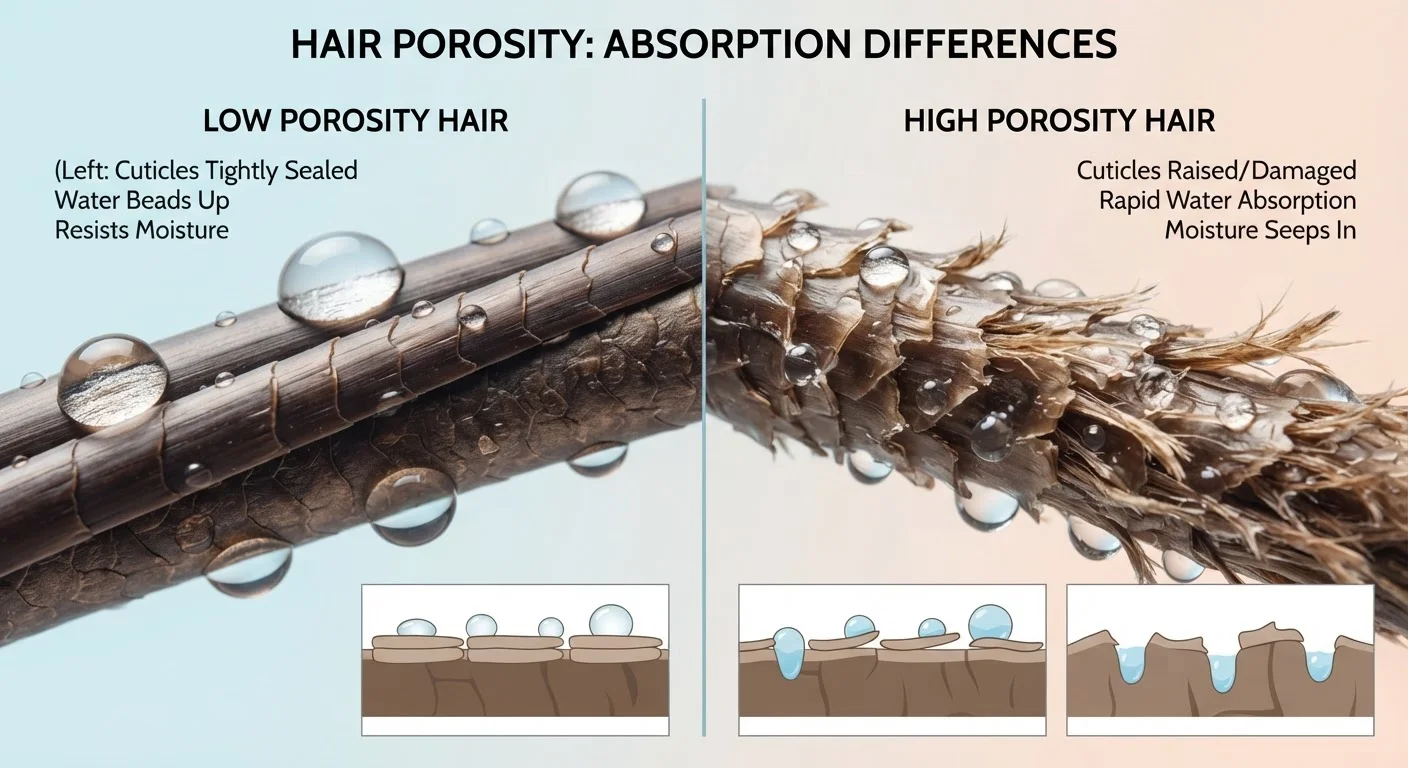
To understand how either formula interacts with your specific hair, it helps to know your hair's porosity — the ability of the cuticle to absorb and retain moisture. See our guide to hair porosity for a full breakdown of how that affects your product choices.
| Criterion | Clarifying Shampoo | Moisturizing Shampoo |
|---|---|---|
| Primary function | Remove buildup and residue | Cleanse while adding hydration |
| Surfactant strength | Stronger, more stripping | Milder, gentler on cuticle |
| Ideal use frequency | Every 2–4 weeks | Regular wash days |
| Best suited for | Oily, product-heavy, or mineral-exposed hair | Dry, curly, color-treated, or processed hair |
| Effect on natural oils | Removes most natural oil | Preserves most natural oil |
| Follow-up needed | Conditioner or deep treatment required | Standard conditioning sufficient |
| Hard water/chlorine removal | Effective | Minimal |
When to Use Each — and How Often
The biggest mistake most people make is treating one shampoo type as a daily default and ignoring the other entirely. Most hair types benefit from both, used strategically.
Clarifying shampoos are periodic tools, not daily drivers. For people who use dry shampoo, heavy stylers, or heat protectants frequently, a clarifying wash every two to four weeks prevents buildup from accumulating and blocking moisture absorption. If you swim in a pool, you may need to clarify after each swim session. Using it too often — especially on dry, fine, or chemically treated hair — can lead to chronic dryness and breakage.
Moisturizing shampoos are suited for regular use, typically every wash day. How often that is depends on your hair type and lifestyle. Curly and coily hair types generally benefit from washing less frequently — perhaps once or twice a week — while fine or oily hair may need more regular cleansing. For guidance on washing approaches tailored to curly hair specifically, see washing curly hair without losing definition.
Hard Water and Shampoo Performance
In areas with high mineral content in tap water, even moisturizing shampoos can leave a film on the hair over time. Calcium and magnesium deposits can make hair feel rough or dull despite regular washing. If this sounds familiar, a periodic clarifying wash is especially useful — regardless of your hair type — to remove mineral accumulation before it affects manageability or shine.
After any clarifying session, always follow up with a conditioner or deep conditioner to restore moisture. Your conditioner vs. deep conditioner vs. hair mask guide can help you choose the right follow-up step.
Matching Your Shampoo to Your Hair Profile
There's no single answer that applies to everyone. Your ideal cleansing routine is shaped by several factors working together.
Hair texture and density matter significantly. Fine hair tends to show buildup faster and may tolerate occasional clarifying without as much moisture loss. Coarse or thick hair often has a drier baseline and benefits from gentler, moisturizing formulas most of the time. For a clear explanation of these terms, see our guide to hair type, texture, and density.
Chemical or heat processing shifts the equation toward moisturizing formulas. Color-treated hair and chemically relaxed hair have an altered cuticle structure that makes them more vulnerable to moisture loss with each wash. These hair types should limit clarifying use to once a month or less, and always follow it with a nourishing treatment.
Scalp condition also plays a role. A flaky or oily scalp may benefit from more frequent clarifying to remove buildup that can clog follicles, while a dry or sensitive scalp may react poorly to the stronger surfactants in clarifying formulas. When in doubt, consult a licensed cosmetologist or dermatologist who can assess your scalp health directly.
If you're building a hair care routine from scratch, shampoo selection is one of the first decisions to get right — it sets the foundation for everything that follows.
~85%
U.S. households with hard water
According to the U.S. Geological Survey, the majority of American homes receive hard water, which contributes to mineral buildup on hair and scalp over time.
3–5x
Higher surfactant concentration in clarifying vs. standard shampoos
Cosmetic chemists generally note that clarifying formulas contain significantly stronger cleansing agents than everyday moisturizing shampoos, explaining their deeper strip effect.